Bretagne III
Jun. 4th, 2019 06:04 pm![[personal profile]](https://www.dreamwidth.org/img/silk/identity/user.png) selenak
selenakWe spent our last days in Brittany mainly hiking on vaarious parts of the coast, which continued to be truly spectacular. Now we did visit some towns in between, too, but really, the landscape is where it‘s at, so I‘ll only mention a few.
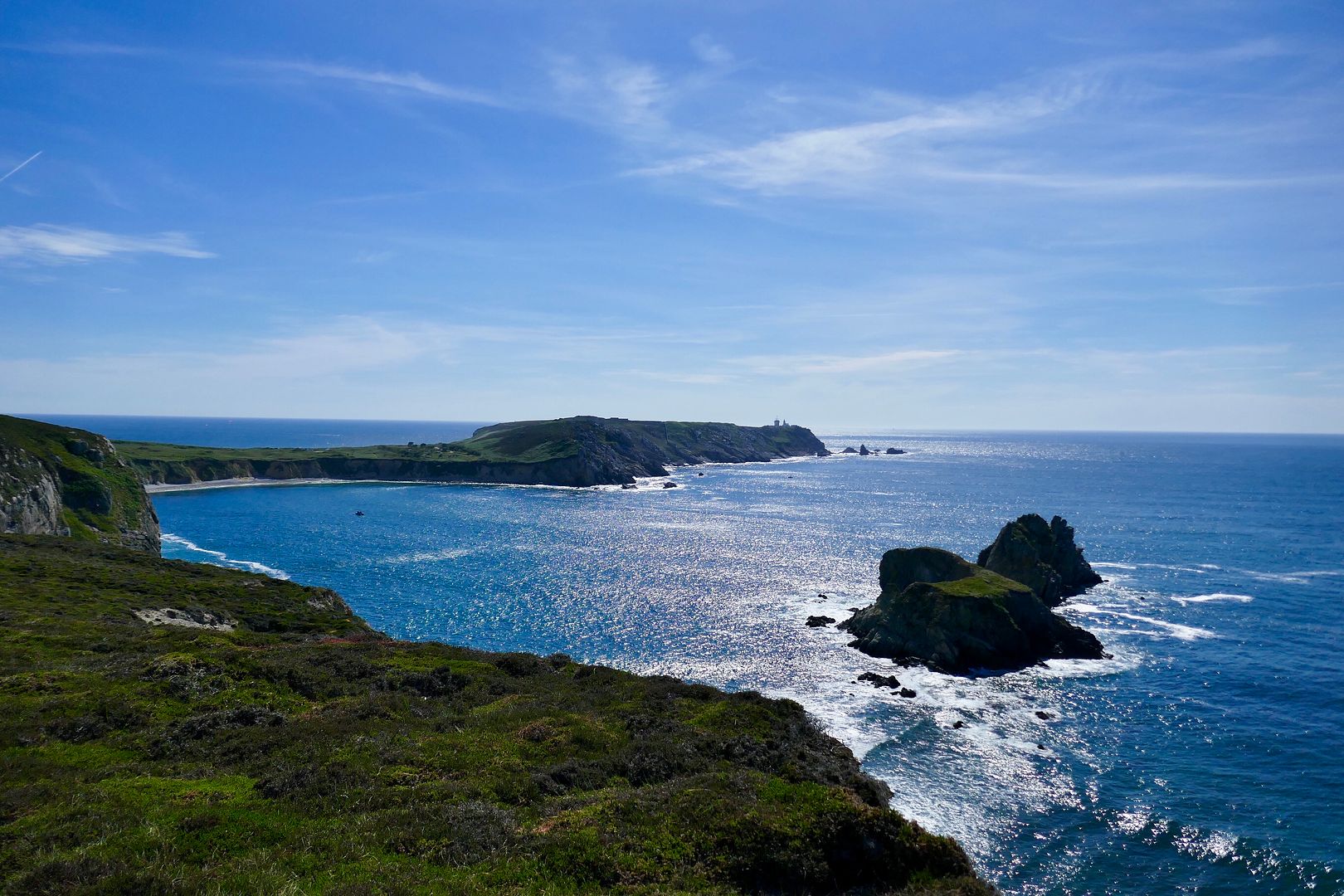
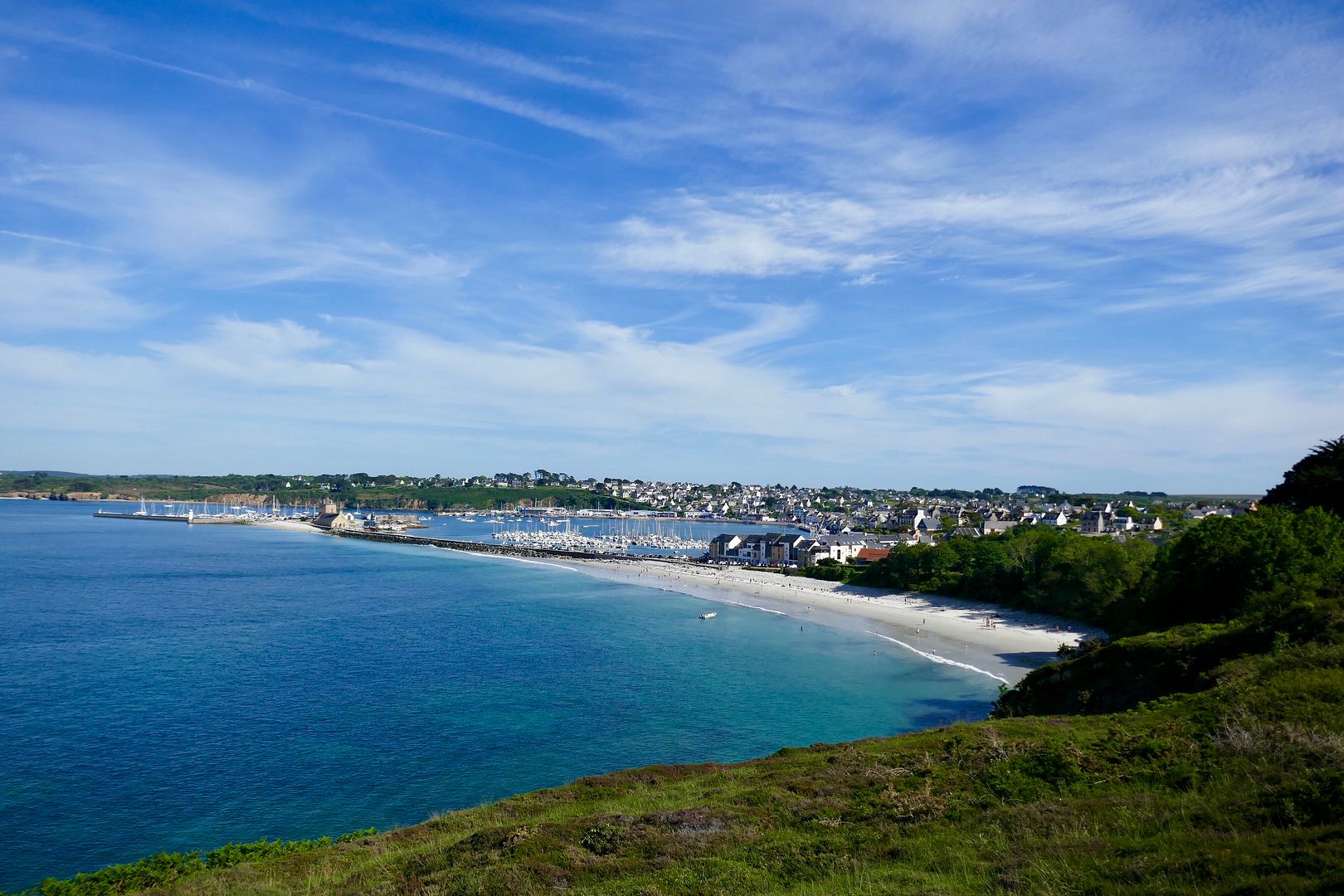
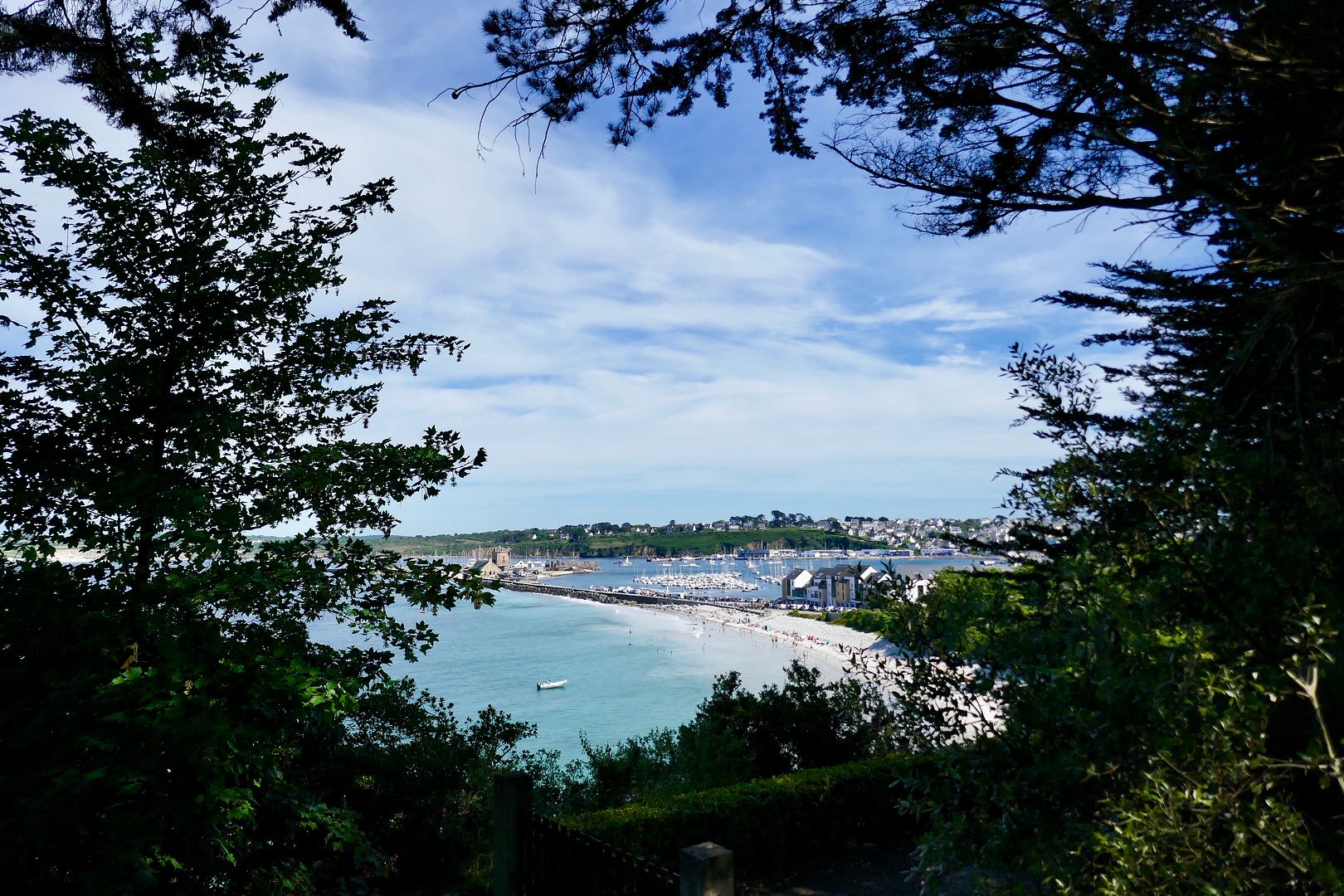
This is Camaret-sur-mer, which started out as a small fishing town and, with the additon of tourism, still is relatively small. It‘s located on the Isle de Crozon.
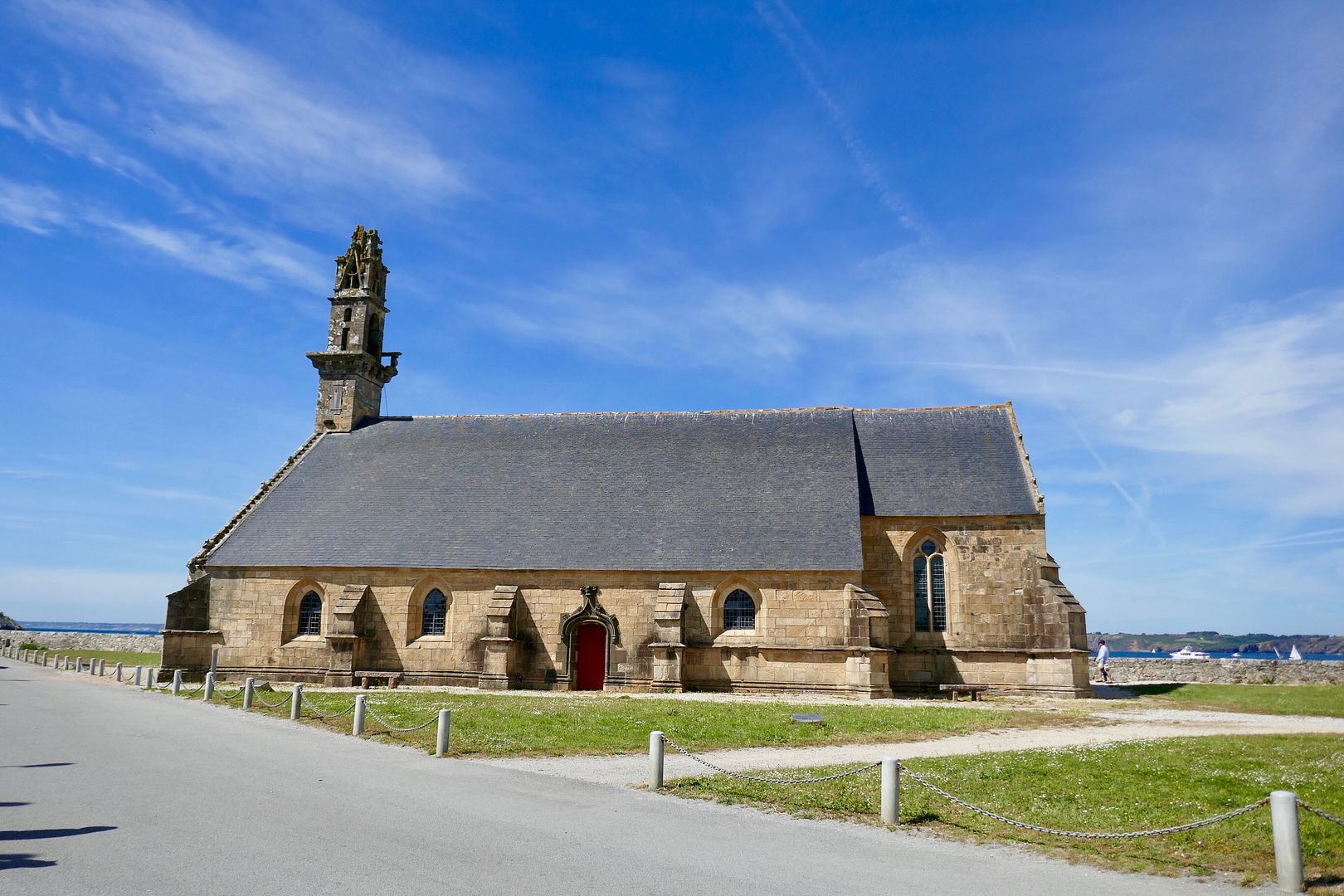
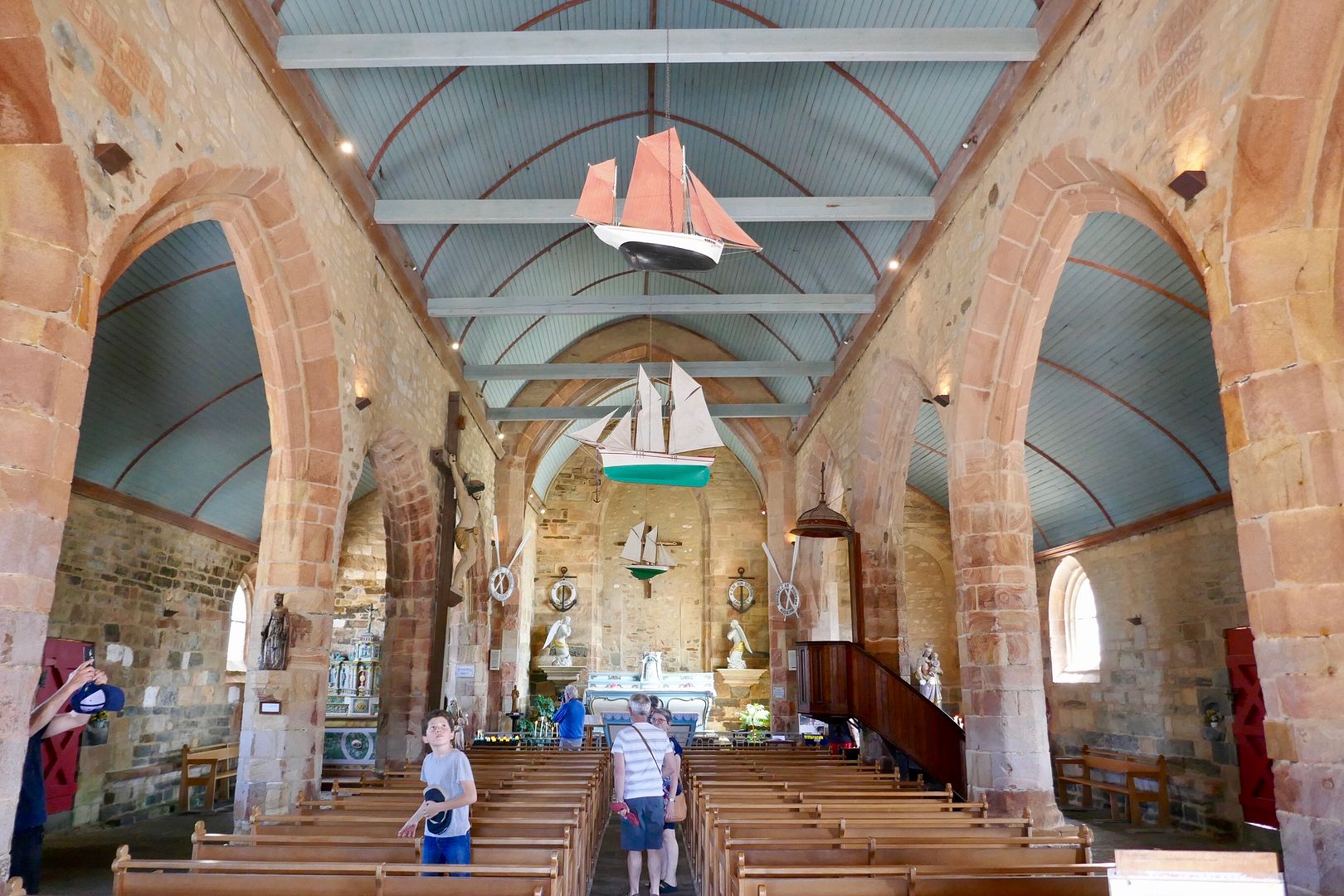
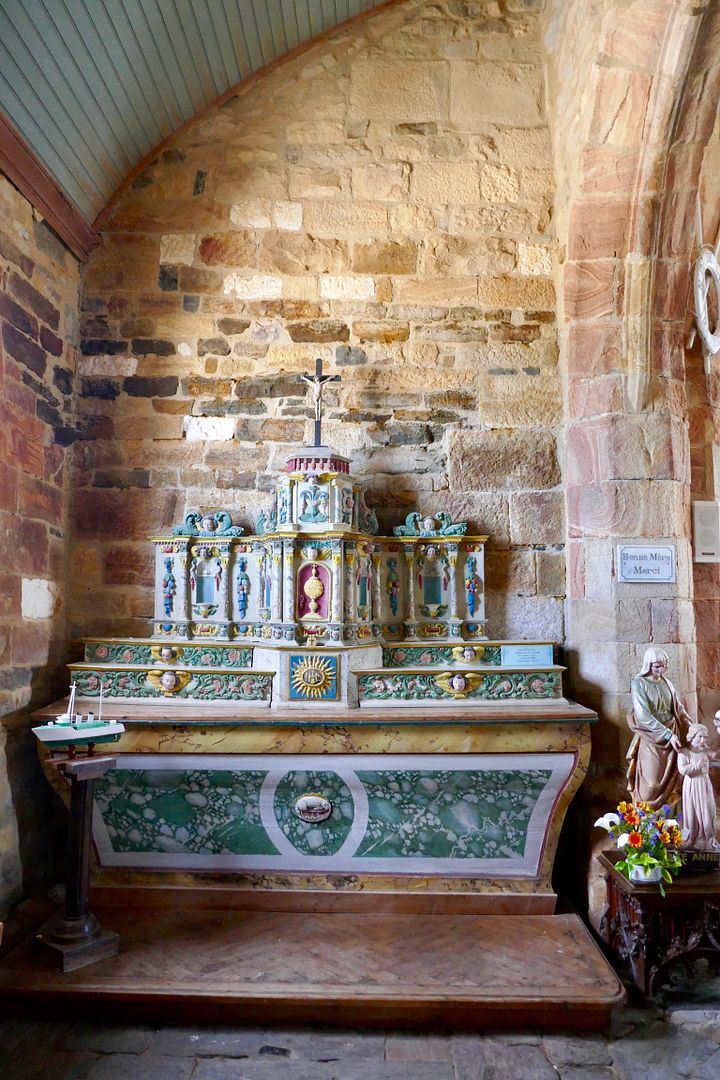
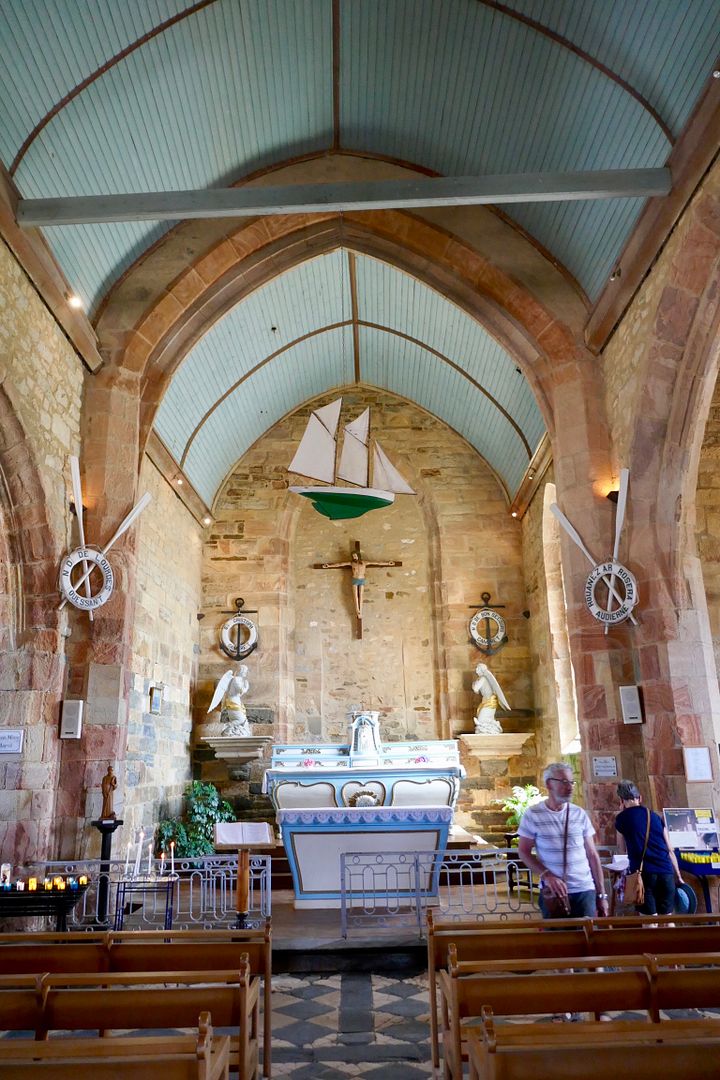
The main church in Camaret’s harbor is a seaman‘s church,and the interior reflects it charmingly.
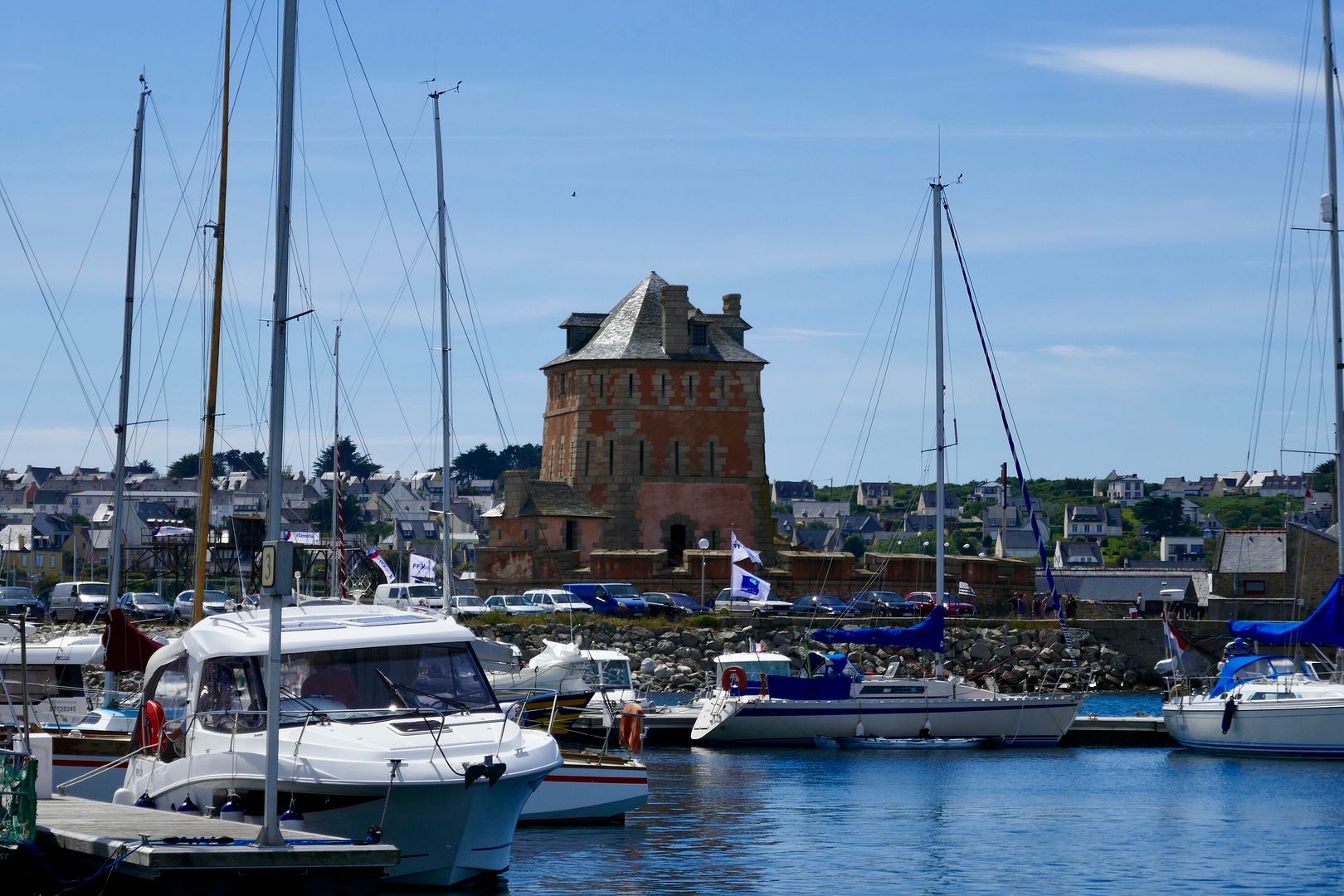
There‘s also a tower built by Vaubon in case of evil English attacks. Very similar in design to what Henry VIII was plastering Cornwell with in case of French attacks, I found.
Today‘s visitors are either sailors:
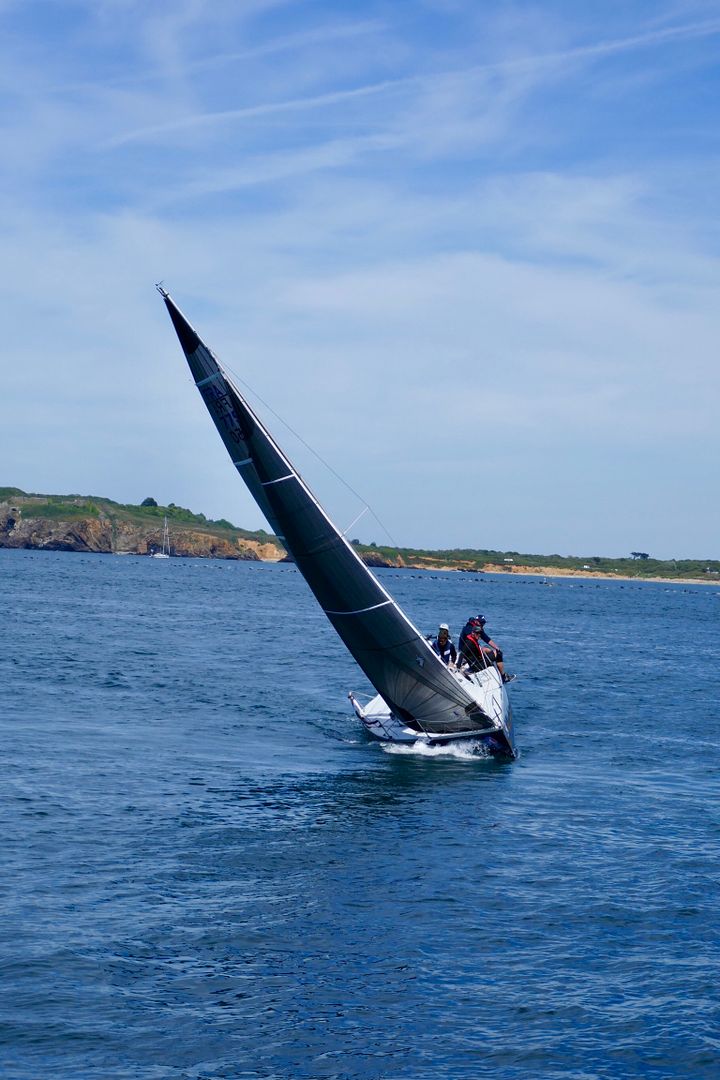
Or they‘re into hiking like yours truly and her APs. There is an awesome trail starting about ten metres from our hotel away leading up to the cliffs to the Pointe de Pen-Hir and further. The other thing Camaret-sur-mer and surrounding villages and towns are sort of known for is that in WWII, a lot of bunkers were built to fight off the Allies (who, as you all know, invaded in Normandy instead). It‘s a bit odd and eerie, walking around ruins of concrete which are leftovers from a spectacularly vicious dictatorship, manned by one‘s countrymen and located in a breathtaking landscape. But the landscape is worth any number of creepy feelings, because:
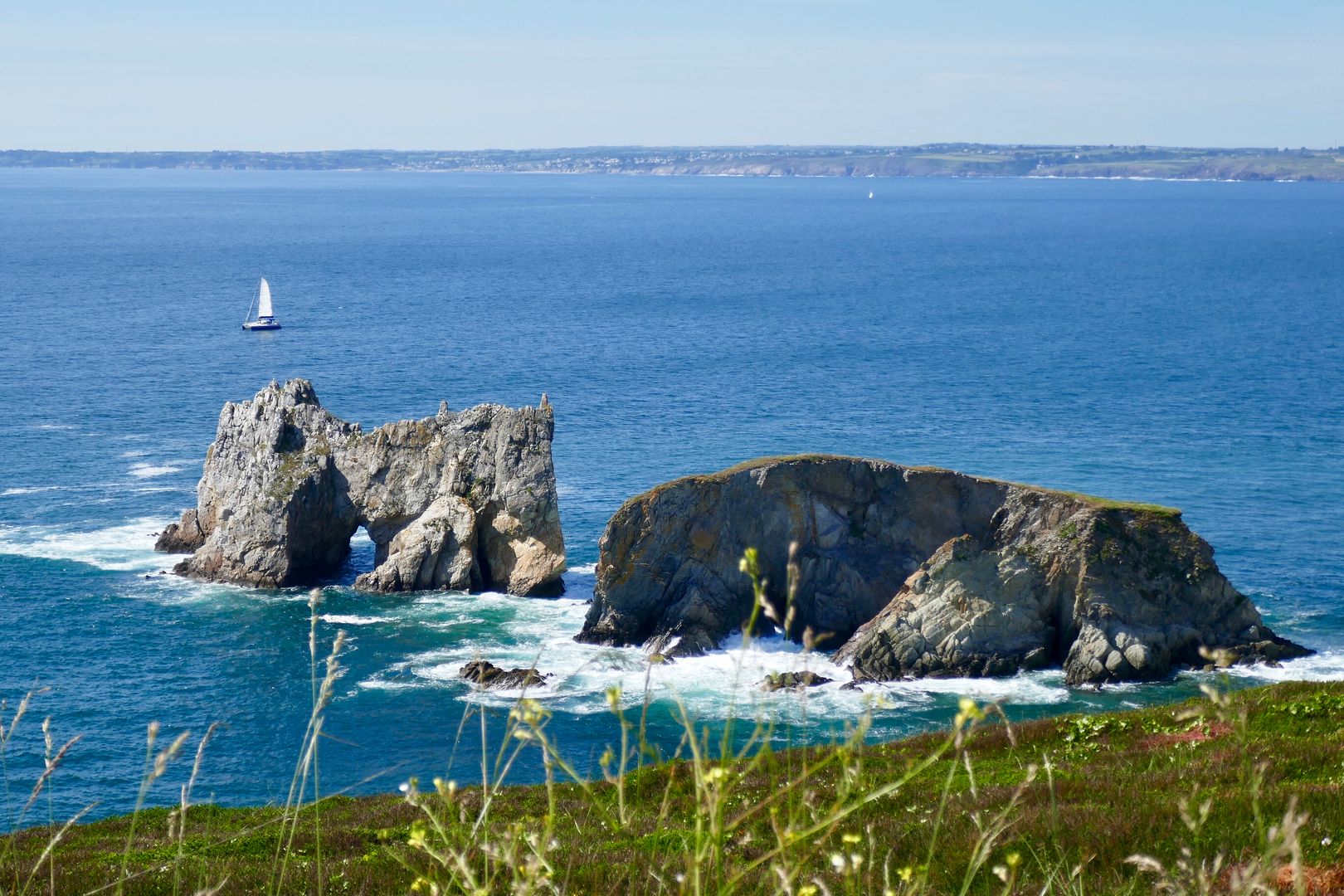
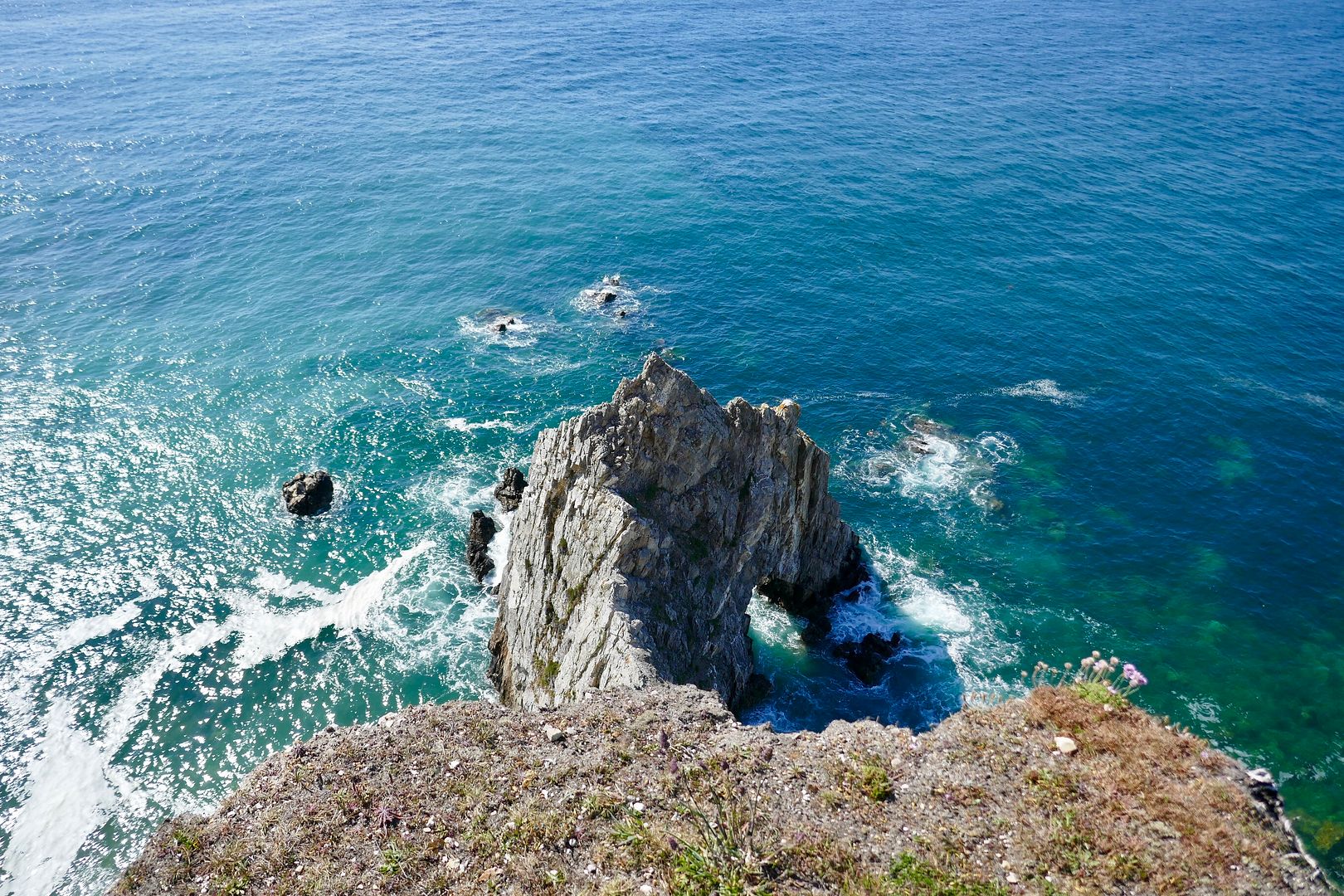
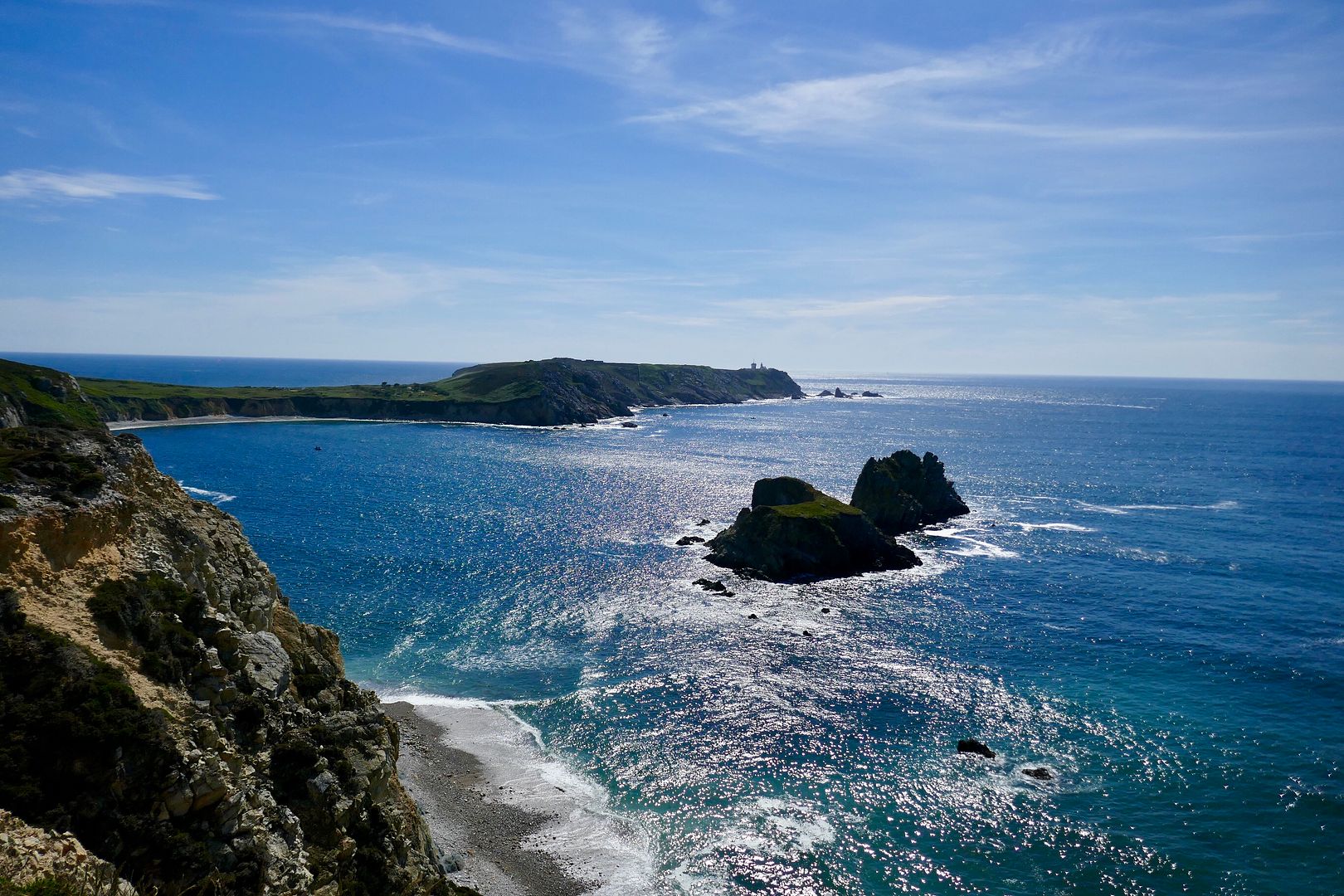
A somewhat larger town is St. Malo. Famous, among other things, for French privateers such as Robert Surcouf, of whom more in a moment, and for birthing so many successful French seamen in general that supposedly Louis XIV degreed every French Captain had to be a St. Malo man. Today‘s main reason for visiting are the completely preserved town battlements. Of whom you can view sites such as this one, including a sea water swimming pool next to the actual ocean:
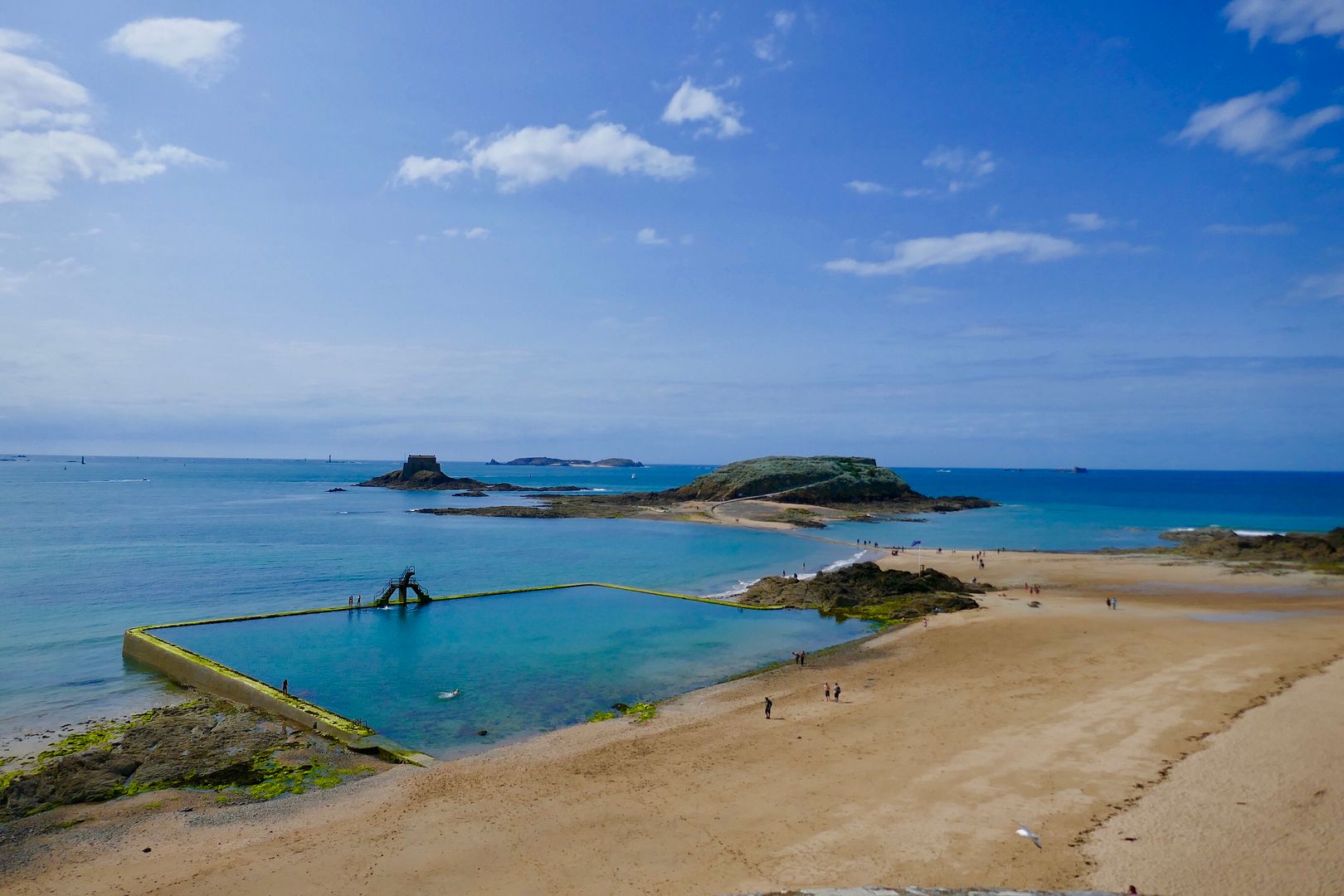
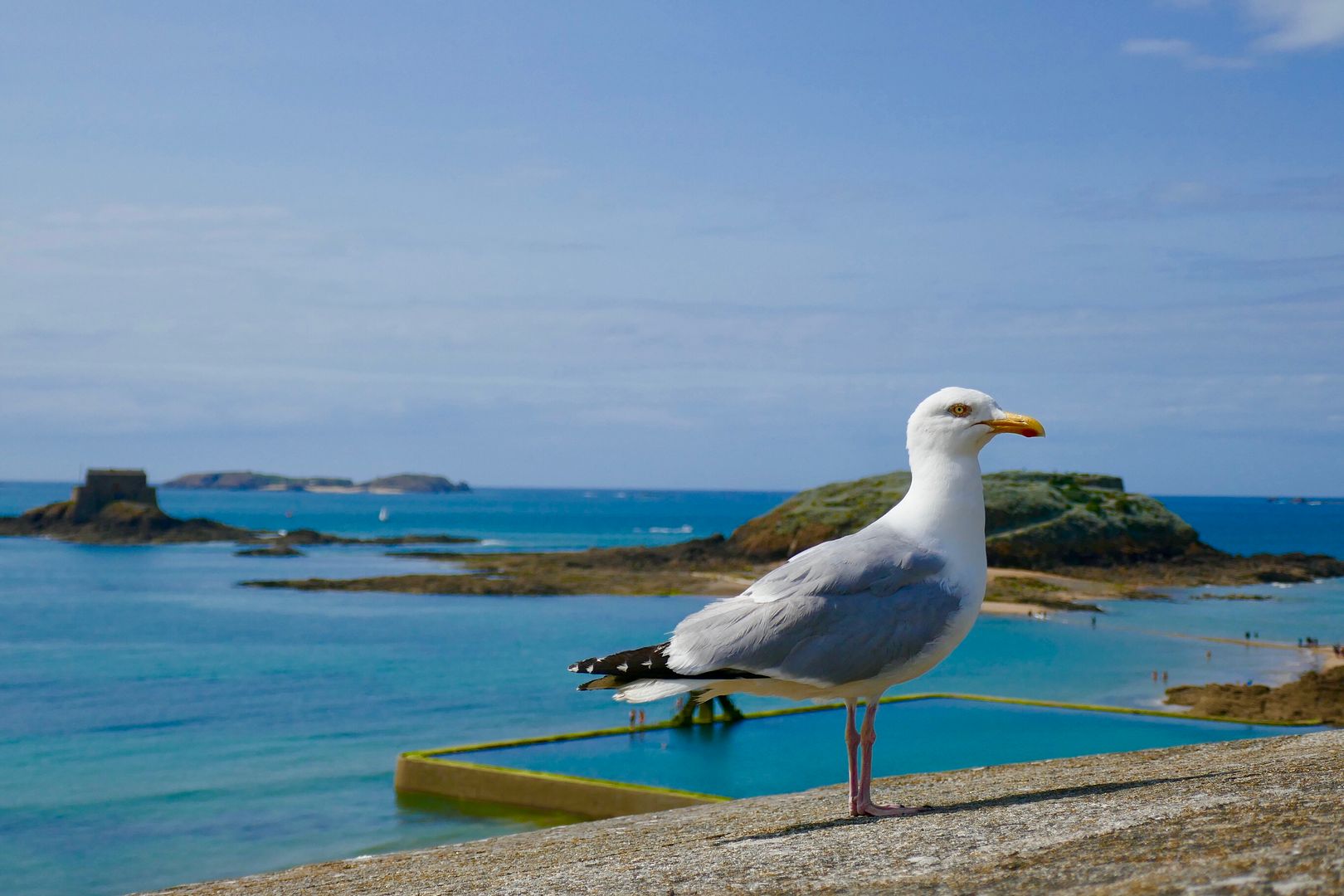
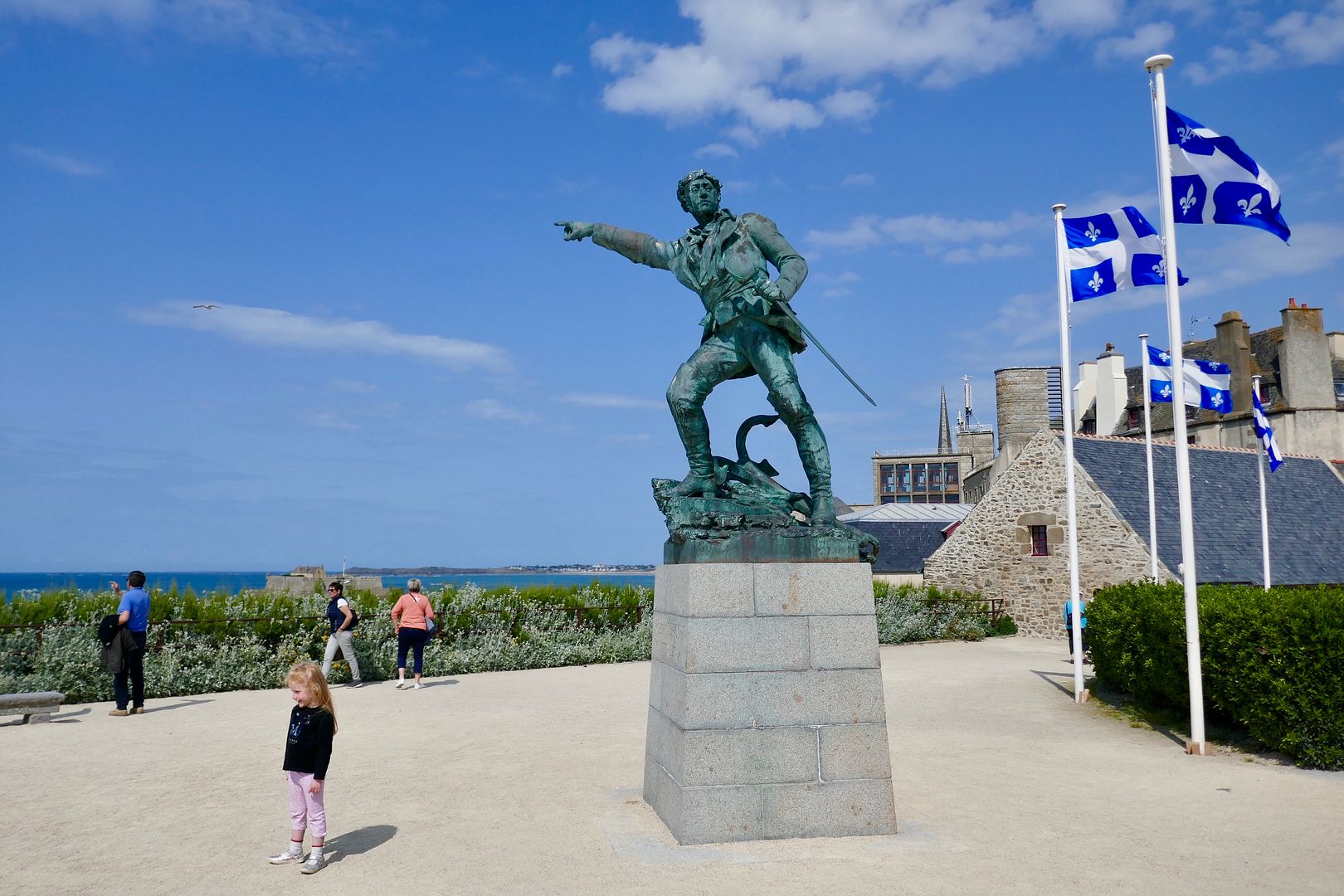
As for Robert Surcouf, most successful Frenchpirate privateer during the Revolution and the Empire, he‘s a local boy and thus I encountered inns and places named after him all over Brittany. He‘s what would have happened if the Hornblower and the Master and Commander books would have been written by a Frenchman, only in reality. Starring Britain as the evil empire, of course. My favourite Surcouf anecdote this time around is that a Britsh navy officer supposedly told him: „You French fight for money, whereas an Englishman fights for honour“, to which Surcouf replied: „Well, everyone fights for what they don‘t have.“ Here is his statue at St. Malo:
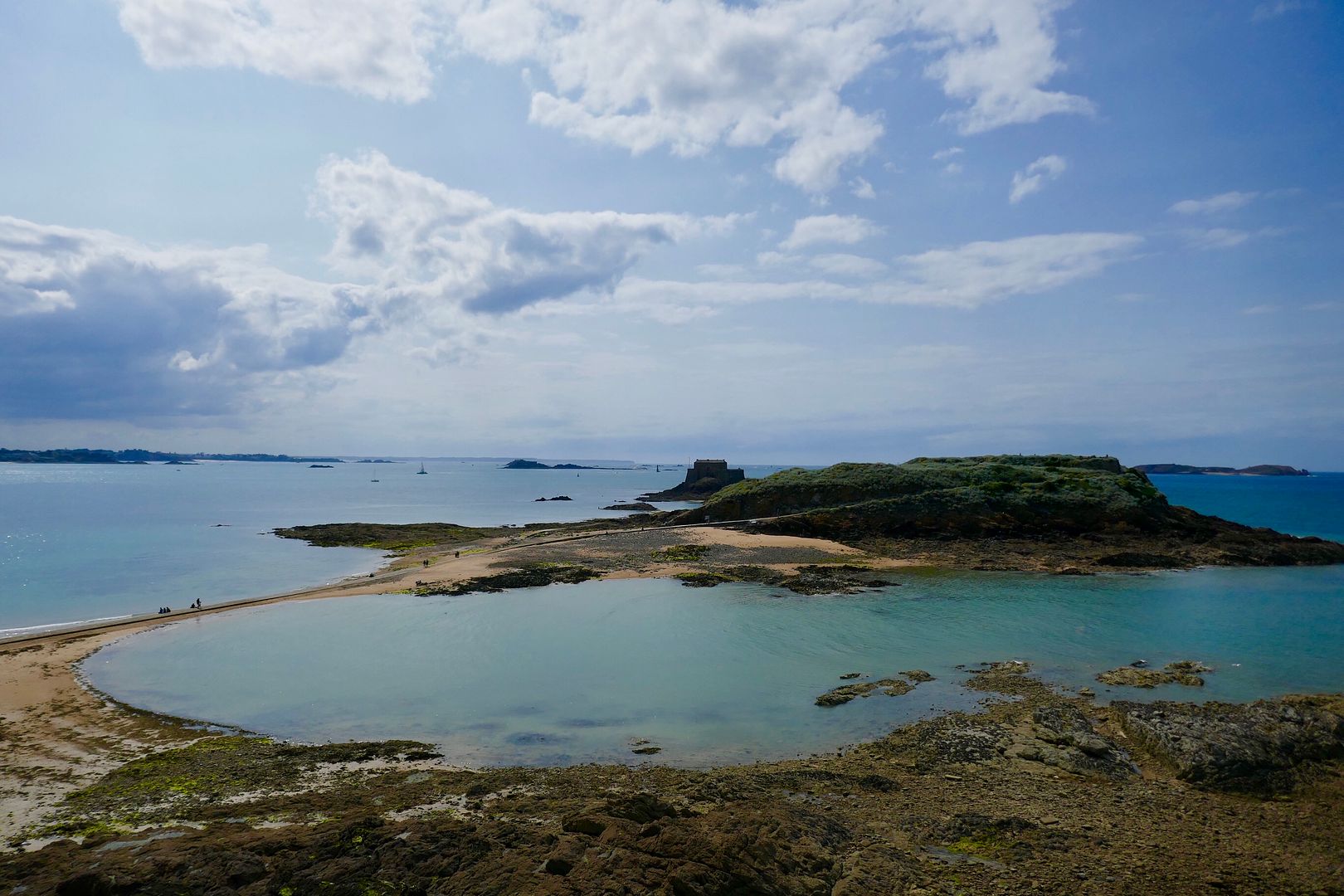
More views from the battlements:
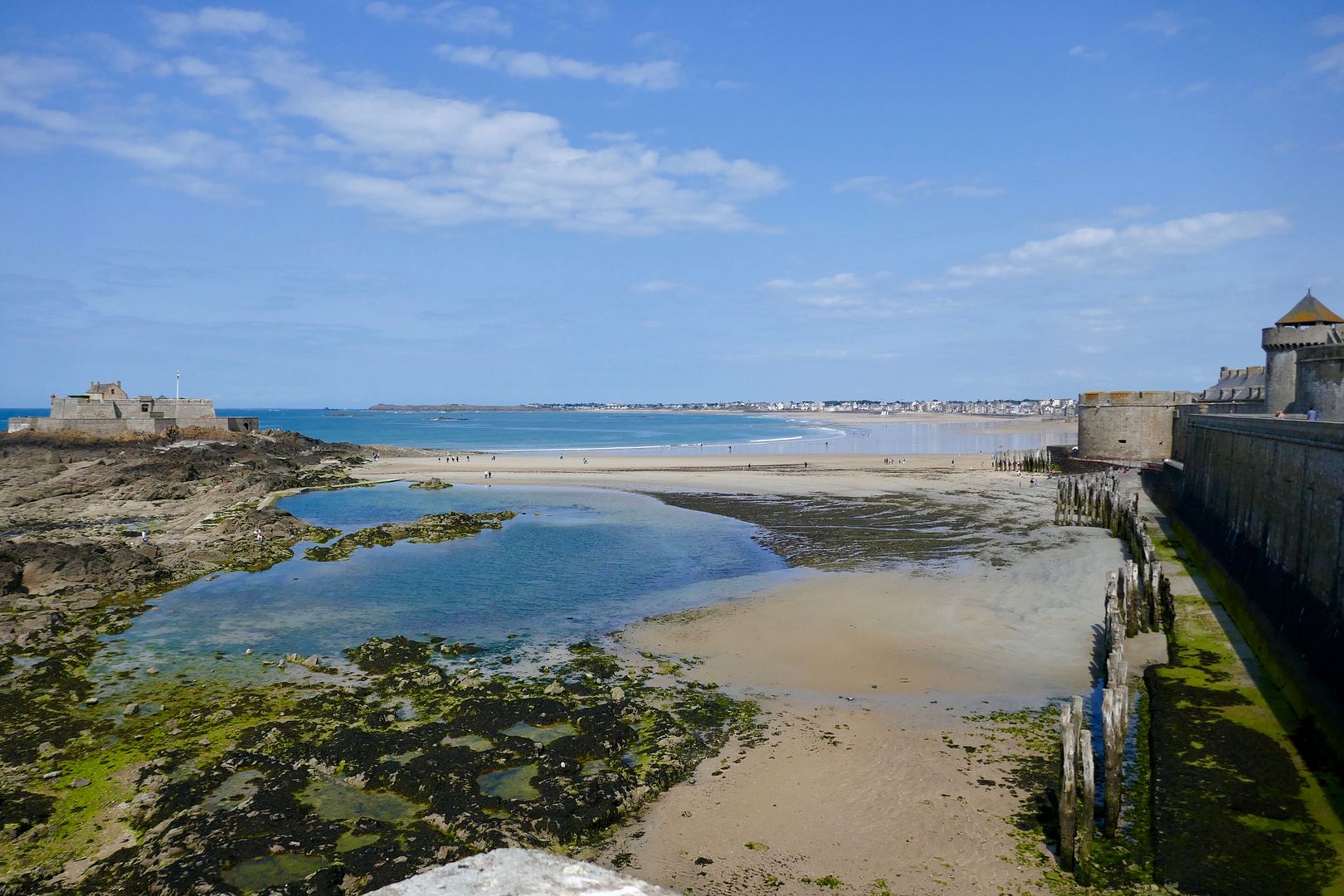
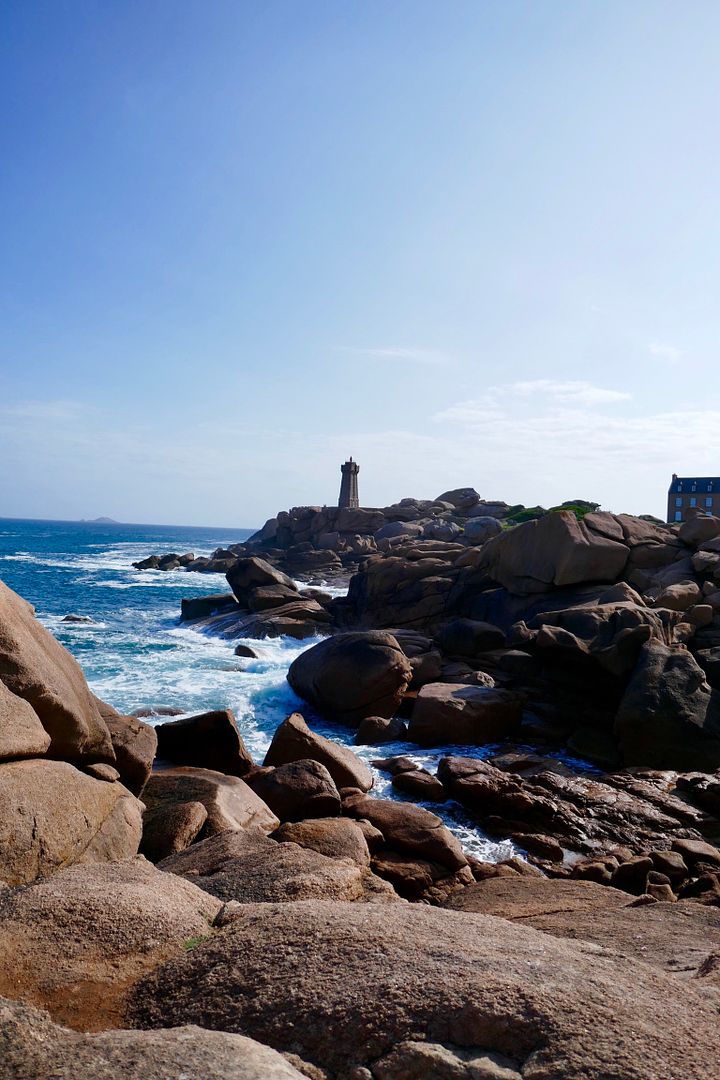
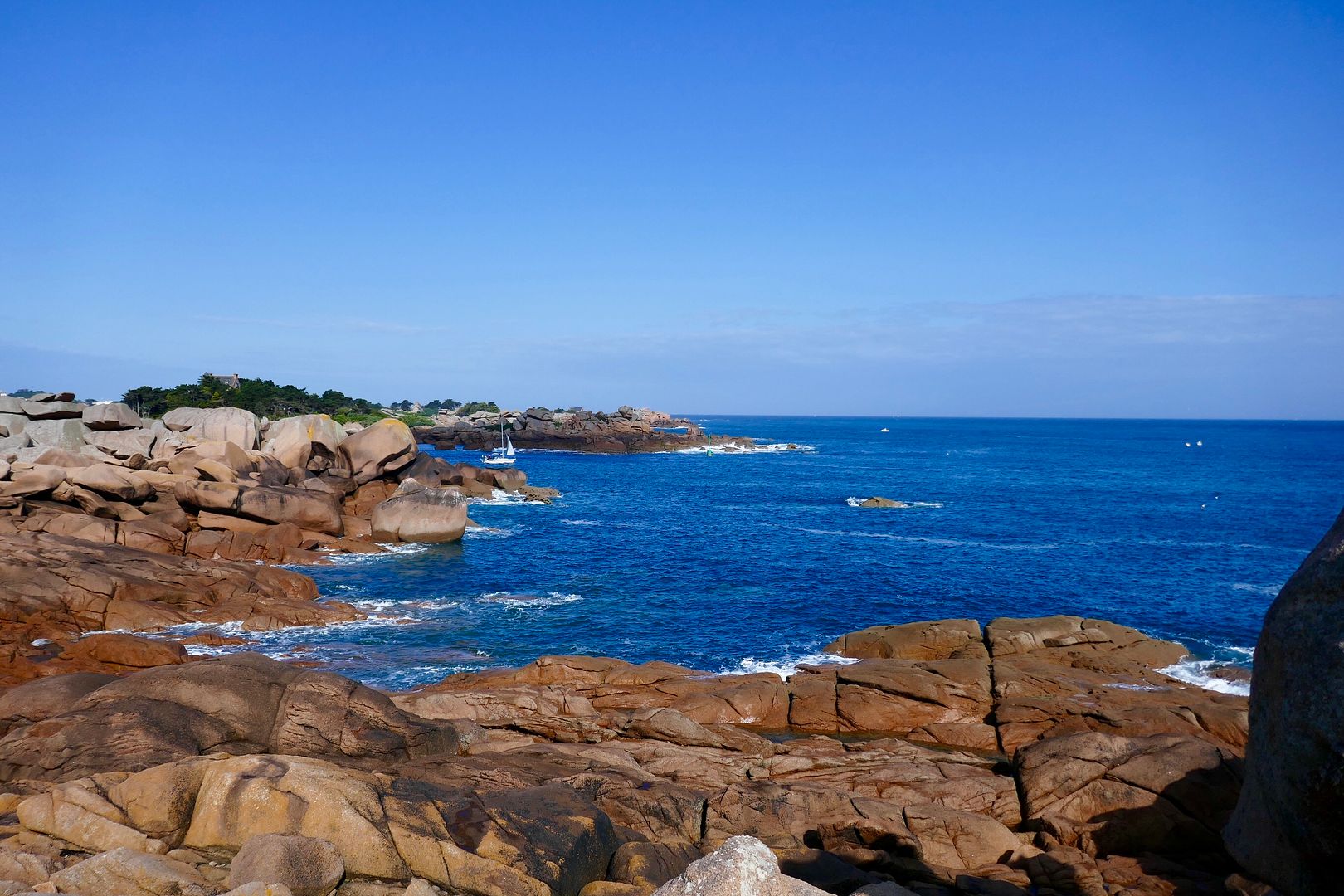
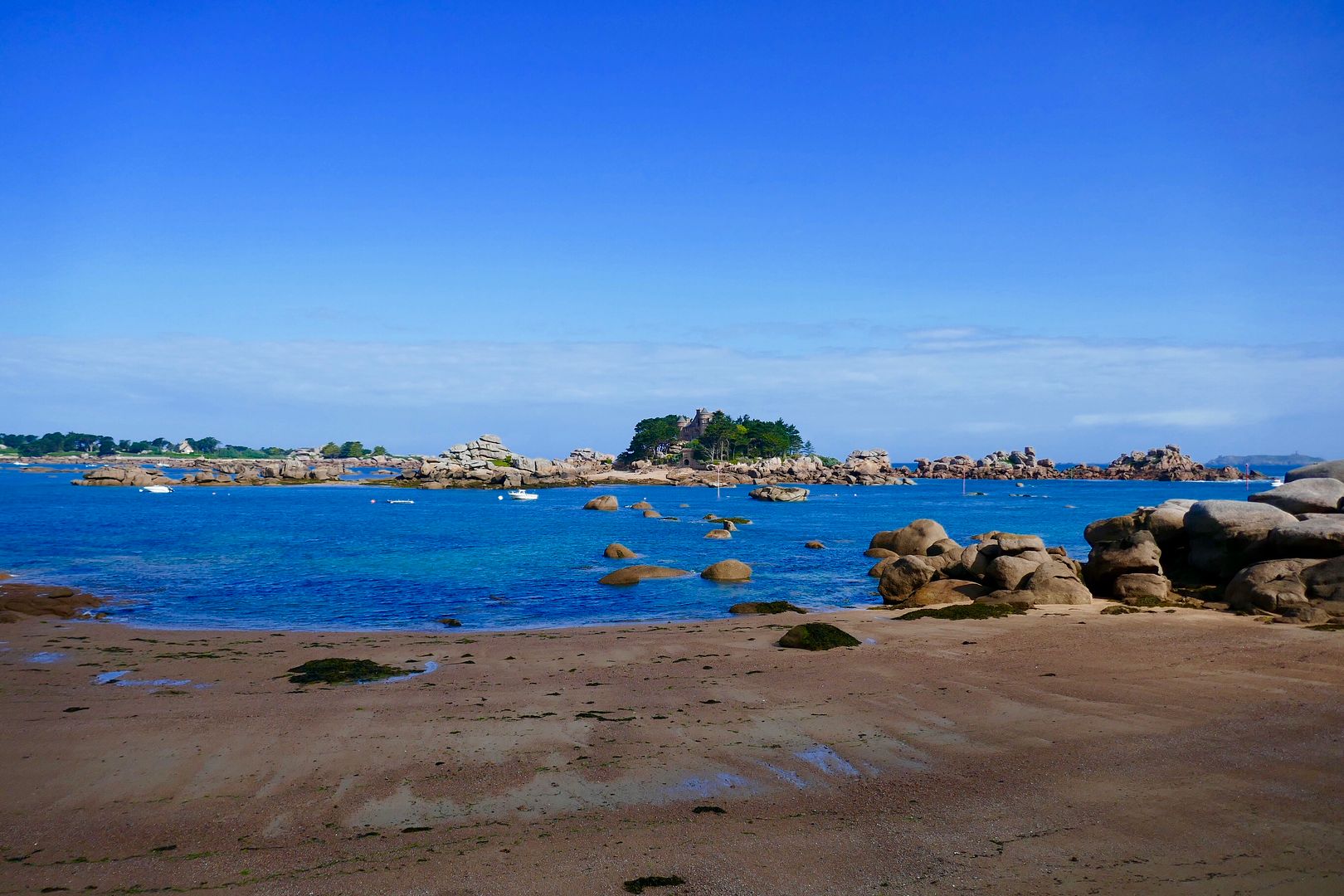
The competition is really tough in Brittany, but all in all, I think my favourite trail to hike was the one we took yesterday, at the Cote de Granite Rose, the coast of pink granite, the „sentier des douaniers“ - the trail of the customers. Because all those small bays just invite smugglers, I presume. We started at Perros-Guirec and walked till Tregastel. And were constantly greeted with views like these at every corner:
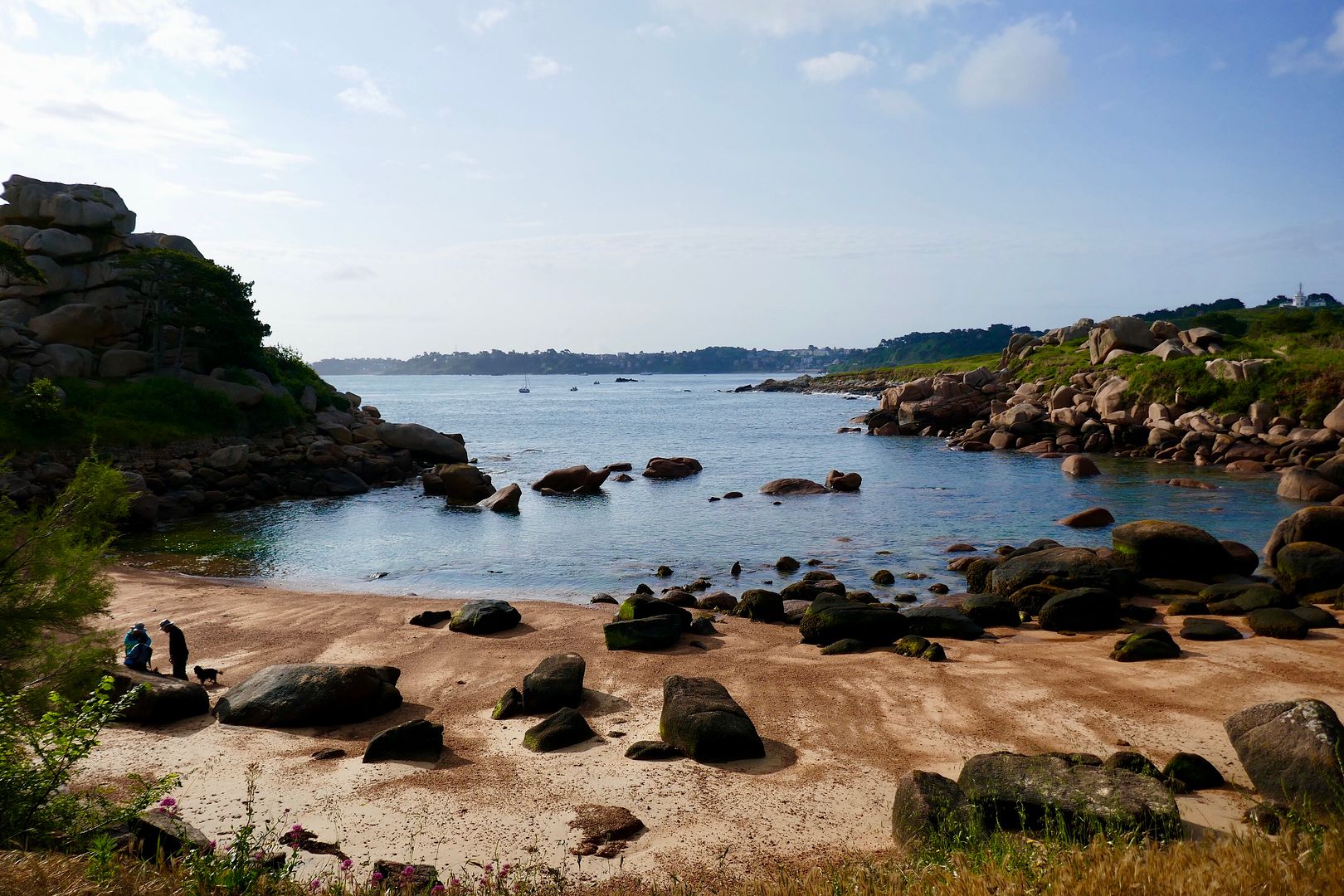
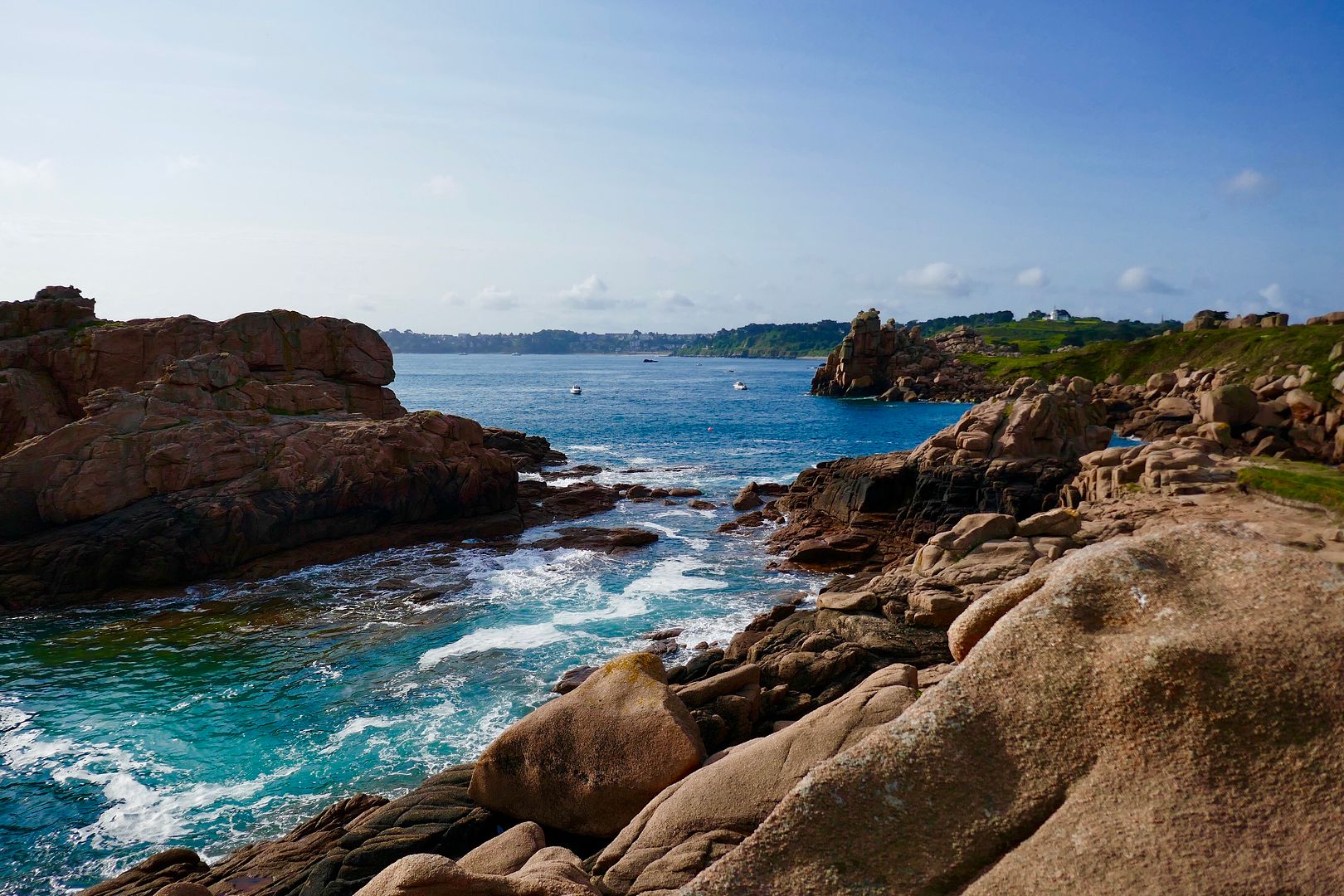
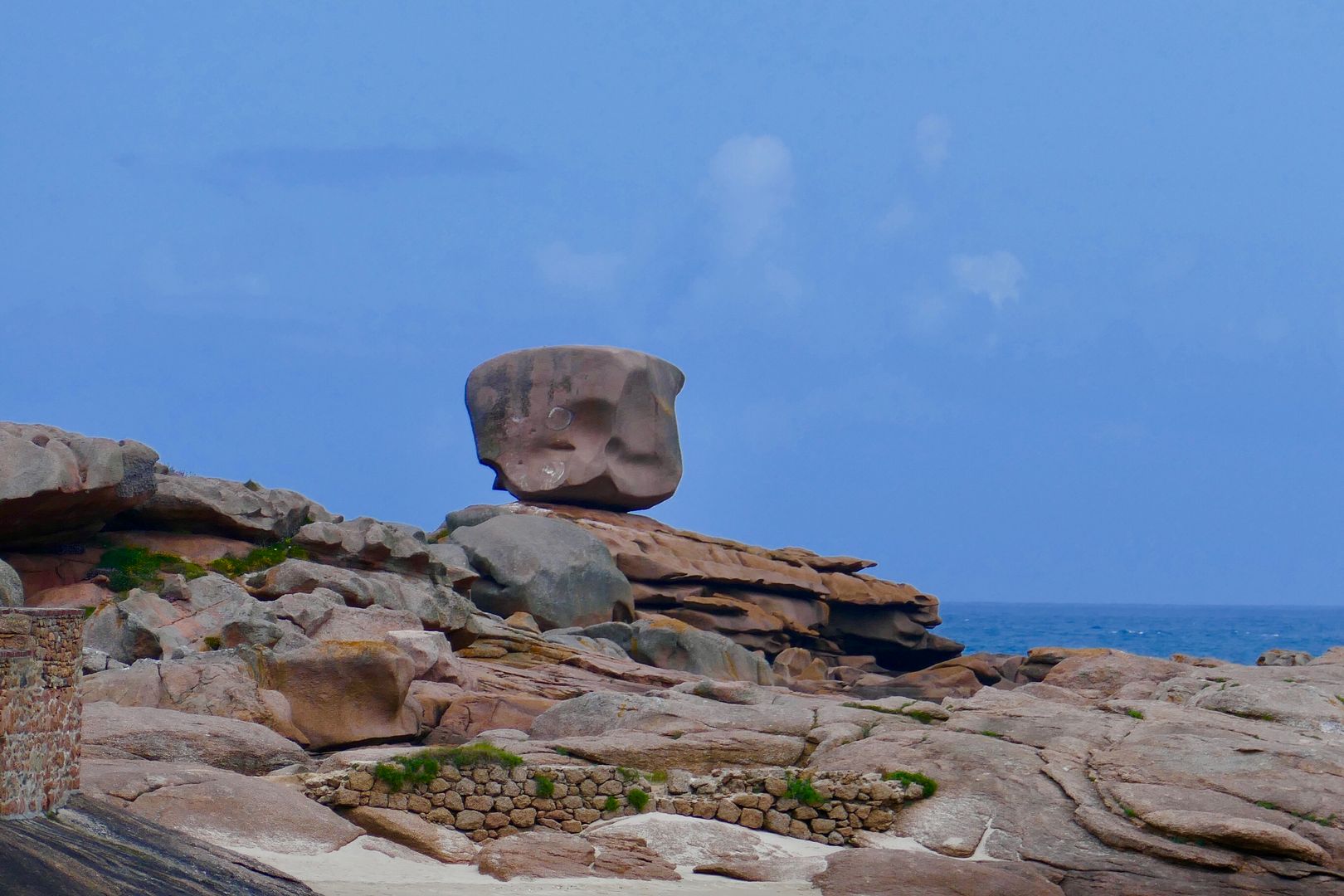
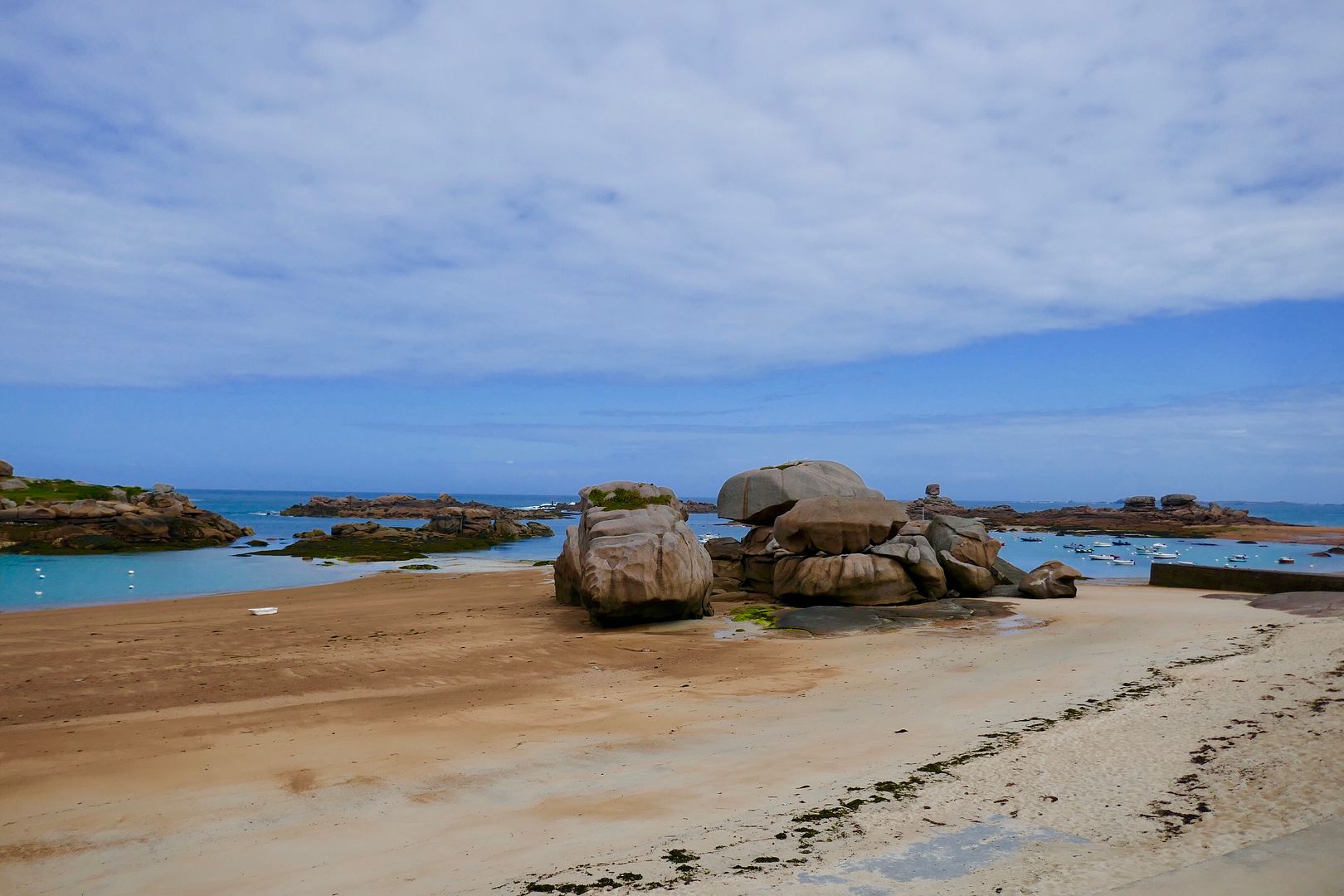
Those granite stones are up to 20 metres high and formed by time and tides in all manner of shapes.
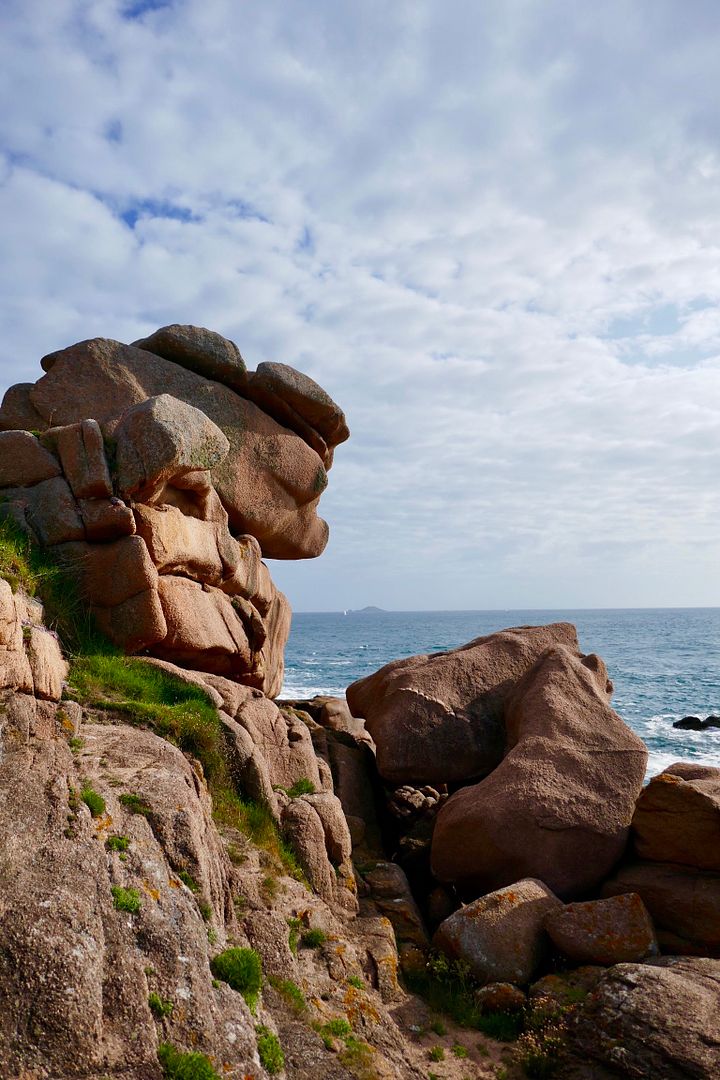
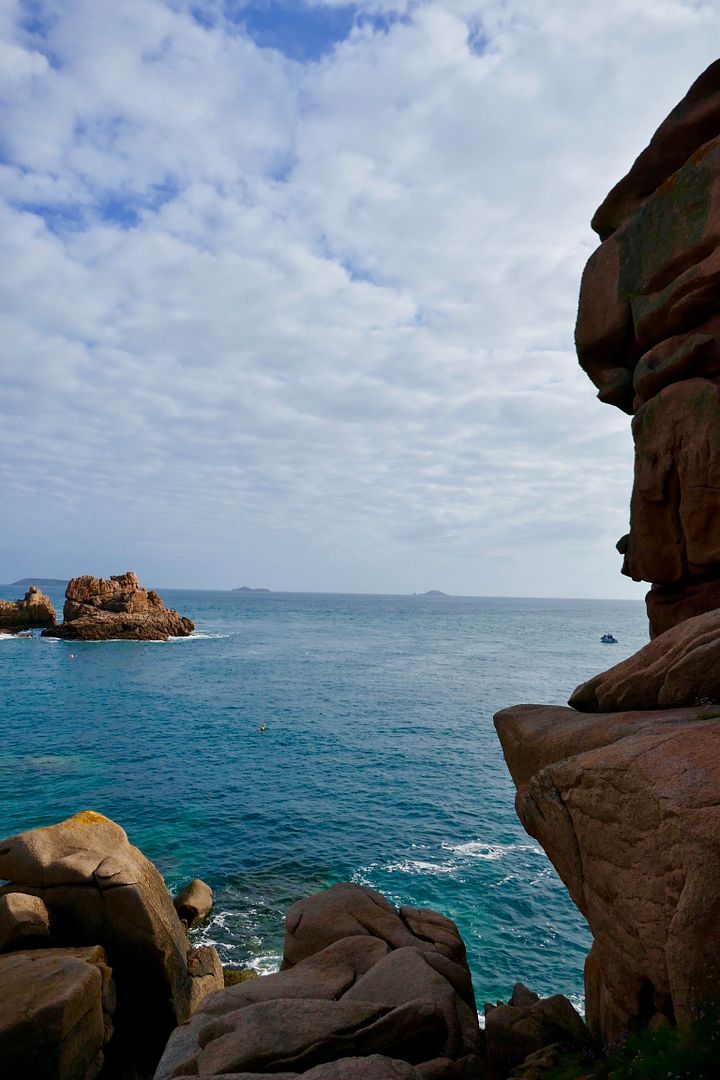
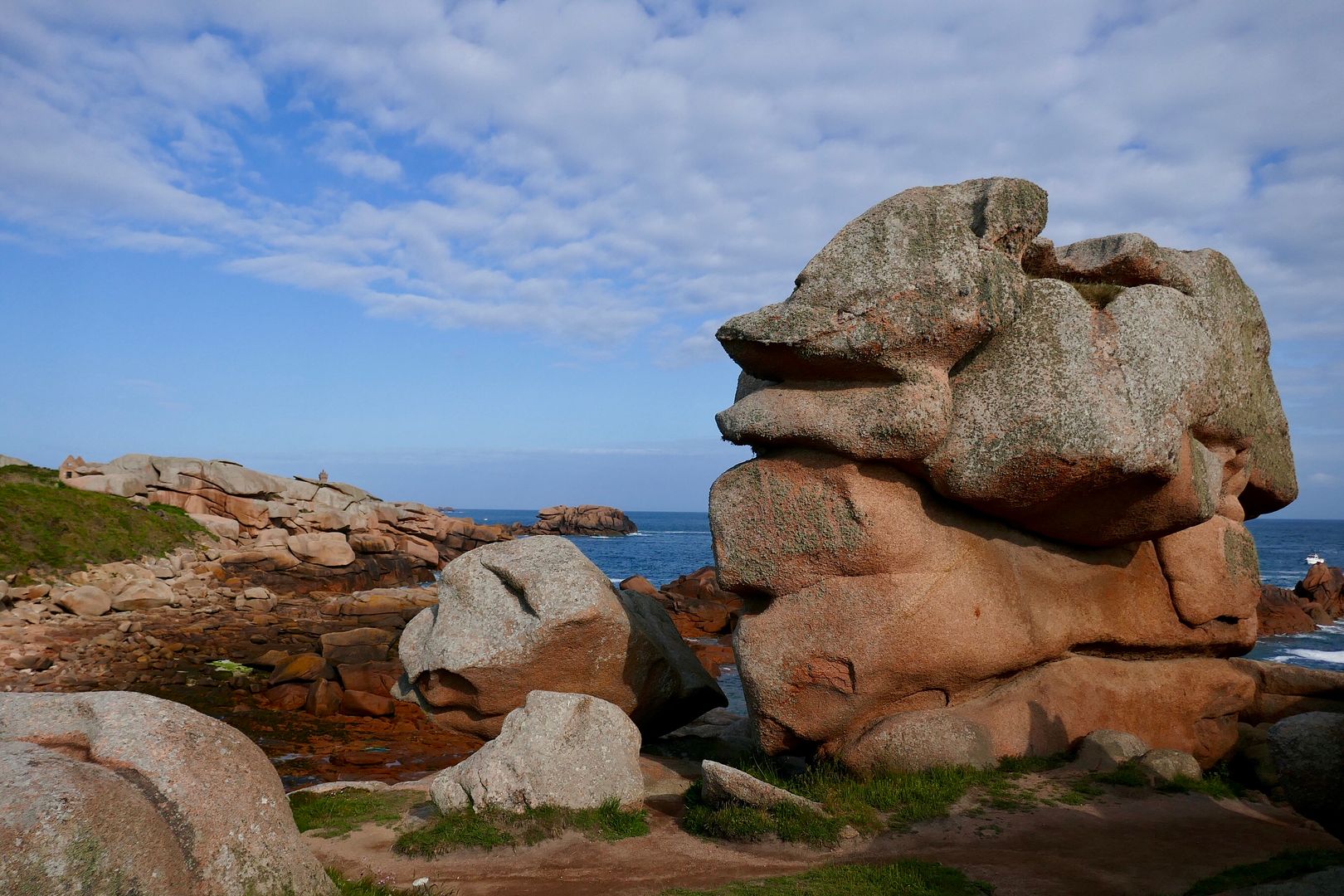
And of course there‘s also a lighthouse.
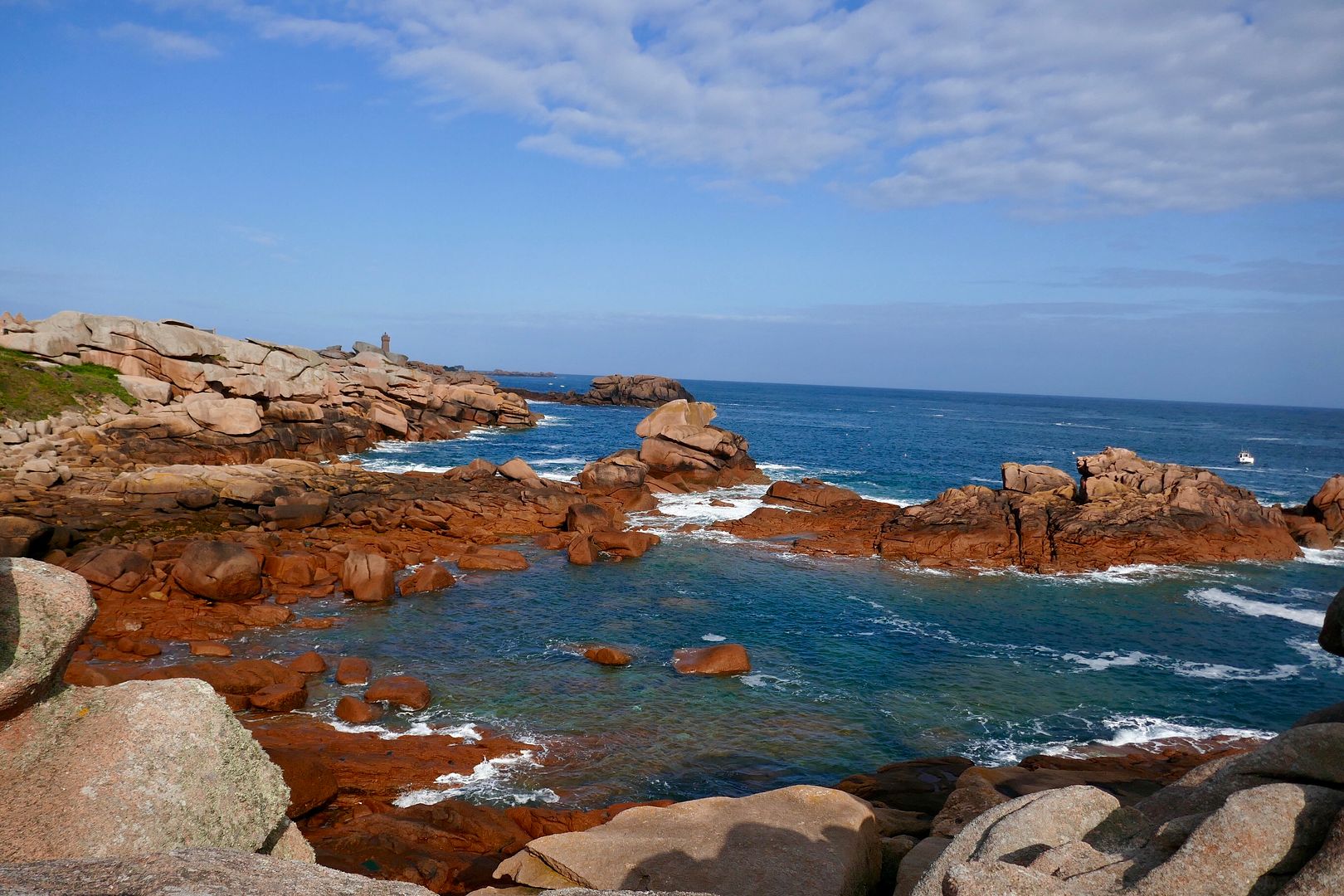
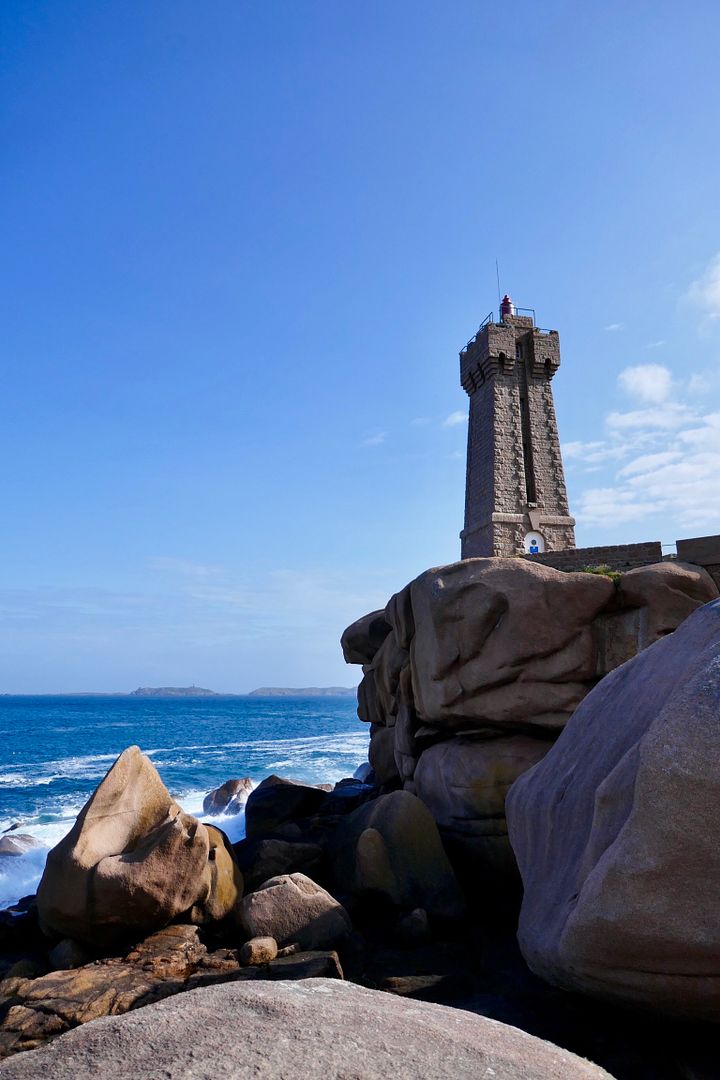
Each bay prettier than the next.
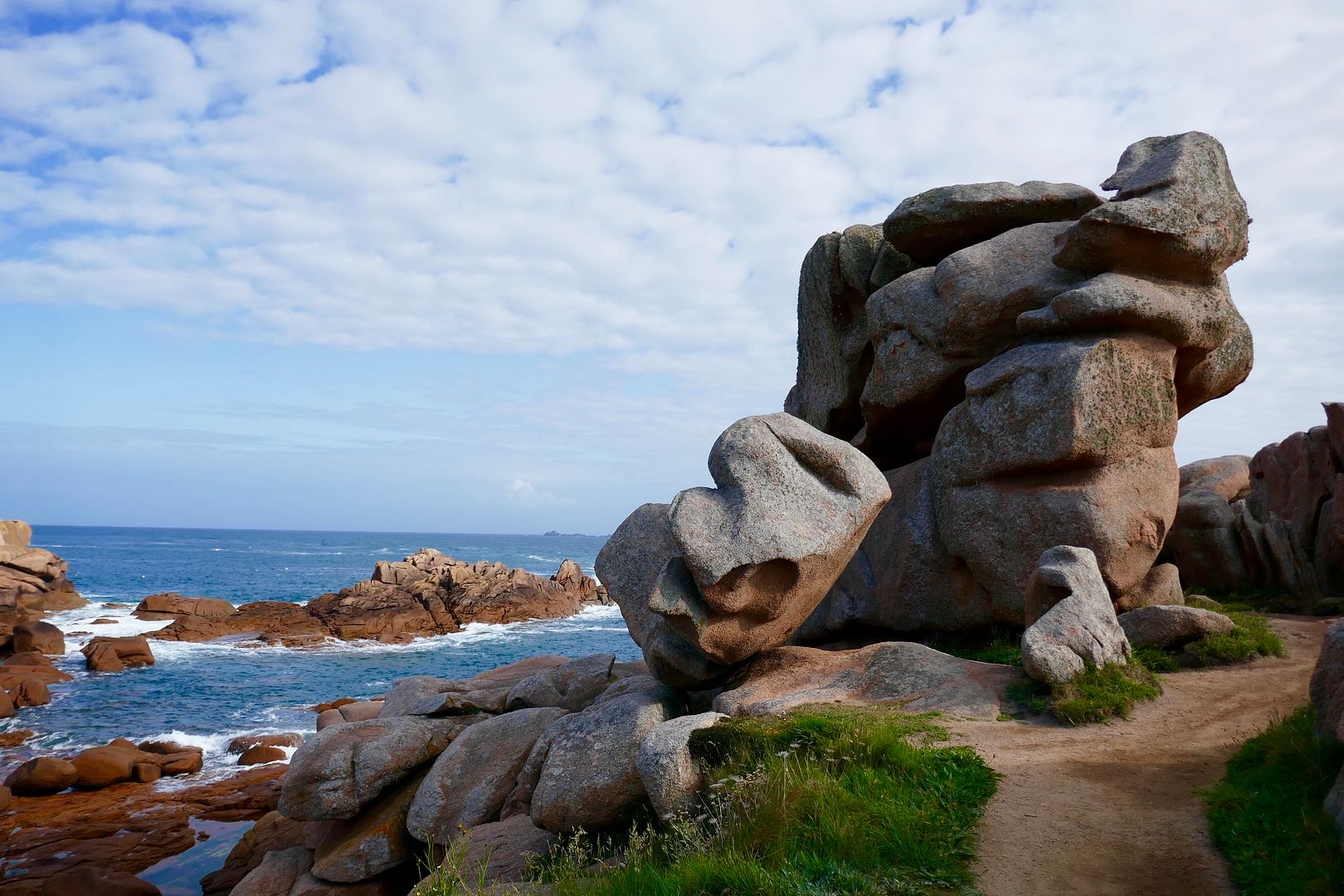
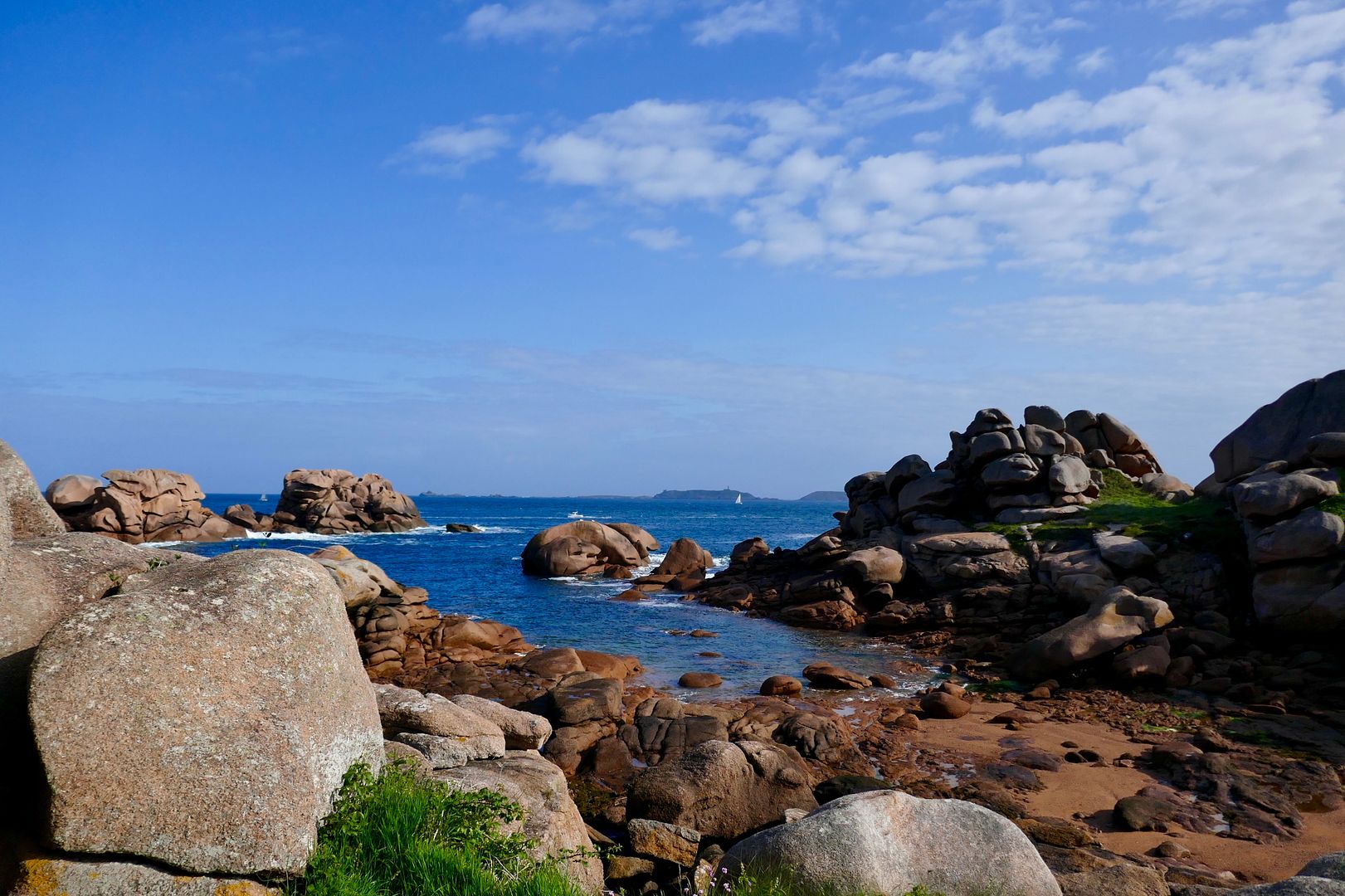
And the entire coast is like this.
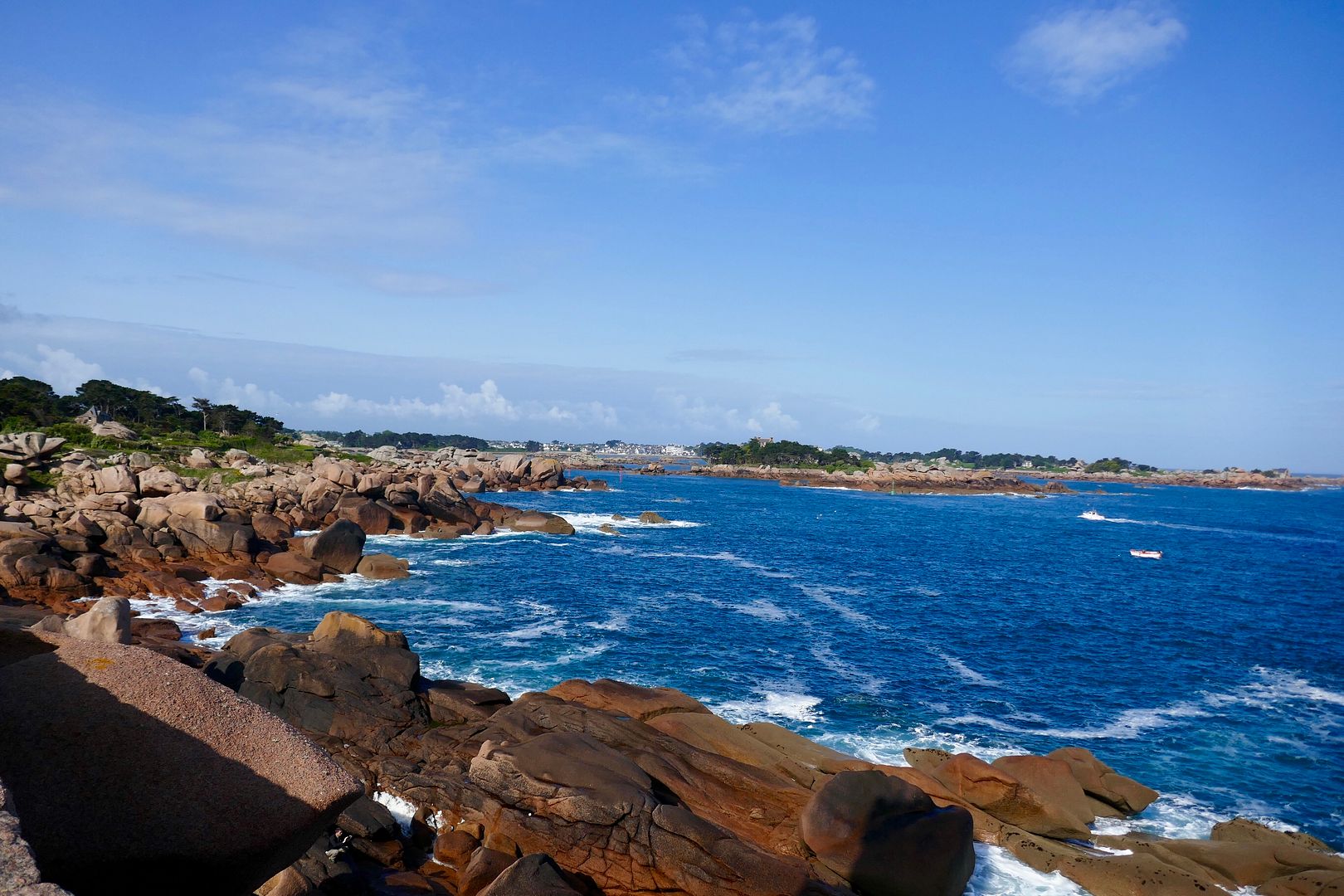
Here were are shortly before Ploumanac‘h.
Harbor of Ploumanac‘h
And Tregastel, complete with detail on a stone which would‘t look out of place in US-American canyons I‘ve visited before:
Since the one downside of the Breton coast is that it is far, very far away from my hometown, I‘m still sitting in the car as I write this, and will do so for many hours to come. The entirety of today is spent by driving back to Germany. And chatting about the wonderful experience we‘ve had these last ten days!

This is Camaret-sur-mer, which started out as a small fishing town and, with the additon of tourism, still is relatively small. It‘s located on the Isle de Crozon.


The main church in Camaret’s harbor is a seaman‘s church,and the interior reflects it charmingly.


There‘s also a tower built by Vaubon in case of evil English attacks. Very similar in design to what Henry VIII was plastering Cornwell with in case of French attacks, I found.

Today‘s visitors are either sailors:

Or they‘re into hiking like yours truly and her APs. There is an awesome trail starting about ten metres from our hotel away leading up to the cliffs to the Pointe de Pen-Hir and further. The other thing Camaret-sur-mer and surrounding villages and towns are sort of known for is that in WWII, a lot of bunkers were built to fight off the Allies (who, as you all know, invaded in Normandy instead). It‘s a bit odd and eerie, walking around ruins of concrete which are leftovers from a spectacularly vicious dictatorship, manned by one‘s countrymen and located in a breathtaking landscape. But the landscape is worth any number of creepy feelings, because:


A somewhat larger town is St. Malo. Famous, among other things, for French privateers such as Robert Surcouf, of whom more in a moment, and for birthing so many successful French seamen in general that supposedly Louis XIV degreed every French Captain had to be a St. Malo man. Today‘s main reason for visiting are the completely preserved town battlements. Of whom you can view sites such as this one, including a sea water swimming pool next to the actual ocean:


As for Robert Surcouf, most successful French

More views from the battlements:


The competition is really tough in Brittany, but all in all, I think my favourite trail to hike was the one we took yesterday, at the Cote de Granite Rose, the coast of pink granite, the „sentier des douaniers“ - the trail of the customers. Because all those small bays just invite smugglers, I presume. We started at Perros-Guirec and walked till Tregastel. And were constantly greeted with views like these at every corner:


Those granite stones are up to 20 metres high and formed by time and tides in all manner of shapes.


And of course there‘s also a lighthouse.


Each bay prettier than the next.


And the entire coast is like this.

Here were are shortly before Ploumanac‘h.

Harbor of Ploumanac‘h

And Tregastel, complete with detail on a stone which would‘t look out of place in US-American canyons I‘ve visited before:


Since the one downside of the Breton coast is that it is far, very far away from my hometown, I‘m still sitting in the car as I write this, and will do so for many hours to come. The entirety of today is spent by driving back to Germany. And chatting about the wonderful experience we‘ve had these last ten days!


no subject
Date: 2019-06-04 08:53 pm (UTC)no subject
Date: 2019-06-04 10:00 pm (UTC)no subject
Date: 2019-06-04 10:37 pm (UTC)Thank you for sharing these -- it brings back fond memories of my own visit to Bretagne way back in 1984.
I visited Bretagne ages ago, when I was a junior in high school. It was during the summer of 1984, for about two months. Stayed with a large French family in one of the small villages - Clohars-Caronet, at least I'm pretty certain that was the name.
It was a foreign exchange program -- and it was meant to help me learn French, except that they don't speak French in Bretagne. Or they didn't then. They speak a combination of French and Gallic, similar to Ireland actually. It wasn't the Parisian French that I had learned.
My French Father had served in France's occupation of Vietnam, and he told me all about it -- in French and some English. I made out about half of what he said. Also, visited a lot of the bunkers you mentioned, one of the islands that you have to take a ferry out to? We rented bikes and biked around it. And drove around most of Bretagne, along with a visit to Mount St. Michel -- which was lovely but also very touristy. One of the highlights was watching John Wayne and Burt Reynolds films in French, and reading Astrex comic books -- they had a lot of them. Also, we would get crepes after church. It was an outdoor Catholic Church. And dip the homemade crepes in coffee.
I loved France.
no subject
Date: 2019-06-05 12:37 am (UTC)no subject
Date: 2019-06-05 10:48 am (UTC)no subject
Date: 2019-06-05 10:49 am (UTC)no subject
Date: 2019-06-05 10:49 am (UTC)no subject
Date: 2019-06-05 03:31 pm (UTC)no subject
Date: 2019-06-05 04:50 pm (UTC)It's similar in the US, I think. I only did the French exchange. We hosted a French student from Paris the first year. She was studying to become a magistrate. I was supposed to go to visit her and her family the next year, but she had a family tragedy and couldn't host me. So at the last minute -- we put in for a new family. I knew nothing about them, and their English wasn't as good, but the experience was in some respects far better. She had been from a wealthy family, and the family I stayed with were more lower middle class and not as highly educated. I corresponded with the Parisian until roughly 1987. But the other family didn't do correspondence.
Where did you do your exchange in the States?
no subject
Date: 2019-06-06 07:38 am (UTC)no subject
Date: 2019-06-06 12:23 pm (UTC)Sounds like a wonderful experience. Interesting that the US exchange student was so disinterested. I wonder if she knew any German? On the way home from France, I traveled with a lot of US exchange students -- who shocked me with their disinterest in the culture. They wanted a vacation -- nice place to stay, great food, romance and fun -- and weren't interested in the culture, learning a language or anything else. All they did was complain on the way home. There were a few, like myself, who loved the trip and the exchange.