Nymphenburg in Spring
Apr. 28th, 2022 06:42 pm![[personal profile]](https://www.dreamwidth.org/img/silk/identity/user.png) selenak
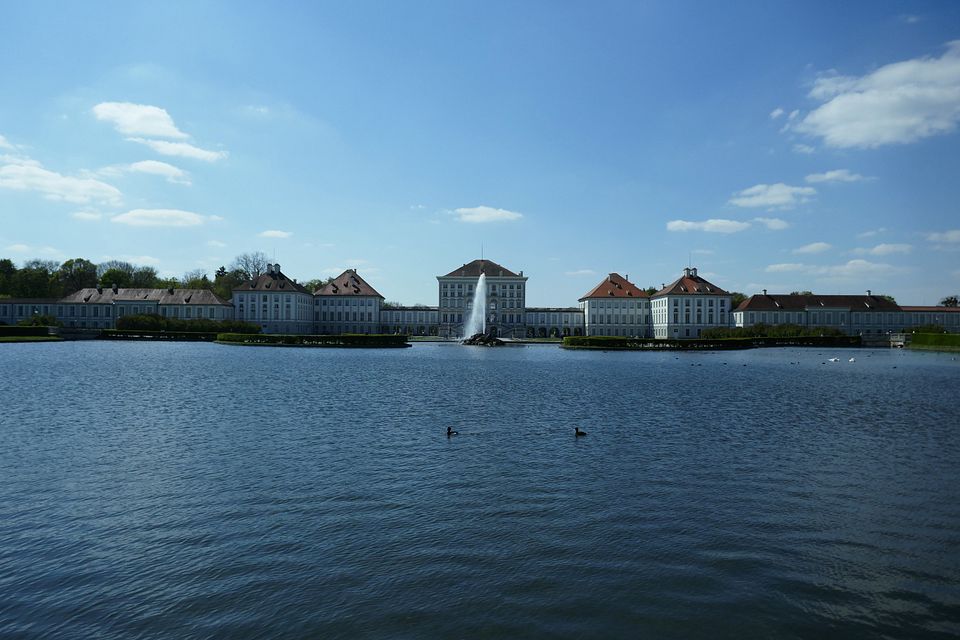
selenakToday's pic spam brought to you by my walking through the park of Nymphenburg whereupon I found that now that it's spring, all the minor small palaces in addition to the big palace have opened their doors for the visitors. And they're just drop gorgeous excessive Rococo, and I felt like sharing. So: here's how the Princes (Elector) of Bavaria lived. (When they became Kings of Bavaria, they mostly chose other residences, for practical reasons. And that was before Ludwig II. got the building bug.) Behold the late Baroque, early Rococo beauty of a Wittelsbach residence. Here's the main building: (On the right side which you can't see on the photo, there's the Nymphenburg porcellain manufactory. In the buildings on the left side, also beyond the picture frame, the former stables, the current Wittelsbach duke has his living quarters. The palaces themselves are state property now.
One more main building detail: there are always swans. I suspect them to have some kind of contract.

Now, the guy mainly responsible for what you're about to see is one Max Emmanuel, or, as he's officially known, Max II. Emmanuel, Prince Elector of Bavaria. He was one ambitious scion of the Wittelsbach family, wanting to break the Habsburg monopoly on the Imperial Throne, with himself, of course, as the alternate candidate for Emperor. To this end, he teamed up with Louis XIV., because hey, most powerful monarch on the European continent, with the largest army, and a feud with the Habsburgs, what can go wrong?
The team up of British forces, led by one John Churchill, Duke of Marlborough, and the Austrian forces, led by Prince Eugene of Savoye, was what went wrong. Marlborough got a nice palace out of it, too, Blenheim, named after Blindheim near Höchstädt, the location of the battle where the Louis & Max Emmanuel team-up was trounced. If you've watched The Favourite, Marlborough is Sarah's husband and the war is the one she wants Anne to continue. Anyway, this was bad news for Max Emmanuel, leading to a few years of exile and Bavaria very much in debt. He got back, though. And did not such a small thing as an indebted country and a lost war stop himself from building and beautifying what he had. Excess was the watchword of the age, after all. Now, the park started out as a hunting park, and there's small wodden pavillion which was originally a hunting lookout, this one:

But it quickly became less about the hunting and more about the relaxing. The main palace being rather large, and mostly there for representation, meant that some small "lodges" were built to actually live in for both Max Emmanuel and his wife. Like the Amalienburg. (Named after the wife, Amalia.) 'This one.

Opera lovers might be familiar with both the outside and the inside of it, because August Everding did a famous production of "Der Rosenkavalier" by Richard Strauss which used the Amalienburg as the basis for the set decoration. No wonder. Here's what Princess Amalia's little retreat looks like inside. First salon:

Antechambre for the lackeys:

All the chandeliers are made of Venetian glass:

On to the bed room, all in yellow.


Moving on:

The sort of ballroom, though we're not calling it that:

With its chandelier:

And absolutely awesome details everywhere on the ceiling, like these:


The salon with all the paintings:

This one is depicting the inauguration of the main Nymphenburg palace:

Moving on to the next salon. You may notice here and everywhere else the fact that Chinese motives were becoming incredibly fashionable in the Rococo age:


My favourite deocration here are the dragons. I very much suspect the design of Fuchur (English name: Falkor), the luck dragon in "The Never Ending Story", which was shot in Munich as well, is based on this Bavarian idea of what a Chinese dragon looks like:

On to the kitchen (because the Electress did not want her dishes to be transported all the way from the main building). It's a mixture of Dutch and Chinese influence in decoration, and all about the porcellain:


Ceiling:

And the kitchen is where you leave the Amalienburg. Here's the backside of it:

Moving on through the park, you get to the Badenburg. This one was for the Prince Elector again.


When he wanted to hang out with his buddies and have all male parties.


Lots of pseudo Chinese wallpapers again. This one, the so called "Ape Room", is the only one where the decoration is in fact the 18th Century original without any restoration. The rest had to be restored because of WWII. This one also has a lot of silver used in the furniture.

On to the next room, which pretends it's marble, but even Max Emmanuel had limits. It's not marble but painted.


Outside again. On the other side of the small lake the Badenburg is set at, there's a pavillion just for sitting and gazing onto the lake romantically.

Nearby on that side of the lake is also the second most beautiful faun of Munich.


However, Max Emmanuel wants you to know he was a spiritual guy as well. To this end, he had built the "Magdalenenklause" - St. Magdalene's hermitage" inside the park, as the retreat he used if he was fealing religious. Only himself and his confessor were allowed to stay there.

So, Max Emmanuel's idea of a hermit's residence with its own chapel, devoted to Mary Magdalene:

The chapel:


Max Emmanuel had himself painted as John the Gospel writer when he was in this mood:

Having made fun of him, I must admit his study in the Magdalenenklause does look a bit austere:

here's the overall buildling again:

Now, the entire park has one big canal in the middle, leading from the backside of the main building to the end of the park, here:

Start of the canal at the main building:

Leaving the park again, and walking away, here's how you see the palace fading:


One more main building detail: there are always swans. I suspect them to have some kind of contract.
Now, the guy mainly responsible for what you're about to see is one Max Emmanuel, or, as he's officially known, Max II. Emmanuel, Prince Elector of Bavaria. He was one ambitious scion of the Wittelsbach family, wanting to break the Habsburg monopoly on the Imperial Throne, with himself, of course, as the alternate candidate for Emperor. To this end, he teamed up with Louis XIV., because hey, most powerful monarch on the European continent, with the largest army, and a feud with the Habsburgs, what can go wrong?
The team up of British forces, led by one John Churchill, Duke of Marlborough, and the Austrian forces, led by Prince Eugene of Savoye, was what went wrong. Marlborough got a nice palace out of it, too, Blenheim, named after Blindheim near Höchstädt, the location of the battle where the Louis & Max Emmanuel team-up was trounced. If you've watched The Favourite, Marlborough is Sarah's husband and the war is the one she wants Anne to continue. Anyway, this was bad news for Max Emmanuel, leading to a few years of exile and Bavaria very much in debt. He got back, though. And did not such a small thing as an indebted country and a lost war stop himself from building and beautifying what he had. Excess was the watchword of the age, after all. Now, the park started out as a hunting park, and there's small wodden pavillion which was originally a hunting lookout, this one:
But it quickly became less about the hunting and more about the relaxing. The main palace being rather large, and mostly there for representation, meant that some small "lodges" were built to actually live in for both Max Emmanuel and his wife. Like the Amalienburg. (Named after the wife, Amalia.) 'This one.
Opera lovers might be familiar with both the outside and the inside of it, because August Everding did a famous production of "Der Rosenkavalier" by Richard Strauss which used the Amalienburg as the basis for the set decoration. No wonder. Here's what Princess Amalia's little retreat looks like inside. First salon:
Antechambre for the lackeys:
All the chandeliers are made of Venetian glass:
On to the bed room, all in yellow.
Moving on:
The sort of ballroom, though we're not calling it that:
With its chandelier:
And absolutely awesome details everywhere on the ceiling, like these:
The salon with all the paintings:
This one is depicting the inauguration of the main Nymphenburg palace:
Moving on to the next salon. You may notice here and everywhere else the fact that Chinese motives were becoming incredibly fashionable in the Rococo age:
My favourite deocration here are the dragons. I very much suspect the design of Fuchur (English name: Falkor), the luck dragon in "The Never Ending Story", which was shot in Munich as well, is based on this Bavarian idea of what a Chinese dragon looks like:
On to the kitchen (because the Electress did not want her dishes to be transported all the way from the main building). It's a mixture of Dutch and Chinese influence in decoration, and all about the porcellain:
Ceiling:
And the kitchen is where you leave the Amalienburg. Here's the backside of it:
Moving on through the park, you get to the Badenburg. This one was for the Prince Elector again.
When he wanted to hang out with his buddies and have all male parties.
Lots of pseudo Chinese wallpapers again. This one, the so called "Ape Room", is the only one where the decoration is in fact the 18th Century original without any restoration. The rest had to be restored because of WWII. This one also has a lot of silver used in the furniture.
On to the next room, which pretends it's marble, but even Max Emmanuel had limits. It's not marble but painted.
Outside again. On the other side of the small lake the Badenburg is set at, there's a pavillion just for sitting and gazing onto the lake romantically.
Nearby on that side of the lake is also the second most beautiful faun of Munich.
However, Max Emmanuel wants you to know he was a spiritual guy as well. To this end, he had built the "Magdalenenklause" - St. Magdalene's hermitage" inside the park, as the retreat he used if he was fealing religious. Only himself and his confessor were allowed to stay there.
So, Max Emmanuel's idea of a hermit's residence with its own chapel, devoted to Mary Magdalene:
The chapel:
Max Emmanuel had himself painted as John the Gospel writer when he was in this mood:
Having made fun of him, I must admit his study in the Magdalenenklause does look a bit austere:
here's the overall buildling again:
Now, the entire park has one big canal in the middle, leading from the backside of the main building to the end of the park, here:
Start of the canal at the main building:
Leaving the park again, and walking away, here's how you see the palace fading:


no subject
Date: 2022-04-28 04:55 pm (UTC)no subject
Date: 2022-04-29 06:09 am (UTC)no subject
Date: 2022-04-29 07:21 am (UTC)no subject
Date: 2022-04-28 05:19 pm (UTC)this Bavarian idea of what a Chinese dragon looks like:
Hee! I think this is my favourite detail. :D
Your photos are excellent, thank you for sharing!
no subject
Date: 2022-04-29 06:05 am (UTC)no subject
Date: 2022-04-28 05:55 pm (UTC)there are always swans. I suspect them to have some kind of contract
Do you know if they were kept there when the palace was built? Or are they a 20th century addition?
That's a lot of mirrors in that ballroom. And more decoration than wall in the bedroom. :P
Bavarian idea of what a Chinese dragon looks like
These are rather cute! The left one looks a bit alarmed, though. :D
A decorated kitchen, huh. I don't actually know what the Palais kitchen looked like, but I feel like this is where Fritz would have stopped...
Love the sunlight falling through the ceiling of the Magdalene chapel.
no subject
Date: 2022-04-28 06:25 pm (UTC)Swans: I don't know, but I wouldn't be surprised if they were originally brought there. Sadly, this very month (April), one of them was murdered by three Tierquäler.
Kitchen: my bet is the one at the Palais was functional rather than decorated as well.
We had a gorgeous day today in Munich with the sunlight. Incidentally, I had never visited the inside of the Magdalene chapel before - and the other small ones only last year. The main palace, I did visit as a teenager and twice afterwards.
no subject
Date: 2022-04-30 07:59 am (UTC)no subject
Date: 2022-04-28 05:58 pm (UTC)no subject
Date: 2022-04-29 06:04 am (UTC)no subject
Date: 2022-04-28 10:09 pm (UTC)A whole lot.
Dayum.
But perhaps placing it in a quiet natural environment is an attempt to balance the TooDamnedMuch with natural beauty?
no subject
Date: 2022-04-29 06:04 am (UTC)It says something about changing times, though, that when Max Emmanuel spent all that money on buildings and impoverished the state accordingly, people put up with it; when Ludwig II. built his fairy tale castles a century later, he was declared insane and deposed.
no subject
Date: 2022-04-29 02:21 pm (UTC)True; I took another look at some of the paintings, and they do have very little to do with the actual natural world.
Your point about changing times is accurate. In fact, I thought about Ludwig II as I read your account of Emmanuel's project, and wondered why he hadn't been hustled off-stage the same way.
no subject
Date: 2022-04-29 02:25 pm (UTC)no subject
Date: 2022-04-29 04:54 pm (UTC)no subject
Date: 2022-04-28 10:20 pm (UTC)no subject
Date: 2022-04-29 05:57 am (UTC)no subject
Date: 2022-04-29 08:44 am (UTC)Fantastic.
Thank you for FANTASTIC pics!
no subject
Date: 2022-04-29 04:23 pm (UTC)no subject
Date: 2022-04-30 07:58 am (UTC)I find it amusing that the hermit gets his own indoor grotto!
no subject
Date: 2022-05-01 05:52 am (UTC)no subject
Date: 2022-04-30 04:50 pm (UTC)no subject
Date: 2022-05-01 07:41 am (UTC)no subject
Date: 2022-05-05 02:51 pm (UTC)no subject
Date: 2022-05-05 03:37 pm (UTC)