Expand Cut Tags

No cut tags
selenak: (Default)
30. Would save if my house burned down.

Well, there goes my secret First Folio. Kidding aside, I think I'd go for a novel my second teacher ever presented to me when I had finished primary school. We had been his first class, and he gave everyone a book as a farewell present, not the same, but a different book for each student, depending on her or his taste, with an individual dedication written by him. I received "Up a road slowly" by Irene Hunt, and here is what I remember about it, not having read it since three decades: the heroine is a loner in love with books and wanting to become a writer. She has a terse relationship with her aunt whom she grows up with after her parents died, originally rejecting her as an humorless spinster, and the reader along with our heroine discovers step by step how fabulous the aunt (named Cordelia) really is. Another interesting relationship is with her uncle (the aunt's brother, not her husband), who is a bit of a slightly more functional Branwell Bronte type (expected to be the brilliant one of the family, overindulged, turns into self destructive alcoholic), who decdes that our heroine is his shot at redemption at some point.

There are also some love interests about, but I don't remember anything about them. Anyway, I loved the book, appreciated that my teacher had picked it for me (the indicated age range on the back was five years older than I was, but Mr. U. knew what else I was reading at that point), and would definitely grab it on my hypothetical way out of a burning house.


The other days )
selenak: (Cora and Rumpel by Hewontgo)
28. Bought at my fave independent bookshop.

My fave independent bookshop was sold to a bookstore chain last year, so, you kow, there's that. Among the many books I did buy there was Isabel Bodgan's novel "Der Pfau" (The Peacock in English), which is an entertaining comedy of manners type of tale about a couple of yuppies who in theory are supposed to do management training and team bonding in a Scottish retreat, while in practice things inevitably go wrong.

29. The one I have reread most often.

Good lord, just one? I honestly can't tell. Also, it depends on my age. 13 to 16 years old me reread The Mists of Avalon a lot, for example, but I don't think I have since then. As a child, I repeatedly read (and loved) The Neverending Story by Michael Ende, and then years passed and I didn't read it, and then I read it repeatedly agian in my late 20s. Plus, chances are I've reread the Grimms' Fairy Tales for different reasons in all decades of my life a lot. And so forth. I honestly reread too many books to tell you which of them I've reread most often.


The other days )
selenak: (Bilbo Baggins)
27. Want to be one of the characters.

I don’t think I ever had that particular urge, not with books, nor with tv shows or movies. Not least because I read a lot of historical novels, and goodness but no. Especially not as a woman. Nor as a privileged man. Thanks, but no thanks; precisely because history is my big passion.

But I haven’t wanted to be a character in contemporary or near contemporary fiction, either, nor in fantasy and sci fi books. Look, even being a Hobbit who doesn’t leave the Shire means you’ll have to deal with the Scouring at some point. Well, I suppose Bilbo had a pretty good life – decades of comfort and books followed by adventure followed by decades of comfort (now shared by young Frodo) and books and just the occasional disquieting sensation caused by the Ring, followed by retirement in Rivendell (gorgeous architecture, more comfort and yet more books and music), and then an ending in the West with Frodo and the Elves. But I wouldn’t have wanted to be Bilbo, either. No way I’d have wanted to wait for decades to follow my inner wanderlust. And I really dislike smoking. In conclusion: no book alter ego for me!


The other days )
selenak: (Ben by Idrilelendil)
26. Should have sold more copies.

“Tiny Pieces of Skull” by Roz Kaveney, that gorgeous, witty, sharp and deeply humane novel which I reviewed here.


The other days )
selenak: (Eva Green)
25. Never finished it.

The Magic Mountain by Thomas Mann. In my defense, I was a teenager who had only just started to learn French, so the fact alone that various characters have untranslated dialogues in it for what I recall as entire pages (maybe my memory is exaggarating?) alone would have put me off. But I also thought the characters were boring, and the plot non-existent. Considering I was under no obligation to read the book, which I had found in my great aunt's library, I put it back and moved on to the next book, the next book being, as far as I know, an Hungarian novel about Liszt.

In later years, I read other texts by Thomas Mann, but I never tackled The Magic Mountain again. Sorry, Tommy. But I've always liked your older brother better anyway.

The other days )
selenak: (Allison by Spankulert)
23. Made to read at school.

Well, a lot of those, actually, but I suspect the question aims at books I probably would not have touched otherwise, so, say, Lord of the Flies is out. (That was the first book-ordered-by-school which I not only read but read immediately because kid!me was stunned, shocked and thrilled; I was just at the right age to recognize a lot of the school story/stranded on an island patterns turned upside down.) Well, there was no book I had actually hated while reading. I mean, I wasn't too keen on Hermann Hesse's Unterm Rad, which is very depressing (student's spirit is systematically crushed by school and society), but also very short. After having to write three essays in a row about Homo Faber by Max Frisch (you might have seen the film version, titled Voyager in English, starring Sam Shephard as the world's least likely native of Switzerland) for my various younger relations (come on, you're the one who is good at literature! etc.), I was heartily sick of the book, but I was okay with it before that.

Oh, I know! Something from my university days. Die Angst des Tormans beim Elfmeter by Peter Handke. (English title: The Goalie's Anxiety at the Penalty Kick.) Had to read it for a seminar on German literary mystery novels. Hated it on sight, never stopped hating it. Dreary dreary dreary, awful characters, and it put me off Handke long before he started fanboying Slobodan Milosevic.

24. Hooked me into reading.

No such thing. As in: since I had loved the books my parents and grandfather read to me or told me stories from during my early childhood, I started reading as soon as I could. Karl May's Winnetou (first volume) was one of the earliest books I read, sure, but not the only one, and I can't say it made me read more than any of the others, though I certainly imprinted on it in other ways. (Apaches good, white settlers not so much, drunken cowboys are the worst, enemy-to-best-friend stories rock, and so forth.) But given I had enjoyed hearing the stories so much, there was never any question to me as to whether or not I would also enjoy reading them.


The other days )
selenak: (Porthos by Chatona)
There is a fantastic new MCU vid, Lions Inside, which also uses the most recent movies, Black Panther, Thor: Ragnarök and Infinity War:


Now, on to the book meme:

21. Summer Read

Why not try the first of the Order of the Air novels by Jo Graham and Melissa Scott, Lost Things? For me, each of them are a great summer read, but it does make sense to read them in chronological order. The 1920s, aviation, archaelogy, adventures of the "normal" and of the supernatural type, and an endearing ensemble of characters who make a found family/team that's still in the getting-together stage at this point.

22. Out of Print.

Guy Endore: The King of Paris. (At least Amazon here tells me it's out of print?) Which is a novel about two of the three Alexandre Dumas, though the first one, the general, gets the three opening chapters before finding his early and sad demise. The two Alexandres at the core of the novel are Mr. Historical Swashbuckler, the author of The Count of Monte Christo and The Three Musketeers, and his larger-than-life personality comes across vividly in the novel, and his son of Lady of the Camelies (aka La Traviata) fame. You could call it a comedy and a tragedy at the same time, immensely entertaining and yet also very aware indeed of the flaws as flaws. Considering the more recent biography of the first Alexandre, the general (son of a black slave and her white French owner) , might have reawakened interest in the Dumas family, I hope it will be republished at some point. If not - check out your local library!

The other days )
selenak: (Default)
20. Favorite cover.

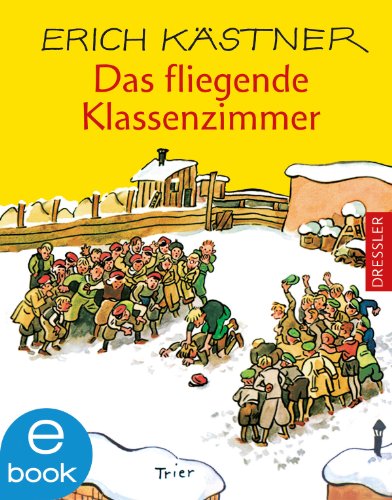
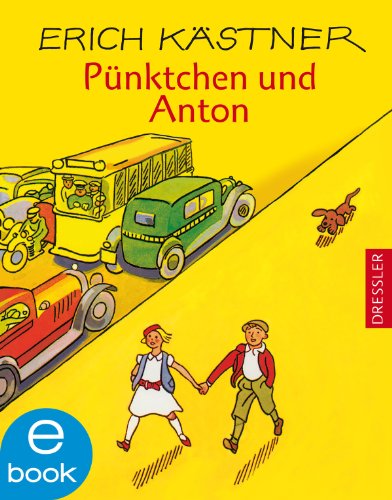
One of them, anyway, since I can’t narrow it down to only one. But here’s the original cover of Erich Kästner’s Emil und die Detektive. Pure 1920s and Neue Sachlichkeit, but also playful, and the look remained associated with Erich Kästner novels for decades to come. The cover was created by Walter Trier, who as opposed to Kästner did go into exile and died there.

 photo images/I/51nOiStG7lL.jpg

More Trier covers for Kästner I’m also fond of: Here’s Das Fliegende Klassenzimmer, and here Pünktchen und Anton.


The other days )
selenak: (Young Elizabeth by Misbegotten)
19. Still can't stop talking about it.

The Matthew Shardlake series by C.J. Sansom, the so far last installment of which I reviewed here. Among my favourite historical mysteries. It captures the way Tudor England was experienced by the general population in a way hardly any other does (since the others tend to focus on royalty and/or some top courtiers), the ever present paranoia, how today’s dogma could be tomorrow’s heresy and vice versa, how deeply all relationships (friendships, family) etc. were split and affected as well. Our detective, lawyer Matthew Shardlake (and you learn a lot about the low in Tudor times as well in these books), makes for a sympathetic main character, the regular cast of characters that keeps returning in the novels is built up with care and fleshed out, the portraits of the historically famous, when they show up, are believable, and Sansom manages to keep even (most of) the villains he dislikes human. By which I don’t mean that their actions are excused, but that there are moments of pity for many of them.

The other days )
selenak: (Amy by Calapine)
18. Bought on a recommendation.

Most recently, the Neapolitan Quartet by Elena Ferrante, review by yours truly just linked. One of my favourite bookstore people in my hometown was wild about it, and she was right to me. Also, I usually go for audio versions solely after having read it in print (or kindle, as the case may be); in this case, it was the other way around, because I had heard an excerpt of Eva Mattes reading the German translation, which she did beautifully, and since the audio version was a complete one, I went for it.

The other days )
selenak: (AmandaRebecca by Kathyh)
17. Future classic.

The Raphsody of Blood series by Roz Kaveney. To steal the description I gave in one of my previous reviews of it: this is a brilliant series of fantasy novels with a cast almost exclusively consisting of LGTB characters, which somehow manages to walk the tightrope between mythic/epic and intimate/modern. There are two distinct narrative threads through the entire story: one set in present day, told in third person, with Emma Jones and her girlfriend and partner Caroline as the main characters, as they become embroiled in supernatural shenanigans ranging from having to play bodyguard at an annoying elf/vampire wedding to full scale battles between deities and master the challenge with an ongoing refusal to be impressed and a tendency to quip, not to mention compassion for the victims of all these events. (Of whom Caroline is one; she dies at the start and is a ghost from then onwards. This makes her love life with Emma somewhat tricky, but not impossible.)

The other narrative thread is told in first person by Mara, aka the Huntress, and moves through the millennia, not in chronological but in thematic order. Mara, as opposed to Emma and Caroline, doesn't have much of a sense of humor, but what she has is dedication to one specific goal: hunting down and making short work of any being who made themselves into a deity by using "the rituals", blood sacrifices, and protecting the people suffering from the fallout, but note she's called "Huntress" not "Protector". Quite how the two narrative threads are intertwined (beyond the fact that at the start of the saga, Mara shows up in the present a bit too late to save Caroline, dispatches the entity who killed her, kisses a distinctly unimpressed Emma and disappears again) becomes more and more clear as the story goes on, and here we get into the trickiness of spoiler territory and not wanting to ruin the careful build up. I'll try my best.

Mara is such a force of nature that one of the most impressive feats is that our author manages to keep her sections suspenseful because she's more or less undefeatable in combat. But she can be tricked and incapacitated (something Robespierre manages in volume 2, for example), she can make errors of judgment (happens several times, with the most long term consequences happening in vol.1. and vol.3.), and above all, the people she cares for through the millennia are vulnerable. Moreover, some of the opponents the story gives her are truly impressive (every hero needs some good villains), and the friends she makes very endearing, so one desperately fears for them and is incredibly relieved about those who end up well (not all do).
In conclusion: read it now, be able to say you were a reader of the first hour later!


The other days )
selenak: (Redlivia by Monanotlisa)
16. Can't believe more people haven't read.

Well, it’s not that it’s utterly unread, but Armadale by Wilkie Collins has become something of a forgotten classic. I mean, Collins in general with his „Dickens‘ trashier pal“ reputation is due for a renaissance, but The Woman in White never got out of fashion, Moonstone has the „first modern detective novel“ market cornered at least, and Armadale is my faaaaaaavourite, and thus I’m choosing it for this reply. My main reason for loving it is its redhaired, clever and snarky villainess/anti-heroine, Lydia Gwilt – not for nothing did Wilkie C. call the theatre version of his novel which he distilled from it „Miss Gwilt“ -, but it has other virtues as well. It’s the „sensation novel“, the Wilkie Collins genre per excellence, in fine form: dastardly, complicated intrigues, doppelgangers, complicated murders, hair-raising escapes, sarcastic dialogue, and ample text and subtext for unusual living arrangements. If you’re into m/m, well, two of the novel’s four Alan Armadales whose father were arch enemies swear themselves best friends instead – love across a family feud, only with a happy ending, no less – and are devoted above and beyond.
But, as mentioned, my main reason for adoring this book is Lydia. Who is introduced in classic Victorian villainess fashion in the first part of the novel – red hair, up to no good, the reader though not the blond and none too bright Alan Armadale deduces instantly she’s identical with someone he’s been warned about as she seduces him away from his love interest whose governess she is – but then we get Lydia’s journal excerpts and some of her letters, and her first person narration is so engaging in its sarcasm and vivacity that she takes over the book. It’s impossible not to root for her instead of Team Armadale. She also has those quintessentials for villaindom turned into anti-hero-ness, a horrible past from early childhood onwards, a drug habit (like her author and a great many 19th century types, Lydia is into various opiates) and true love for one of the virtuous characters (the dark haired and smarter of the Alan Armadales, going by the nome de plume of Ozias Midwinter). To the great indignation of some contemporary critics, she gets to keep her beauty, her red hair and gets an heroic if tragic ending. I requested her once for Yuletide and got not one but two stories about her, one of which has her having faked her death and having adventures elsewhere, which made me profoundly happy.

The other days )
selenak: (Pumuckl)
15. Favorite fictional father.

Ah, literary Dads. (It says "fictional", but this is a book meme, and thus all tv and movie only fathers are excluded.) My problem here is that I'm not sure at what, exactly, the question is aiming at. Because I can think of several characters I like a lot whose being parents is an important part of their characterisation, yet who are plainly terrible at fatherhood. And I have a feeling the question is going for beloved fathers who actually are good for their offspring.Or maybe not. So I shall try to provide answers for all criteria.

A sidenote first: I read To Kill A Mockingbird too late in life to have imprinted on the book. I mention this because I have the feeling Atticus Finch gets named a lot as a candidate for being both a good father and a memorable character (not a common combination in books). It probably says something about me that it took the Go Set A Watchman, the raw sequel/prequel, to make me somewhat interested in that particular father-daughter relationship.

On to my candidates: First, terrible fathers who nonetheless are favorite characters: Spoilers for American Gods the novel ensue )

Fathers who are doing their best at being a father but can be failboats as a person anyway: I'm stretching the definition of "fictional" here, but Theodor Fontane's version of his father Louis in Meine Kinderjahre is just my favorite for this. (Also, it's the original for a great many Fontane characters.) Now Fontane, aka one of the justly most famous German late 19th century novelists, is regarded as THE fictional chronicler of Prussian society. And yet his portrait of father Henri Louis Fontane is absolutely anti-cliché when it comes to the popuplar image of Prussian fathers. Louis is charming, loving, a fun parent, and his gift for gab - he's a raconteur , as his contemporaries who lived when German had far more French words, put it - is obviously one that passed to his son Theo. When Louis has to do the expected fatherly thing of importing moral lessons (tm), he'll tell you an anecdote about Napoleon and his marshals instead because he thinks these are more fun. (His favourite was Ney, [profile] amenirdis.) At a party, he has no problem making deliberately a fool out of himself as long as it ensures boredom doesn't set in. He's also an incorrigible gambler, which means he loses the pharmacies he has (he's an apothocary by profession), one after the other, and it destroys the relationship with his wife who also hates that she has to be the stern, punishment dealing out parent to Louis' fun parent. (Something adult Theo understands but child Theo didn't.) Said wife is the one who has to cope with the worries of what will happen with the kids after yet another bankruptcy, because she can't share the "something will come up" optimism, and is cast as the joykiller by the kids for her trouble. (Irony of fate: Theodor Fontane to some degree replicated this dynamic in his own marriage - not by gambling, but by deciding to become a full time professional writer. Which in the late 19th century was no safer economic choice than it is today.) Anyway, the portrait of his father is drawn with much affection but also with the clarity of hindsight, and said father certainly is one of the most memorable and compelling Fontane characters, and a personal favorite of mine. (Footnote: if you're wondering about the French names, both of Fontane's parents were descendants of French Huguenots who emigrated to Prussia after Louis XIV had revoked the edict of Nantes.)

Fathers who are good fathers and good people: here my favourite is a father figure, not a father. It's Meister Eder from the German children's novel (and radio play, and tv) series Meister Eder und sein Pumuckl by Ellis Kaut. (This series actually started as radio plays, then she wrote the novels, then eventually it was filmed.) Eder is a carpenter living in Munich and at the start of the story a goblin becomes stuck in his workshop by accident, and thus visible to Eder. This is Pumuckl, the red-headed guy from my icon. By goblin law, Pumuckl now has to stay with Eder, and essentially is an unruly, anarchic child to Eder's kind but set-in-his-ways dad. The charm of the novels lies in them adjusting to each other and complimenting each other in their very opposite natures. Eder, most memorably played and voiced by Gustl Bayrhammer, is a Munich craftsman fond of his beer and his quiet life and yet despite himself absolutely charmed by having this bit of magic in his life; he also makes even Bavarian-despising North Germans like at least this particular Bavarian. (Ellis Kaut herself was literarly a Münchner Kindl, a child of Munich.) Getting adopted by Meister Eder: definitely a dream fate for a great many German kids through the generations.

The other days )
selenak: (Illyria by Kathyh)
14. An old favorite.

Child of the Morning by Pauline Gedge. This was the novel which introduced me to Hatshepsut, female Pharaoh of the 18th dynasty. The internet tells me it was originally published ca. 40 years ago (gulp! Because while it took probably some years to get translated into German, I did read the hardcover German edition), and it's been a while since my last reread, but this was and remains one of my favourite historical novels.

Hatshepsut is an engaging heroine, unapologetically brilliant but not above compromise if she has to. Rare for a historical novel featuring a queen, her main love interest, the architect Senmut - who builds the famous temple of Deir-el-Bahri for her and also becomes her high steward , is not given modern issues re: their power differential. Gedge also manages to make it believable she can't bring herself to kill her stepson/nephew, even though she's aware he'll eventually destroy her. The last part of the novel always managed to reduce me to tears whenever I read it, and I don't cry easily.

Subsequently, I read a lot of Pauline Gedge's other novels - she returned to ancient Egypt frequently in her fiction - and wihle I like a lot of them, this one remains my firm favourite. What's true for all of them, though, is that she manages to conjure up an Egypt which feels (to this interested laywoman who has read a lot but has not studied the subject) genuine and plausible, not a contemporary story in nice costumes. (For example, no one blinks at the incestous marriages which are the norm for Egyptian royalty. There is no "as you know, Bob" scene explaining this; it's part of their world.) I also read other fictional takes on Hatshepsut, by good authors, by mediocre authors, but again: this remains my favorite.


The other days )
selenak: (Bardolatry by Cheesygirl)
13. Makes me laugh.

Her Majesty's Will by David Blixt, which I have reviewed here. As I said, hands down one of the most enjoyable books I've ever read, in which young Shakespeare inadvertendly gets entangled in a (historical) spy plot, flirts with Kit Marlowe (textually, no subtext about it) and the author includes even a few neat put-downs to Oxfordians while he's at it. It's a glorious and very funny romp of an Elizabethan adventure.


The other days )
selenak: (Camelot Factor by Kathyh)
12. I pretend to have read it.

War and Peace, occassionally. I'm shamefully ignorant (in the sense of actually having read the books, as opposed to general cultural osmosis) of the Russian classics anyway, and for some reason, I never got around to War and Peace. I did see both the Hollywood and the more recent tv series version, but it's definitely on my "must read before I die" list.


The other days )
selenak: (Claudius by Pixelbee)
10. Reminds me of someone I love.

I had a younger brother who died when he was 16. We were in some regards quite different, including books - I was always trying to get him to read, with tactics including reading books he liked and stopping at a cliffhanger, for example. And in the year he died, he discovered for the first time books on his own, which I hadn't read first, and which he loved and wanted to share with me, instead of the other way around. Since he'd also just discovered fantasy role playing, these books were the Dragonlance Chronicles by Margaret Weis and Tracy Hickman. This is why I can't think of them objectively; I can't not associate them with him, and his excited "you must read these" ramble.

11. Secondhand bookshop gem.

Robert A. Caro's The Years of Lyndon Johnson volumes had been recced to me as some of the best political biographies ever by various sources. Each volume weighs a ton, but it just so happened that one of the two English language bookstores in Munich, the one only offering second hand books, had the set pretty cheaply. They were as great as advertised.


The other days )
selenak: (Hurt!Doctor by milly-gal)
9. Film or tv tie-in.

Most of these I own hail from the late 80s and early 90s and are Star Trek novels; some of said novels have imprinted enough on me to become part of my inner headcanon (Caroline Cowles “The Pandora Principle”, for example, and thus Saavik as half Romulan, with huge issues about it).

Fanfiction has largely, but not entirely supplanted my desire to acquire professional tie-ins. The latest one I bought, just a few weeks ago, was Stephen Moffat’s noveliisation of his big anniversary of Doctor Who special, The Day of the Doctor, motivated by an enthusiastic review I’d seen. And indeed Moffat, in addition to including the “Night of the Doctor” webisode (Trobadora, you might be relieved to know that the potion the Eighth Doctor receives pre regeneration is just a placebo, it’s the Sisterhood of Karn providing a psychological ploy so he gives himself permission to become the War Doctor), also gives us lots of fleshing out and more material. Thus the novel version of the tale includes River Song (turns out she did meet the Tenth Doctor a couple more times post-Library - for him, of course not for River - and was the one to send him on a Zygon quest), and some wonderful and touching Kate Lethbridge-Stewart memories of her father, the Brigadier. Also, while Elizabeth I in the special is basically Queenie from Blackadder, the version from the novel is a smart woman throughout.

Moffat’s writing reflects that this is the Doctor remembering the same events in several (I advisedly do not use the word “three” here) versions, that he’s the same individual at very different stages in his life; that’s true for the tv special itself, but here it’s also conveyed stylistically. Lots of new gags (the Doctor remembers being colourblind in his first two incarnations), and one altered one where the alteration says something about the difference a few years can make. In the tv special, at one point Kate says to Clara, re: why the Brits would never allow the US to get their hands on something enabling time travel - “You’ve seen their movies”. In the novelization published this year, Kate says “you’ve watched their news”.

The book is dedicated to John Hurt, and the descriptions of his voice are one last burst of fannish admiration. Which I share. Numbering issues not withstanding, I’m glad he got to play the Doctor before leaving us. All in all, this particular tie-in is truly a great example of what a media tie-in can be - not limiting itself to repeating what was already said so well but adding depth to the picture.


The other days )
selenak: (Peggy Carter by Misbegotten)
Had a frightfully busy last two days, which is how I feel behind on the book meme. On the bright side, being on my feet all of Saturday meant I didn't gnaw on my fingers waiting for the [community profile] ssrconfidential collection to be opened. ;) Which it now is! 42 new Agent Carter stories (or vids, or icons) await you here! Enjoy. I'm certainly planning to. The story I received as a gift was this one:


A New Arrangement (3539 words) by Anonymous
Chapters: 1/1
Fandom: Agent Carter (TV)
Rating: Teen And Up Audiences
Warnings: No Archive Warnings Apply
Relationships: Ana Jarvis/Edwin Jarvis, Edwin Jarvis & Howard Stark, Ana Jarvis & Howard Stark
Characters: Ana Jarvis, Edwin Jarvis, Howard Stark
Additional Tags: Pre-Canon, World War II, Canon Jewish Character, Female Jewish Character, Marriage
Summary:

Edwin and Ana love each other, and they're grateful to Mr. Stark. But there are still a lot of details to figure out in their new life.


It's a lovely take on the early days of these three living together, and I'm pleased as punch about my present. On to the book meme:

7. Forgot I owned it

Christopher Clark: The Sleepwalkers. This is no reflection on the book, which I still haven't read - I got it as a Christmas present some years ago and forgot to take it with me when I went back to Munich from Bamberg after the New Year. Then, my father borrowed it and forgot to put it back in my room. And then it fell out of my mind that I had it by the next time I visited my hometown. I was reminded only during a recent visit.

8. Have more than one copy.

A lot of classics which I needed during my university days, from Ovid to Feuchtwanger, whom I wrote my thesis about. I have cheap paperback editions full of markers and broken spines, and I have more solid editions to read for pleasure.


The other days )
selenak: (Avalon by Kathyh)
6. The one I always give as a gift.

My first impulse is to say that there is no such thing. Because I regard books as highly subjective and individual gifts. You have to at least have some idea of the taste of the person you're giving the book to, and thus it really varies.

This said, here are two books I've chosen as presents repeatedly:

Tausend Peitschenhiebe: Weil ich sage, was ich denke", which is a collection of Raif Badawi's blog entries translated from Arabic into German. I think there's an English translation, too, by now. Raif Badawi is the blogger from Saudi-Arabia condemned to a thousand lashes, and while this story went around the world, few people knew what he'd actually written, due to lack of familiarity with his language. This collection set out to remedy this somewhat (and also to help providing his wife with something of an income), which is why I both bought it and handed it out as a present.

Haroun and the Sea of Stories by Salman Rushdie, which is still my favorite of his novels. It's one of those books for children which work for any age. I first came across it via a library loan and was so charmed I immediately bought it, and presented it to various younger and older friends.

The other days )

Profile

selenak: (Default)
selenak

January 2026

S M T W T F S
    1 2 3
4 5678910
11121314151617
18192021222324
25262728293031

Most Popular Tags

Syndicate

RSS Atom

Style Credit

Page generated Jan. 5th, 2026 10:08 am
Powered by Dreamwidth Studios