Expand Cut Tags

No cut tags
selenak: (Avalon by Kathyh)
[personal profile] hannah asked: I'd love to hear you talk about assorted public transportation options you've taken while traveling, both domestically and internationally, and whether or not any stuck out to you for any reason.

Domestically: Well, it's practically a German cliché to complain about Die Bahn, but the truth is that while it truly is in a bad state, due to sixteen years of conservative ministers of transport defining their office as "lobbying for Mercedes, BMW and Audi" and endlessly delaying necessary repairs of the railway system, I still consider our public transport system my favourite way to travel within Germany. Both the trains, and in cities the busses and streetcars and underground trains. In most cases, it's possible to reach any given destination by train and from the railway station by local public transport. And one great invention that was added in, I think, the second Pandemic year, was Das Deutschlandticket, meaning a ticket you pay per month and which you can use for all public transport within Germany that is not - forgive me using now traumatizing initials - ICE or IC. (ICE in Germany means our fastest trains, to put it simply. ICs are second fastest trains. Both are the type of trains which can bring you from Munich to Berlin in less than five hours.) Which means that if, say, you live in Munich like me, and go to a conference in Hamburg, you do not have to buy extra tickets to use the public transport system in Hamburg, you can simply use your Deutschlandticket . Very neat indeed.

Anyway, the terrible state of our railway system means that currently practically every second long distance train is late, but there are a lot of them, and you do get notified at least an hour before the supposed departure of your train, so you can, using the Bahn app,, easily find a replacement connection. Well, most of the time. Not that people without a mobile device and internet access are screwed, and the are still a considerable part of older folk for whom this is true. Yours truly, in her fiftyseventh year of life, does not have this problem and thus can navigate the perils of the public transport system while using its benefits. Which I still very much prefer to taking the care, believe me. I am a German who isn't crazy about the Autobahn.

Internationally: Back in what turned out to be the last year of the Soviet Uniion (I think? 1991?) my APs and self spent two weeks in Russiai, one in Moscow and one in Leningrad/St. Petersburg, respectively. Among the many memorable things in Moscow were a couple of subway stations which looked like mini palaces, complete with chandeliers. I dimly recall being told these hailed from Stalin's era and were meant to demonstrate how well off the people were in the worker's paradise, which sounds like him, and of course looking like mini palaces does not enhance the usefulness of a subway station, but it still was an unexpected and impressive view! Also, the APs and yours truly actually managed to get to all the sightseeing spots we wanted to visited via the Moscow Metro and armed with a guide book and a map, so all hail the public transport system in Moscow in the year 1991. That same journey also included going by train overnight form Moscow to Leningrad (as it was still called), which worked fine, and while the cabins were hardly luxurious, they were comfortable enough for such a journey.

I also remember the main railway station in Madrid which includes a palm tree garden to relax in, which was lovely. And the cable cars of Lisbon from when I was there two or so years ago; last year, there was a terrible accident featuring one of them, so I don't know whether they'll still continue to be used that way, but they certainly were a signature part of the city (and usually you stand when using them, because they're that crowded.)

The country other than my own where I used the public transport system most often would be the United Kingdom. Generally, I've found British cars to be less comfortable but far more reliable than German ones, and the one time when I did a criss cross journey through the country on my lonesome, I got pretty much anywhere by train easily. As for the London "Tube", it's responsible for some occasions with much adrenaline pumping and transpiration from when I needed to reach the airport but was stuck in the Picadilly Line unexpectedly, but so far - knock on wood - in each of these cases, I did manage to reach the airport in time after all. Oh, and the one time I had to go from Heathrow to Oxford via bus directly, it worked perfectly as well, so good on you, British busses.

Let's see, what else? Oh, right, I once had a chance to housesit a palazzo in Venice for ten days which was awesome, and while I went everywhere on foot, I did take the vaporetto now and then, which was fine, as was the train connection to Padua when I used the chance to see the Giotto frescoes there.

The other days
selenak: (DuncanAmanda - Kathyh)
"Von der Parteien Gunst und Hass verwirrt/ schwankt sein Charakterbild in der Geschichte" (Schiller about Charles' contemporary Wallenstein; less elegantly put in a prose translation into English, "distorted by the favour and hatred of factions, the portrait of his character flickers through history". Up until a few years ago, I assumed there was at least consensus about Charles I., while possessing "private" virtues (i.e. good son, father and husband), not having been a very good King, what with the losing his head over it, but no, he does have his defenders in that department as well, present day ones, I mean, not 17th century royalist. I haven't read Leandra de Lisle's Charles biography, but I did read her recent biography of his wife Henrietta Maria, which makes a spirited case for her as well. (My review of the Henrietta Maria biography is here.) While I'm linking things, Charles I. inevitably features heavily in two podcasts I listened to in the last two years, one named "Early Stuart England" and thus concluded (it ends with the start of the Restoration), and one ongoing, called "Pax Britannica" and about the story of the British Empire, which has only just arrived at the Great Fire of London; both start with Charles' father James (VI and I), and do a great job offering context and bringing all the many players of the era alive, not "just" the respective monarchs. They appear to be both well researched, but come to quite different conclusions as to what Charles thought he was doing in his final trial in their episodes about those last few months in the life of Charles I. Stuart . (Also regarding where Cromwell initially thought the trial was going.) If you don't have the time for an entire podcast but want to hear vivid presentations of the trial itself and the summing up of Charles I., good and bad sides, that go with it, here is the trial/execution episode of Early Stuart England, and here the one from Pax Britannica.

Now, on to my own opinions and impressions re: Charles I. Which after reading and listening up in the last years on the Stuarts didn't change as much as my opinions on his father James did, but that's another, separate entry, which I will probably write as well. Years ago I thought Charles had a lot in common with his maternal grandmother Mary Queen of Scots - they both died undeniably with courage and flair, they both saw themselves as martyrs of their respective faiths, they both were great at evoking personal loyalty in people close to them - and neither of them was an actually good ruler, not least because their idea of the kingdom and people they were ruling and the actual people differed considerably. Mostly I still think that, though now I also see considerable differences.

Not least because Mary literally became a Queen as a baby, and once she was smuggled out of the country as a toddler, she grew up very much the adored future Queen of France, in France, and some of her later troubles hailed from the abrupt change from the role she'd been prepared for - Queen Consort of a Catholic kingdom - to the one she had to fulfill - Queen Regnant of a by now majorly Protestant Kingdom. Meanwhile, her grandson Charles might have been male, but wasn't expected to reign at all, because he was the spare, not the heir, through his childhood and early adolescence. Not only that, but he was overshadowed by both his older siblings, brother Henry and sister Elizabeth, he was sickly small child and for years not expected to live at all, he was handicapped twice over (stuttering and having trouble walking, with the usual ghastly historical methods used to cure him of both). Mary was a golden child (as were Charles' siblings), young Charles was the family embarassment and reminds me of no one as much as of Frederick I. of Prussia (that's the grandfather of Frederick the Great), another "spare" who was suffering from physical impairments and spent a childhood overshadowed by his glamorous older brother, his father's favourite, with whom he nonetheless had a good relationship and grieved for when he was gone. (Think Boromir and Faramir.) That makes for a very different psychological and emotional make-up, and both Charles I. and Frederick I. compensated later in life, when they unexpectedly did become the heir and then the monarch, by very much leaning into the ritual and splendour of Kingship. No "Hail fellow, well met" type of attitude for them (which for all their absolutism the Tudors were so good at); they were monarchs who rather treasured the distance and remoteness, as if in compensation of all that early ridicule and disdain.

If you're curious about the first Frederick, more about him here. Of coure, he died in bed, having created a new kingdom (and a lot of debts), whereas Charles ended up beheaded, with (most) of his family in exile, his three kingdoms at war and England a Republic (or if you want to be hostile a military dictatorship) for the next twelve years. Some of the reasons for this different results are Charles' fault, but not all. He did live in very different circumstances, not least because he inherited some baggage from the previous reign, fatally a very bad relationship between King and Parliament, and his father's favourite, Buckingham. (In fact, Buckingham managing to be the favourite of two monarchs in a row instead of being kicked out once his original patron was no more was a feat hardly any other royal favourite has accomoplished.) But he also from the get go was good at making his own mistakes, ironically enough at first by being completely in sync with the mood of the times. The peace with Spain was a signature James I. policy and achievement (and a very necessary one at the point he inherited the kingdom from Elizabeth, with both England and Spain financially exhausted by the war) - and deeply unpopular. When young Charles (still Prince of Wales) and Buckingham after their misadvantures in visiting Spain and NOT returning with a Spanish infanta as a bride for Charles went into the opposite direction and became heads of the war party which wanted a replay of the Elizabethan era's greatest hits, Charles was, for the first and last time in his life, incredibly popular. And once James was dead, an attempted replay was exactly what he and Buckingham went for - which turned out to be a disaster. Instead of glorious victories, there were defeats. Buckingham just wasn't very good as either admiral or war leader. And Charles was stubbornly loyal to his fave.

This is a trait sympathetic in a private human being and disastrous in a monarch, because the "evil advisor" ploy is ever so useful if you need to blame someone for an unpopular policy and/or monumental fuckup, and James, for all that he adored his boyfriends, had used it if he had to. Charles I.' sons, Charles II. and James II., drew very different lessons from their childhood and adolescence in an English Civil War, not least in this regard . Charles II. was ruthless enough to sacrifice unpopular royal advisors if needs must, James II. was not and was more the doubling down type, and guess which one died a king and which one died in exile. Buckingham had already been hated under James, but under Charles this really went into overdrive, and there was a rather blatant attempt at getting him killed via show trial when parlamentarians (aware that Charles who refused to let Buckingham go insisted that Buckingham had only fulfilled his orders) thought they had a winning idea by insinuating Buckingham had murdered James (which Charles hardly could cover for), only to find Charles indignantly shot that down as well. Buckingham ended up assassinated anyway, by a disgruntled veteran but to the great public cheer of Parliament, and you can't really call Charles paranoid for developing the opinion that most MP were fanatics not above lying in order to kill his friends with flimsy legal jiustifications.

(Fast forward to Wentworth/Strafford getting killed in just such a fashion years and years later.)

Buckingham's successor as person closest to the King and accordingly hated for it was Charles' wife, Henrietta Maria, and here we have shades of Louis XVI., because in both cases the fact these two Kings didn't have mistresses and were loyal to their wives worked against them and contributed to the wives fulfilling the role of the royal favourite in getting blamed for everything going wrong, and there was an increasing amount of things going wrong. Leandra de Lisle points out that actually, far from dominating Charles and making him do her bidding, Henrietta Maria had to live with the fact that Catholics under Charles had it worse, not better, than they had lived under James I., because no, Charles wasn't a crypto Catholic. Going all in with the High Church idea and the bishops etc. together with Archbishop Laud wasn't in preparation for an eventual return to Rome. Which didn't make it better in terms of the result. It was one of those head, desk, moments demonstrating what I said earlier, that Charles kept misjudging what the people in the countries he was ruling wanted and were like (he really seems to have thought it was all a couple of troublemakers in Westminster that objected, but really, out there in the countryside, etc.).

Now, for all that he spent his first three years as a toddler in Scotland, he had otherwise zero experiences of the place, and none of Ireland, so he has some excuses there, and like I said, I can understand the emotional background to the increasingly terrible relationship with the English Parliament. But it still means he failed at his job, to put it as simplified as possible. There were monarchs before and after who were also absolutely and sincerely convinced they were God's anointed (and knew better than anyone elected). Elizabeth certainly thought she was. And most of her favourites were deeply unpopular. (It's telling that the sole one who wasn't, Essex, was the one ending up rebelling and getting executed.) But she was aware she had to woo Parliament now and then to get what she wanted in terms of budget. And she was really good at a mixture of prevaricating, not allowing herself to be pinned down in one particular corner. Charles I.'s near unerring instinct for finding "solutions" to his problems that made things worse, not better, and then refusing to offer scapegoats or listen to advice that required a complete reevaluation of his own beliefs was a fatal combination of traits which, again, would have well fitted a private citizen - but not a monarch in early modern England.

So did Charles leave the country something other than a Civil War in which some 6% of the population died? (Hence the "man of blood" label, though of course it's a bit rich coming from the likes of Cromwell - just ask the Irish.) An A plus art collection, and I'm not just being flippant. He had superb taste in paintings, not just in terms of dead and already declared great painters but of his own contemporaries. (Charles I. as a nobleman and patron without royal responsibilities - say, as the King's younger brother he was originally supposed to be - , would probably get an admiring footnote in any cultural history.) The idea that monarchs/heads of government can be put on trial and held reponsible not by other fellow monarchs but by their people. (Well, in principle. In practice, the trial in question was extremely questionable from a legalistic pov, not least because it wasn't even conducted by the actual elected Parliament but by the leftover "rump" that remained after having been purged by the military of anyone who might disagree. Hence Charles, who like grandmother Mary was at his best when backed into his last corner, pointing just this out as if he was a trained lawyer. Stupid, he was not. Whether that makes his previous fuckups as a ruler worse is for you to decide.) Anyway, I would say that the National Assembly putting Louis XVI on trial had a better claim of being actually representative of the country AT THAT POINT than the Rump was of Civil War England. And both trials presented an intriguing paradox, to wit: a) the monarchs they judged were guilty of at least some of the accusations - Louis XVI HAD conspired with foreign powers against his people in his last two years, Charles had, among other things, restarted the Civil War after it had already been believed to have ended, but b) any just trial should allow for the possibility that the defendant could be found innocent, and there was no way in either trial that would have happened, the only acceptable outcome was a guilty verdict and a death sentence, because the accusers and the judges were one and the same. (One of the podcasters disagrees and belongs to the school of historians who think hat if Charles had submitted to the authority of the trial and had entered a plea, he wouldn't have ended up executed, btw.)

(BTW, Robespierre originally was, unless I'm misrenembering, against a trial against Louis XVI for that reason - not because he didn't want him dead, but because, and here his inner lawyer spoke, a trial should allow for the possibility of innocence, and if Louis was innocent, the entire Revolution was wrong, which could no be, hence there should not have been a trial.)

Charles to his last hour did not consider himself guilty in the sense he was accused of being. He did think his death was divine punishment, not for failing his people - he thought, as mentioned, he had done his best throughout his life, and it wasn't his fault that it hadn't worked out - , but for letting Parliament bully him into signing the death warrant for Thomas Wentworth, Earl of Stafford, a man he knew to be innocent and to have been condemned just as a lesson to him. This, he said in his final speech, was why his fate was deserved. I think this perspective both shows why I wouldn't have wanted to be ruled by him, but why I also think he was, as a human being, a far cry from our current lot of autocrats who wouldn't know how to spell guilt and responsibility, be it personal or political.

The other days
selenak: (Bardolatry by Cheesygirl)
At long last, the highlight and ending of my London theatre marathon, and it would be yours, too: On stage Marlowe/Shakespeare slash fiction! I had hoped this to be the case from the sexy poster and the short summary, and when I acquired the programm and read it, I knew it, because among the listed crew is one Katherine Hardman, Intimacy Coordinator, whose previous Intimacy Coordinating tasks included AMC’s Interview With the Vampire. Clearly a woman who coordinated Lestat/Louis, Louis/Armand, and Lestat/Armand in an actor and audience friendly way would be up to Kit/Will, thought I. Thank you, RSC. And Liz Duffy Adams, who wrote the play. And Daniel Evans, who directed it.

Wyndham’s Theatre: Born With Teeth

Incidentally, the posters hadn’t said who would play whom, but I just assumed Ncuti Gatwa would be gay atheist spy Marlowe, and Edward Bluemel Shakespeare, and indeed this proved to be the case. Since this play is a two hander, meaning only two actors show up and are on stage the entire time, it needs a combination of great acting and hotness, and they both delivered.

Come live with me and be my love… )

In conclusion: loved the play, loved the actors, loved the production, and am travelling back to Munich in a state of fannish delight.
selenak: (Camelot Factor by Kathyh)
I can spend a few days in London right now, and that already meant two plays.

Globe Theatre: The Merry Wives of Windsor

Rarely performed these days, and actually one I never read, which is one of the reasons why I used the chance to watch it in an afternoon performance, that and the way watching plays at the Globe, in a perfectly reconstructed Elizabethan theatre, has yet to cease being special to me.

Shakespearean Spoilers have mixed feelings )

The Garrick: Mrs Warren’s Profession

One of George Bernard Shaw’s early “problem plays” and scandals. (He wrote it in the early 1890s, and except for a club performance in 1902, it would take two decades to make it to the London stage. By contrast, it was already performed in Germany in the 1890s as well. Legendary producer Max Reinhardt was a big Shaw fan and so were a lot of Wilhelmians.) This production is starring Imelda Staunton as the titular Mrs. Warren, and her real life daughter Bessie Carter (known to the general audience probably best as Prudence Featherington in Bridgerton) as Vivie Warren; the director is Dominic Cooke.

Shavian Spoilers argue about the ways of making money )

Having thus watched Shakespeare and Shaw, I have on my schedule next: Robert Bolt, and then a new play, which from the sound of it is Shakespeare/Marlowe slash, starring Ncuti Gatwa as Kit M. Stay tuned!
selenak: (James Boswell)
S.G. McLean: The Bookseller of Inverness: Jacobite tropes in search of a main character )

Andrew Roberts: George III. Farmer George, Just George: Roberts for the Defense )
selenak: (Linda by Beatlemaniac90)
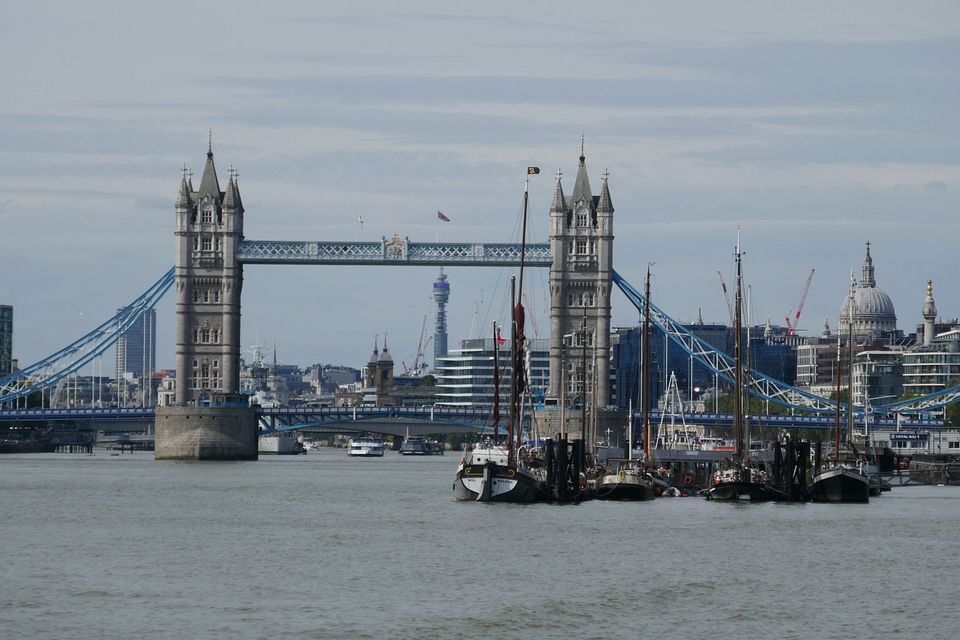
Aka the pictorial results of my latest time in the British capital. Despite the occasional rain, it was mostly sunny - and fun. I did return with the unfun sort of cold, though, but never mind, it happens, especially in autumn. Now, photos!


Tower-Yachten-St. Paul
London Town in photos )
selenak: (Bardolatry by Cheesygirl)
I was in London mostly for work reasons this last week, but I did get some sightseeing and friends meeting done as well, not to mention some book shopping and theatre going, and I'll post a pic spam as soon as I am able. But first, have some reviews:

Plays:

Antony and Cleopatra: staged at the Globe, with Nadia Nadarajah and John Hollingworth in the titular roles. Antony and Cleopatra is one of those plays which just doesn't work for me when I read it but magically does work when I see it performed. In this particular case, there was of course also the charm of seeing it played on a reconstructed Elizabethan theatre, and the particular concept of this specific production, which was letting the Egyptians talk in sign language and the Romans out loud. (Going by the programm, the actors playing the Egyptians are indeed deaf; the Roman actors learned how to do British sign language as well.) (The costumes went for a standard antiquity look.) This made for strengths and weaknesses - on the one hand, the audience was focused even more on facial and body language, plus Antony either using sign language as well or not immediately said something about his current standing with Cleopatra, and the production had the audacity of letting their last scene play out mostly silent - you could have heard a needle fall, and it was breathtaking. On the downside, it meant that early on, the audience had to make up their minds whether to read the subtitles (the play was subtitled throughout, i.e. deaf people could enjoy the solely spoken parts as well) or watch the performances until getting in the rhythm of things. Also, some of the poetry of the language was lost - well, expressed in a different way, I suppose, but the last time I saw this play staged, it was at Stratford with Patrick Stewart as Antony and Harriet Walters as Cleopatra, and once you've heard these two recite those lines...

Otoh: the one point where we hear sounds from Cleopatra - after she, Iras and Charmian have been taken captive by Octavian's people, and a soldier holds her so she can't sign, meaning she has to speak out loud - it felt like a horrible violation, which tells you something about how immersed into this performance I've become.

Hadestown: a musical of which I'd heard a lot of good things, and justly so. Takes both the Orpheus & Eurydice and the Hades & Persephone myths and narrates them in a vaguely Depression era environment - but not "secularized", as it were, i.e. Hades isn't simply an industrialist, he really is a god and Persephone a goddess, etc. This said, the musical does lean into the whole Hades = Pluto = Plutocrat, master of the riches of the earth - symbolism, and the power he has is that of money in a world full of poverty; the famous scene in Ovid where Orpheus manages to make all the Shades who are getting punished in the Underworld - Tantalus, Sisyphus, even the Furies themselves - stop their torment and cry transforms into him being able to stop the exploited Dead/factory workers who've just given him a beating on Hades' behalf from working and make them feel again, for example. Eurydice doesn't get bitten by a snake, she makes a deal with Hades, who in turn is on the outs with Persephone, who increasingly can't cope with the constant switching between Underworld and World of the Living that makes her life. The fifth lead is Hermes (played by an actress looking Dietirch-esque in 1930s suits). The music is great, and the musical has the courage of its convictions apropos the ending.

Stranger Things: The First Shadow: yep, it's a theatre play that works as a prequel to the Netlix series, written by Kate Trefry based on a story from her and Jack Thorne (who has written Harry Potter and the Cursed Child as a way to prove he can write sequels/prequels to hits in another medium). Set during the 1950s, this is the tale of Henry Creel (as sketched out in flashbacks in s4 of the show), plus a new character, Patty Newby (adopted sister of Bob the Hobbit whom Joyce dated in s2), with the teenage versions of Joyce, Hopper, Bob and to a far lesser degree the parents of our future heroes getting involved in varying degrees as things go increasingly weird. Spoilers for the play and the series ensue. )

Books:

Sarah Gordon: Underdog: The Other Other Bronte. Poor Charlotte. Whenever she shows in fiction these last few years, it seems to be as a villain and/or the embodiment of sibling jealousy. Last year, she played the role of the envious sister in the frustrating movie Emily about
guess who; this year, she's the bad girl in this play which I did not have the chance to watch but bought the script of. It's (supposed to be) about Anne and much as the novel The Madwoman Upstairs does, about how Charlotte done her wrong. (Different authors, btw, but both postulate Charlotte, realizing her first novel The Professor sucked, stole the premise from Anne's Agnes Grey to create Jane Eyre. Only this play goes way beyong "Jane Eyre is a plagiarized Agnes Grey!" charge and the historically more accurate "Charlotte didn't allow any reprintings of The Tenant of Wildfell Hall once Anne was dead and thus is responsible for Anne's masterpiece getting forgotten for a century until it was rediscovered"; nope, Underdog has Charlotte constantly belittle and bully Anne like you wouldn't believe. (What about Emily? may a Bronte reader familiar with the fact Anne was closest to Emily and vice versa in the famliy ask. Well, much like Anne hardly shows up in Emily the movie, here Emily is an also ran in Underdog the play until near the end, when she tells Charlotte off for constantly bullying Anne just before her death. But really, otherwise she's just sort of there and not really taking Anne that seriously as a writer, either. As for Anne: supposedly this is her play, but the authorial eagerness in making her the perfect (not Victorian perfect, 21st century perfect) heroine who can see that Charlotte and Emily write unhealthy m/f relationships and is the true pioneer of feminist fiction paradoxically means she's never three dimensional. Also, this is a tale told by its villain, i.e. Charlotte. There's just one sequence where Charlotte isn't present and which isn't about her (Anne's first governessing job). But otherwise, Charlotte is the narrator, trying to justify herself but really unmasking, in a very 19th century novel style, though Wilkie Collins more than any of the Brontes. In conclusion, To Walk Invisible the movie is still the only take on the Sisters which manages to portray all three with sympathy and skill.

Katherine Moar: Farm Hall. Another play, this one set in the titular place in1945 where the British government hosted the German scienistst they'd gotten their hands on until the nuclear bomb(s) dropped, trying to figure out by recording them how far the German atom bomb project had gotten and what they knew. It starts with a quote from Michael Frayn of Copenhagen fame and very much feels like Copenhagen fanfiction in terms of Heisenberg's characterisation (maybe a touch sharper about his ego early on, but two thirds in, in the aftermath of the Hiroshima news, he does talk Otto Hahn through how it could have worked, thus as in Copenhagen providing the counter argument to "he wouldn't have been able to figure out the key bits anyway"). However, it's much more of an ensemble piece. A well done play, but unfortunately I kept having my disbelief suspension snapped, for example when they have some of the German scientists wonder about American movies being so popular and being produced with so much effort when there's a war going on. Dear Katherine Moar, while the German film industry undoubtedly greatly suffered from the Nazi caused exodus of many incredibly talented people, it really got dream funding from the government (a firm believer of panem et circenses, Goebbels), and was producing films for the purpose of entertainment and propaganda right until the bitter end. I mean, freaking Goebbels ordered parts of the army to play spear carriers in Veit Harlan's Colberg in 1944. =>' No German living at that time would have been the least bit surprised that the US film industry is doing well in the war. Also, I had the impression the Carl Friedrich von Weizäcker characterisation is mostly based on him being the son of a prominent, privileged family, so he gets to be the spoiled young man of the ensemble, and wellllllll, not the impression I had. Most characters go through similar arcs - they start out feeling smug in their scientific superiority and determinedly not talking about recent genocides, get the superiority shattered and, some of them, starting to confront the recent past. As fanficton, it works; I'm not sure it does as a play.

Lucy Jago: A Net for Small Fishes. A novel that deals with the same Stuart court scandal I wrote a story about, Frances Howard (Essex, Somerset) and the Overbury Affair, in this case, though, narrated by Anne Turner, the long term friend who got Frances the poison. It's written with much sympathy for both ladies, Anne and Frances, and when I came to the afterward, I saw it drew from the same main source I had used ("The Trials of Fances Howard", i.e. the most recent and most balanced account of the Overbury affair. Lucy Jago doesn't provide Frances with the same motives I speculated about, but I find her version plausible as well, and I appreciate the complexity of the relationships - especially Anne and Frances (I was half afraid she'd do a Philippa Gregory and go for the mean girl/ exploited good girl approach, but no, absolutely not). Even bit players like Queen Anne are interesting. A compelling historical novel.
selenak: Only an idiot.... (LondoFritz by Cahn)
I wll say something about the swap suggestion that inspired this question at the end, because I have my own opinion about it, unsurprisingly, but first, here are some spontanous 18th Century ideas from yours truly. I tried to pick contemporaries of the same generation:


Kingdom Swap 1: Friedrich Wilhelm I. (Prussia) swaps with his first cousin George II (Britain and Hannover) )

Kingdom Swap 2: Stanislas I. Poniatowski (Poland) swaps with Joseph II (HRE) )

Kingdom, err, Realm Swap 3: Peter the Great (Russia) swaps with Gian Gastone de' Medici (Tuscany) )

Now, what [personal profile] thornyrose42 wrote to me was: I was listening to a podcast (You’re Dead to Me) where a comedian quipped that Peter III of Russia and Frederick the Great would have both been quite satisfied with a kingdom swap, since Peter admired Prussia so much and Frederick would not have said no to such a giant hunk of Empire.

Whether or not that is true, what do you think would be some of the best and worst kingdom swaps from your favourite periods? Whose style of governance was much better suited to another kingdom’s problems? Who managed where they were ruling but would have floundered when forced to deal with someone else’s political brew.


And okay, Peter III and Frederick are contemporaries but of two different generations, but here's my own opinion of how that would go: )

The other days
selenak: (Pumuckl)
Re: UK Election - I don't have anything more constructive to say than "I'm sorry". Though this post puts it a bit better than that.

Also: [personal profile] petra recently linked Emma Thompson & Bryn Terfel performing Sweeney Todd, which was divine, and if ever there's a moment for pitch black Sondheim cynicsm, it's this one, so I'll follow suit, only with Imelda Staunton and Michael Ball:


Without women the novel would die: probably, though this article pays only a nodding tribute to previous centuries, and none at all to what I think is intimately tied to the current day different reading habits - different gender performance. I've spent the last week translating and summarizing excerpts from an 18th century nobleman's diaries for [personal profile] cahn and [personal profile] mildred_of_midgard, which reminded me of, among so many other things, how reading with and to each other (and bursting into tears whenever you felt like it, and proclaiming your utter devotion or your abject misery every second page) were completely au fait for your 18th century male. I mean, I knew that since I read Werther at school. But it's still neat to get a non-fiction reminder every now and then. And of course men were still great readers in the 19th and 20 century, but displaying emotion about it became less and less something seen as compatible with the masculine code of behavior.

Aaaaanyway. Feel free to burst into tears and/or grab a book now, oh fellow 21st century people of any gender. I venture to guess either might help at least a little bit?
selenak: (City - KathyH)
Flying back to Munich this afternoon, I leave you with some visual impressions of my time in London, with a brief excursion to Winchester, and to Greenwich.

Museum vom Observatory aus photo image_zps906hv2ec.jpeg


More below the cut )
selenak: (Richard III. by Vexana_Sky)
I almost didn't make it to the Almeida on Friday night, which, given that the chance to watch Ralph Fiennes and Vanessa Redgrave in Richard III was one of the reasons why I picked this particular week when my APs gave me a week in London for Christmas, would have been a not so fun irony. The London Underground played one of its tricks, with the Northern Line temporarily breaking down. But thanks to a taxi driver who had a hysterical foreigner in the form of yours truly at hand, I did make it in time. It was an excellent production, with one caveat, and reminded me how much The Hollow Crown version cut. (For example: that terse monologue about Hastings getting framed post-execution which makes it very contemporary indeed.) Contemporary costumes, except for the final battle scenes, for which everyone was in armor and had swords.

The play opened and ended at the car park in Leicester where they found historical Richard III's remains, which I took as an attempt to tie in the revived interest, because otherwise of course the production was firmly Shakespeare, not history, and not just the usual habit of casting middle aged actors as the York brothers but also the women in very different ages to their historical counterparts helps seeing the play as its own 'verse. Fiennes' Richard does the usual "clever mastermind loses it as soon as he actually has power trajectory - come to think of it, I guess the only ursurper whom Shakeskpeare allows to remain subtle instead of ham fisted is Claudius in Hamlet -, with an undercurrent of "both power hunger and misanthropy are the result of being loathed from birth", and he does it well. I've seen a complaint that he doesn't seduce the audience by being charming, complete with trajectory that Fiennes isn't able to. Having recently watched his Monsieur Gustave, I beg to differ: he can be charming, if the role calls for it. His version of Shakespeare's Richard doesn't; he's very compelling, though, more like a clever cobra taking out lots of hapless bunnies before realising he's stuck with lots of dead bodies and no idea what do actually do with them.

I hadn't been sure whether Vanessa Redgrave was playing Queen Margaret or the Duchess of York when [personal profile] jesuswasbatman asked me about it; turns out she was Margaret, far less mad than clear-sighted here, though Margaret carrying a baby doll around (which she in her second scene bequeathed to Elizabeth Woodville) was presumably a signal that she's not all there after all. Seriously, though, what I loved about the performance was that this Margaret was both tragic and and vengeful without being over the top about it. There was a stillness in Redgrave when she watched her enemies fall, a slight smile, that reminded even an audience that didn't listen to the textual reminder of her killing of Rutland and York that Margaret is no nice woman wronged, but an aged monster rendered powerless herself. The way she and Richard keep an eye on each other through Margaret's first scene also comes across as two predators knowing each other by instinct, or maybe it's also the star quality both actors have.

Redgrave aside, this was another production making it very clear that Tudor's appearance at the end not withstanding, Richard's true opponents in this play are the women. Hastings - who kept checking his twitter feed - was a bombastic, with non-malignant fool, Clarence naively blind, and Buckingham the not-so-faithful Lieutenant type considering himself somehow excempt from Richard's malignity out of sheer ego. Meanwhile, Joanna Vanderham was a very young (no idea how old the actress is, but she looked at least twenty, if not thirty years younger than Fiennes as Richard) but firm Lady Anne who only just starts to come around at the end of the wooing scene but mostly acts as she does because she doesn't want to become a killer, Susan Engel is the other matriarch, Cecily Nevill, Duchess of York (age wise looks a match with Redgrave, so that bit of internal verse-sense is kept) and her palpable loathing of her son remains, despite all that Richard does, as disturbing as ever. (The production closes with her reappearing on stage, standing at his grave in Leicester and enigmatically staring in it.) Aislin McGuckin was a great Elizabeth Woodville, but alas, her scenes include my one caveat/complaint about this production, though it's no fault of hers or Fiennes' but of the director's decision.

The Richard & Elizabeth scene pre battle of Bosworth goes the traditional way of him by now incapable of swaying his target and her not buying a word of - and then he proceeds to rape her. Now, the way the rape is played makes it clear it's not about hidden sexual attraction but about power and humiliation, and yet another example of Richard resorting to tyrannical power exertion because he can't get what he wants by his wits anymore. It's also in tandem with this Richard projecting his mother issues by misogyny. But still: the rest of the second half of the play makes that point already. And I'm just so tired of rape (the one thing not even Holinshed, More and Shakespeare thought to accuse Richard of, btw) being the default act to signal that a villain is really truly bad. So could have done without that.

Still on a Shakespeare note: the British Library currently has a "Shakespere in Ten Acts" exhibition which I visited with [personal profile] jesuswasbatman. Truly full of treasures, starting not just with the expected First Folio but copies of the Robert Greene book containing the "Johannes Factotum" crack about Shakespeare, and the 1602 collection of anecdotes - in hand writing, not in print, which was fascinating to me, since I've rarely seen handwritten bound books in the post Gutenberg era - that contains the "William the Conqueror arrived before Richard III" story about Shakespeare, Burbage and the female fan. There is a rough chronology of the exhibition, but also various of the plays as a central focus in different eras. In the mid 19th century, we get Othello and Ira Aldridge's entire career getting a wall to himself, which I can't help but suspect and hope was influenced by interest in Ira Aldridge being revived through the Adrian Lester starring play I watched the last time I was here. Seeing the posters both British and European was fascinating - and telling, what with the American born Ira billed as "a native of Senegal" in the early English ones. And speaking of black actors playing Othello, I had of course known that Paul Robeson had done so, but not that Laurence Olivier refused to join a Robeson supporting campaign in order to get him to play the role in Britain because, as Olivier openly declared, he wanted to have a go at Othello himself.

There are costumes and stage props of more recent productions, as the 1960s Peter Brook directed Midsummer Night's Dream, and interviews with surviving actors; I was amused to find a recording of the puppet play version of the early German version of Hamlet (hails from ye late 17th and early 19th century days when the Bard was more popular in our part of the world than at home, before Garrick helped him to a comeback). All in all, truly a satisfying anniversary exhibition to visit.
selenak: (VanGogh - Lefaym)
Sunday was a bit gloomy, weather-wise, but Monday was sunny, and thus I did again something I hadn't for two decades and went to Kew Gardens. Then, because it was such a fine day, I added something I hadn't done during previous London trips, full stop, and took the boat on the Thames instead of the train in order to get from Kew Gardens to Hampton Court. (Aka how the the kings and queens and their courts did it.) Of course, by the time I arrived in Hampton Court clouds had gathered and I was a bit frozen, but never mind, it had been worth it. All in all, it was a great way to say goodbye to London for this year, although not quite, because in the evening I went to [personal profile] rozk's book launch, which was fabulous. Now I'm off to the air port, but won't be able to resume my fannish life until next week because tomorrow I'm bound for Prague! (Where I was only once in my life before, and then I was 13, so I hardly remember anything.)


Meanwhile, share the beauty of gardens, mansions and palaces, not to mention the Thames:


 photo image.jpg11_zpsblqpsa6o.jpg


More beneath the cut )
selenak: (City - KathyH)
I'm very very exhausted, in a good way, so no report yet on a play and a film that I've seen, which shall be written at some future point, but for now, just pics. Because while this is about the gazillionest visit to London, I still can't resist using my camera, and on this very beautiful day, I was with [personal profile] kathyh in Windsor.

 photo image.jpg6_zpsy7shvwal.jpg

Read more... )
selenak: (Tourists by Kathyh)
Not to go all Robert Browning on you, but I'm off to be in England, now that April's there. Well, London for a week, but it's going to be fabulous, it always is.

Being less online will also mean less of a (mis)chance of getting spoiled for Age of Ultron before I have the chance to watch it, which will be soon, since it will be released in Europe tomorrow. But it does mean that Americans aside, which Itunes has, I won't be able to catch up with my shows untl next week. Will report on London in April instead!
selenak: (Dork)
Because there was the occasional spot of sunshine. Like yesterday morning, before I had to catch my flight. Guess what I did before I left that island on the silver sea?

 photo 2014_0221England0126_zps58ddcd5b.jpg


Pity the traffic which has to go through Abbey Road because they literally have not a moment of uninterrupted access from dawn to dusk... )
selenak: (Bardolatry by Cheesygirl)
Overheard, just the other day, near Marble Arch while having lunch, the following conversation:

Aged Father: "What about the Roma who were here last time?"
Daughter (my age, Tory politician). "We're not calling them that, Dad, we're calling them agressive beggars of Eastern European Origin. And we got rid of them."

And thus you know you're surrounded by conservative England. There was a lot of interesting talk during that lunch otherwise, on all types of subjects from the EU to Dickens to Thomas Mann, but that part was the only point where I felt positively Orwellian.

Thursday also saw me watching Rapture, Blister, Burn, a play written by Gina Gionfriddo and performed at Hampstead Theatre. It occurs to me that means that out of five plays I watched during my time in London, three were written by women (Red Velvet, A Taste of Honey and Rapture - Blister - Burn, respectively), and today I also watched a film, The Invisible Woman, which was written by Abi Morgan and based on the book by Claire Tomalin. The times, they are (hopefully) changing. Which was partly the subject of Rapture, Blister, Burn, a play starring Emilia Fox (which is why I went) and Emma Fielding, and focused on women and their choices, and different generations of feminism. Rapture-Blister-Burn with spoilers ) It's not a play that offers some amazing new insights but it it's one that offers a very funny depiction of the inevitable imperfection of current day female life (in all its variations). Who says feminists are without a sense of humour?

Thursday was very rainy, so I first went to the National Gallery (me and half of London, but as opposed to the National Portrait Gallery, I hadn't visited the NG for years, and I did want to see some of these paintings in non-printed form again), which was, despite all the other people, a very relaxing thing to do. When wandering around the Impressionists, I was struck again by how many of them sat out the Franco-Prussian war in Britain, which was probably the most sensible thing to do, but can't have been that comfortable an exile, since they all went back once it was over.

Then I watched The Invisible Woman, because non-blockbuster foreign films which weren't co-produced with German money take sometimes a year or so before they get shown in our cinemas, and I really wanted to see this one, for various reasons: I had read Claire Tomalin's Dickens biography, which impressed me in its even handedness and vivacity, Claire Tomalin's report about how the film came to me, and the various reviews which assured me on what were the two most criticial points for me in advance to know: that this film would not excuse Dickens' behaviour by demonizing or denigrating his wife, that it would not play out Nelly against Catherine, on the one hand, but on the other that it would also manage to show just why so many people cared about Dickens as a person, not "just" as an author. (Because otherwise Nelly looks foolish.) And because Nelly's personality always eluded me in the biographies, I hoped for the film, which is after all fiction, to help out there. Which it did. The Invisible Woman with spoilers )

My last London play this year was The Knight of the Burning Pestle at the new Sam Wannamaker Playhouse, which is an addition to the Globe; an indoor Jacobean playhouse where the Globe company can now stage plays in winter, too. I had tried for the Duchess of Malfi, their first play in the new house, about which I'd heard great things, but it was completely sold out, so last night I could watch the premiere of the next play, Beaumont's rarely performed Knight of the Burning Pestle. I had never seen it on stage before, and haven't read it though I knew one or two scenes from books about the Elizabethan and Jacobean theatre - since it is a play-within-a-play type of drama, which breaks the fourth wall with gusto, it gets quoted as an (of course dramatically exaggareted) example of what the stage practice of the day would have been. As it turns out, it is ideal for this particular theatre, which is build similar to the Swan in Stratford, only completely in wood, modelled on the Blackfriars Playhouse. So as opposed to the Globe, you have this relatively small space, with the basic archetectural structure of a refectory with a nod to an alehouse, all in wood. I'd been warned about the hard seats, but let me tell you, for the Bayreuth-trained theatre and opera enthusiast, this was downright comfortable by comparison. Also the play was very much about audience participation; the other thing I was told was that for the Duchess of Malfi, everything was completely dark except for the candles used for lighting. Not so here; the doors were always open, partly because at some points the characters ran off stage and through them and back again, but also because the audience reactions were part of the play so you needed the audience to be visible.

The Knight of the Burning Pestle presents you, among other things, with a London citizen, a grocer, his wife and his apprentice going to a play, not being content with what they watch as they don't like the hero and taking over the plot, inserting a new character, their apprentice, in it who is to have all types of glorious adventures which suspiciously resemble Don Quixote (a book which was out in Spanish but not yet in English at the time so there is some debate whether Beaumont had read it) while the actors try to stage their original play (which is about a London merchant's apprentice being forbidden to marry said merchant's daughter and after all sorts of shenanigans getting together with her anyway), which doesn't fit the demanded adventure plots at all. It's the kind of thing which sounds hopelessly confusing when written but when staged as it was last night really is hilarious, with the whole audience cheering Rafe on when he has his Quixotic adventures and adoring the Citizen and his Wife who were the heart of the performance and sat among the audience commenting when they weren't on stage trying to help the actors/their characters. They are basically Jacobean fandom living the fans-know-everything-better-anyway dream (which tells me Francis Beaumont must have been lectured by fanboys and fangirls a lot), and presented with great affection. Instead of the usual break ca. halfway through a play, for this play we got three interludes that lasted about four minutes during which there were on stage dances, and during which also food and drinks were sold as well (yes, you could, in the true Jacobean spirit, eat and drink during the performance, though at one point one of the actors of The London Merchant went down to the Citizen's wife and took her food away, and one longer, fifteen minutes interlude announced as "privvy break". Like I said, this was pretty much the Rocky Horror Show type of live performance audience experience, Jacobean style, and terrific fun from beginning to end.

Today: the sun has come back! Will walk a while before heading off to the airport - my flight is in the afternoon. What a trip!
selenak: (City - KathyH)
Monday saw me visiting another bunch of dead Victorians - or perhaps more accurately dead Georgians who made it into Victoria's reign and some additional Victorians - at Kensal Green Cemetery, more on that below the cut complete with photos; and before you ask, that is the end of my morbid cemetery exploration during this particular London trip.

On the other hand, hitting the London theatres continues; on Monday I also met up with [personal profile] kangeiko and saw A Taste of Honey by Shelagh Delaney at the National. Neither of us knew anything about the play other than the name of the author, the title and that it was now considered a modern classic. My main reason for wanting to see it was that Lesley Sharpe plays one of the two leading roles. Now that I've watched it, though, I am in awe that a play like this could be created and staged in 1958, by a female author, and so utterly unlike the simultanous plays of John Osborne & Co. In fact, depressingly it still stands out compared with much of today's theatre, tv and cinema output, many decades later. First of all, the main focus is on a complex mother-daughter relationship. Secondly, the daughter, Jo, has an affair with a black sailor, Jimmie, and later has a gay friend, Geoffrey, who moves in with her. The mother, Helen, had Jo when she was young and the two at times act more like bickering sisters than like mother and daughter, with Jo as the responsible one; Helen is also in and out of relationships which more or less provide her income. Inevitably, Jo, too, gets pregnant. And yet: Nobody committs suicide or beats each other up or gets murdered. No one is slut shamed. And not because anyone is living in an idyll or life is kind. The program had a line about the characters being "different types of survivors in a world that doesn't throw anyone lifebelts", and that's true, and yet it is not a cynical play. The characters and their relationships come across as three dimensional and true, and no one feels like a vehicle for the author's rant on issue X. Now I'm all the more frustrated Shelagh Delaney didn't go on to write many more plays (though she did write one more play and some radio and tv scripts, as a quick googling tells me). What a talent! Yes, some writers have only one perfect work in them - see also Harper Lee - but those are the exception; most, given the opportunity, can do more.

As for the production, I thought both Kate O'Flynn as Jo - who is on stage in most scenes and so really needs to be good - and Lesley Sharpe as Helen were fabulous, and so was their supporting cast. The staging and costumes went for the time the play was written in and set, i.e. late 50s, and yet it didn't feel "period" in the sense of feeling distanced; it never played into nostalgia, being too sharp and witty for that. In conclusion: if you're in London for the next two months, try and catch it!

Yesterday was no theatre day because I was invited to a wonderful friend of mine for dinner, a lovely old lady who is one of the most amazing people I've known, and who'll be 90 next year. She's originally from Munich where her father was a very respected lawyer. You may have seen his photo, because when the Third Reich arrived, her father made the mistake believing in justice and complained to the police about harrasment. In response, they made him run through Munich in his underwear with a sign around his neck saying "I am a Jewish pig and will never complain to the police again". (Last year at the anniversary of the so-called "Reichskristallnacht" the photo got reprinted in a lot of Munich-based media again.) Anyway, Bea's parents then got her out of the country via the Kindertransport to England, hence her ending up here. I met her over a decade ago and we've been in contact ever since; she's so full of life and charming and optimistic that you're moved and humbled by her very presence if it wasn't that she's far too animated and drawing response not to enjoy oneself just for the good company.
(I cried once anyway, years ago, because sometimes the awful horror of it all overwhelms you anew.)

Anyway, yesterday evening I visited her and her family, and we had a great evening. It included an anecdote about an encounter with the royals apropos a Holocaust museum/exhibition opening here in London, where Bea and other surviving children who came to England through the Kindertransport had been invited and were presented to the Queen and Prince Philipp. Said exhibition included a model of Auschwitz, with the huts all in white, according to Bea. Says Philipp, gesturing towards the Auschwitz model: "And where do you live now? Not there anymore, right?"

.....

Tuesday was good for hanging out with friends, though; lunch I spent with [personal profile] kathyh at a pub which was an amazing relic of the turn of the (19th into 20th) century full of art deco. Originally we met at the Modern Tate and were planning to have lunch there, but it was too crowded, it being half term in Britain this week, which I hadn't known but which explained all the children I encountered. Generally speaking, I prefer the Tate Britain because of the Williams Turner and Blake represented there, but I did want to see the Richard Hamilton exhibition, which included his series of pictures called "Swingeing London" (sic, it's a pun) using the photo of Robert Fraser and Mick Jagger handcuffed to each other when arrested during the 1967 drug bust, and his design for the Beatles' White Album. (The cover, obviously, is just white, but the exhibition also had the original for the inside poster that came with the LP and was based on a collage of photographs culled from their archives. Today in the age of the cd (well, the age of Itunes, I guess,now), you can't make out individual photos,far too tiny, but in the big A3 size original where all the photos are in their original size, too, you can, and my inner Beatles obsessive was not a bit embarrassed to be able to identify many of them. (Both the original cover design and the original inside poster design were said to be on loan from a "private collection", which I guess means Paul McCartney.)

And now for the graves of Victorian writers (guess who still gets flowers and who doesn't?) and the sisters, wives and best buddies of Mr. Mad, Bad and Dangerous To Know himself, Lord Byron (those would be the Georgians I mentioned earlier. And because they are adorable, some of Sunday morning's pelicans, whose ancestors supposedly came to St. James Park with the Restoration and Charles II.

Collins versus Thackeray versus Wilde (mother of Oscar) )
selenak: (Linda by Beatlemaniac90)
Yesterday was actually a sunny day, and I met the St. James pelicans on my way through the park.

I always visit the National Portrait Gallery when I'm in London; it's less crowded than the National Gallery, and it appeals to the historical obsessive in me. This time, as it turned out I could also visit the exhibition showcasing David Bailey's work over the decades, Stardust. There is an undertone of "I didn't just photograph the 60s, you know" there, but then, it's true. Mind you, whether 60s, 80s or 2000 onwards, what's undeniable is that black and white is Bailey's metier; the occasional colour photograph simply isn't as effective. The title not withstanding, the exhibition doesn't solely consist of Bailey's celebrity photos; there is one room with showing his photos of New Guinea people and Australian Aborigines, neither of whom are treated condescendingly or in any different from the way he photographs Western people, and another with his contribution to Live Aid which was to go to Sudan and document the situation there without fee. But inevitably, this being David Bailey, two thirds of the exhibition show people which one does know. (Well, I did, anyway.) Two of the most interesting portraits to me which I hadn't seen before were photos Bailey did of fellow photographers, of Don McCullin (probably most famous for his Vietnam work and in this the antipode of Bailey in terms of subject matter in the 60s) in the 90s, looking craggy and sage and yet somewhat amused, and of Linda McCartney in 1985, the face unabashedly without make-up and showing every line of a woman in her mid forties, and strong in herself for it. Incidentally, in terms of self portraits, Bailey's are a mixture of unflinching sense-of-humor about himself - the more current day ones not only are as unflattering as possible but also tend to have him posing as a clown, all grimaces, puffed up cheeks and nose - and youthful showing off; there is one photo of the young David Bailey lounging in bed which is amazingly sexy and makes it understandably why supposedly two thirds of his models ended up having sex with him.

His favourite band, the Rolling Stones, get their own room (the notes informing us that David Bailey first met Mick Jagger when they were dating the Shrimpton sisters, Jean and Chrissie, in 1963, and that they're friends till this day), but in terms of his older work, the non-Stone photos are more memorable; another part of exhibition shows the "Pin-Box" collection he published in 1965 which had most of Swinging London (some of whom remained famous, and some folk who have since fallen into obscurity) in it, including the most notorious gangsters of the day, the Kray twins. Now I had seen Bailey's portrait shot of Ronnie and Reggie Kray before (and so have you, if you've seen photos of the Krays at all), but what I hadn't been aware of was that he took that photo in session with all three Kray brothers (yes, there was a third). Older brother Charlie was subsequently edited out of all the pictures (the exhibition has the originals, though), since no one cared about him. I sometimes wonder whether it's the awareness of who the Krays were that make me imagine you can see the cold brutality in the eyes, a certain psychopathic blankness, and whether I would read the photographsh differently if they were labeled "Ronald and Reginald Smith". But I think not; Bailey, at his best, can get across much character in his pictures.

Among the today obscure/forgotten people from the 1965 Pin-Box is for example Gordon Waller (of Peter & Gordon); among the still instantly recognizable one of the most famous pictures ever taken of John Lennon & Paul McCartney. So I knew that one, of course, but what I hadn't known was that Bailey also took portrait shots of Brian Epstein, three of which are included in the exhibition, two regular shots and a double exposure portrait, all excellent. It's worth noting that while the exhibition has several portraits of Jean Shrimpton, there are none from the photo shooting that made Bailey famous in 1962 (maybe Vogue still has the copy right?).

From photography to theatre: after visiting the National Portrait Gallery, I headed off to the other side of the river to see King Lear at the National Theatre, starring Simon Russell Beale in the title role, directed by Sam Mendes. Which was a very strong production, even if I'm still uncertain about some of the choices. Mendes went for a vaguely 1940s - general 20th century look, military dictatorship instead of traditional monarchy; interestingly, the French forces under Cordelia are clad in a brown guerilla look while the English ones both under Lear and later under Albany and Edmund are clad in a fascist black. Beale's Lear, as most good Lears do, starts very unsympathetic and gets more and more human and pitiable as the play proceeds. When he first says "let me not go mad" it's also the first time I felt any sympathy for him. Mind you, the autocratic behaviour in the opening scene of course means Lear comes off badly towards Cordelia and Kent however you play it, but in this production he also came off badly towards Goneril and Regan, with no warmth towards them yet expecting them to love (and proclaim their love for) him, plus the production had the hundred knights really rowdy (and, remember, in sinister black) at Goneril's, so Goneril feeling threatened and wanting to get rid of them in addition to having a strained relationship with her father was understandable. When Lear curses her, you can see how terrible this is for her. And then, like I said, the first human moment: "Let me not go mad". And suddenly Beale is projecting this fear, the moment of awareness, and it's so relatable - the fear of dementia, of Alzheimer's, of your own body and mind betraying you, of the helplessness when everything threatens to be taken away.

This is a production that feels very fast paced, but not in a bad way, as things go from bad to worse in both the Lear and the Gloucester plot; the suspense never snaps. Two outstanding moments in the first half before the interval - Gloucester's blinding, with the servant's intervention given its dramatic due when most productions I've seen tend to get that moment over with very quickly. (I think it's a great touch of Shakespeare's, especially given the "even if the King's cause is wrong, our duty towards him absolves us from any blame" debate in Henry V, because here you have a character who is not a noble going against the rule of duty and obedience because he can't stand seeing a man tortured this way. Also, before the blinding there is waterboarding as Regan and Cornwall interrogate Gloucester. Obvious contemporary nod is obvious. And speaking of Regan and Cornwall, usually because Regan moves on quickly to Edmund and is the less present sister in any case she doesn't get more emotional range beyond sadistic sex kitten; here she's sadistic and enjoying sex, but she's also sincerely in love with her equally cruel husband and devasteted when he's killed, desperately trying to stop the bleeding and save him. (She's also played by Anna Maxwell Martin of Bletchley Circle fame.)

The other outstanding scene, and a production choice I'm not sure about, is the climax of Lear's mad scene just before the interval. In the text, he stages a mad mock trial of his daughters. "Is your name Goneril" etc. In Sam Mendes' production, he doesn't just mistake a stage prop for Goneril, though he starts out with that. No, he then does something spoilery and unique to this production ) Then again, madness. I just don't know.

Later Lear also acts kindly towards Edgar-as-Tom, and towards Gloucester, which shows why Cordelia and Kent love this man (which is important; if you play Lear as solely bad, which I've also seen - and Jane Smiley does it in her modern Lear, A Thousand Acres, where he's a daughter rapist to boot - then not only there's no tragedy but it doesn't make sense anyone would feel love and loyalty for such a man). And the reconciliaton scene with Cordelia is outstanding; I have never seen a production where not only there is a Lear reluctant because he's so ashamed at how he treated her but also Cordelia who on the one hand loves and pities him but on the other is scarred by what happened herself, and so there is physical distance and uncomfortableness and slow, slow getting closer, so that when they do at last embrace, it is incredibly moving.

Always a question for actors for Lear: are you on the one hand old enough not to need ghastly make up but on the other strong enough to carry your Cordelia on the stage? Beale is up to the job. I've seen Lears drag their Cordelia because carrying an adult woman in your arms is no mean feat, but he accomplishes it. He's also one of the Lears whose "look there, look there" isn't a comforting final delusion that Cordelia still lives and starts to breathe again,but a despair about her death. It's heartrendering.

I haven't said much about the Gloucester plot, which is partly because it contains another of those choices I'm not sure about. Now this production's Edmund (Sam Troughton - a relation, I wonder?) with his sleeked back blond hair is slick enough in the machinations early on but also presented as a cold fish, which, fair enough, it's just that you have a hard time seeing why Goneril and Regan (both played by charismatic and beautiful actresses conveying much emotion) would fall for him. And in the later half, Mendes cuts Edgar's narration of Gloucester's death (so while on the one hand he adds that spoilery thing from the big madness scene ) on the other he lets Gloucester survive), and thus also Edmund's moment of being moved by it and the following not exactly repentance but at least attempt to take his orders for Lear's and Cordelia's deaths back. Also cut is Edmund's possibly vain and/or possibly being moved remark re: Regan's and Goneril's demise, "so Edmund was beloved". In short, those slight touches which don't make Edmund less of a villain but do make him human.

These caveats not withstanding, it is an excellent Lear, and I'm glad to have watched it. Onwards to more London theatre!
selenak: (Omar by Monanotlisa)
I arrived in London amidst rain and wind on Friday afternoon, but my trusty umbrella protected me enough so I could purchase the rest of the theatre tickets I wanted which they hadn't wanted to sell me online, and on Saturday morning London looked like this:

Parlament photo image_zpsc8a0f1bc.jpg

Mind you, the wind hadn't gone, which is why more and more clouds gathered during the day until it started to rain again. Still, I had planned on doing something I'd never managed during all my previous visits to London, which was to see Highgate Cemetery. Which I did, with [personal profile] jesuswasbatman, and you'll find the pic spam complete with Douglas Adams and Karl Marx and ongoing narration below under the cut. Afterwards, we had a quick lunch because by then it was heavily raining again and we needed something warm, and then I hastened away to meet [personal profile] rozk, whom I had tea and chatted away with until it was time for me to walk back to my hotel, change and take the Jubilee line to Kilburn where I watched the play Red Velvet, about Ira Albridge, one of the earliest black actors of the 19th century who became an international star. It's a new play, written by Lolita Chakrabarti and directed by Indhu Rubasingham, and Ira Albridge is played by Adrian Lester, who won an awardf or this role.

Albridge was American, born in New York in 1807, and left the US in 1824 for Britain where he toured the provinces and worked his way towards greater reknown until 1833 when he played Othello at Covent Garden, the first black actor to perform on a patented British theatre in London. What happened before, during and after forms the gist of the play, which the beginning and ending set thirty years later in on tour in Poland, where Ira Albridge, at that point an actor who'd performed across the continent, including Russia, been given medals by the King of Prussian and the Emperor of Austria and knighted by the Duke of Sachsen-Meiningen (who, btw, was a big theatre fan and is credited for some major reforms in German theatre) would eventually die. (His death isn't part of the play, but there is a reason why we see him near the end of his life and career, I'll get to that.)

Ira Albridge's performance as Othello at Covent Garden came to be becaus a week earlier, the most famous actor in Britain, Edmund Kean, playing Othello, had collapsed on stage in the arms of his son Charles who played Jago. Edmund Kean didn't recover and would die a few weeks later; he never shows up in the play but his shadow hangs over it. The manager of Covent Garden, Pierre LaPorte, faced with the prospect of losing the audience because the big star and draw had just dropped dead (or nearly so), then took a gamble and hired Ira Albridge. In the play Red Velvet, Pierre and Ira were friends before and one of the younger actors has seen Ira on stage previously, but for everyone else the fact that the new Othello is actually a black man comes as a shock, especially for Charles Kean.

Sidenote: this is probably the biggest departure the play does from history. Charles Kean in the play gets saddled with the role of prime antagonist, and it's not hard to see why the playwright picked him as the voice of racism and conservative traditionalism; as opposed to his father Edmund, who was one of the big innovative actors of his day, Charles Kean not only had the misfortune that comes from being the so-so talented son of a genius father in the same profession but also is remembered mostly for stately Shakespeare productions with detailed historical costumes who generated placid approval but never excitement. And it would make psychological sense if he felt supplanted by and jealous of Ira Albridge playing his father's role (but never his) opposite his fiancee, Ellen Tree, as Desdemona. Plus, you know, ironic doubling of the Iago role etc. However, the timeline of Albridge's life in the program points out that actually Charles Kean had already acted with Ira Albridge four years previously in Belfast... and the play was Othello, no less, with Ira as Othello and Charles as Iago. So in order for Charles to be the racist No.1 who is indignant at the mere thought of a black man playing Shakespeare and refuses to act with him, who can't stand the sight of him touching a white woman etc., this earlier cooperation had to be wiped out from history.

As the play also points out, 1833 was when slavery finally became illegal in the British colonies as well (the slave trade had been outlawed in 1807, but not slavery itself as far as the colonies are concerned), and it was very much a topic of the day; it's a topic of debate among the actors, too. Who also employ a black maid but never, including the fervent abolitionists, actually talk to her beyond giving her coats etc. or asking for tea; Connie, who is from Jamaica, is a silent presence (and the only other black character) except for one scene, after the first Othello performance and before the second one, when she and Ira are alone and have a conversation both about the play itself (she's not too impressed because Othello was so easily persuaded) and the circumstances (she tries, in vain, to warn him of what's to come).

Adrian Lester plays Ira in two different time frames - as old Ira, he's the essential old star, a bit tyrannical but also still able of charm if he cares to, hiding the unhealed scars of what happened in 1833 until they get laid open and you realise just what the price for his stardom was. As young Ira, he's passionate, ambitious and hopeful, and the play is great in capturing both the intense camraderie that can develop between actors, the excitement of developing performances together (which happens with Ellen Tree) - and its quick falling apart under pressure. Because the reviews are horribly racist (and btw, not invented - none of these critics seems to have been self aware enough of the irony of complaining of a "stupid looking, thick-lipped ill-formed African" daring to play Othello and "pawing" a white actress), and the entire Covent Garden theatre is closed after only two performances. (Ira Albridge didn't play in London again for another fifteen years, and then only once; all his triumphs took place elsewhere.) The play doesn't go for simple good/bad equation; you believe, for example, that Pierre LaPorte is sincere in his friendship and really wanted Ira to suceed, and their breakup scene is heartrendering, but at the same time, he's not just making a business decision, and he's also not free from the universally biased world around them - in the climax of their fierce argument, some expressions like "your true nature" get out, and it's clear he means "your nature as a black man".

The play doesn't examine how prejudice works in solely one direction, though; I already mentioned Connie, the black maid. There is also Ira's first wife Margaret, who is white, and doesn't get a seat at the evening of his first performance at Covent Garden because being married to a black man has put her beyond the social pale. And in the framing opening and closing scenes of the play, there is the female Polish journalist Halina who tries to get an interview with Ira in order to get her big break which could finally make the men at her paper take her seriously instead of keeping her solely around to write about ladies winning flower arrangement prices. Now the play both draws a parallel between the glass ceiling Halina is trying to break as a woman reporter and the one young Ira tried to break on the stage AND shows they're different things; in the final scene, when Halina pours her heart out about what she wants and why, old Ira is slowly putting on his make-up for playing King Lear. Adrian Lester hardly says anything in that scene and is yet absolutely devastating by body language and by what he does - because the make-up Ira is putting on for Lear is whitening his face. And you realise that all the other, non-Othello,non-Aaron roles he played so successfully - he had to play in whiteface. By the time he asks for his gloves to cover his hands, it's hard not to cry, and like I said - Adrian Lester does it almost silently. (Whereas he's very verbal in the rest of the play, and btw - the man has a terrific voice.)

I also found it a very courageous choice on the part of the playwright. It would have been easy to make the audience feel good by letting them leave in the knowledge that hey, yes, there was the London disaster but Ira did become a star after all! Happy ending! Instead, the last scene is like a punch in the gut: yes, he did become a star, but the time he lived in still managed to humiliate him through all his years of being one.

In conclusion: go watch, if you can.

Now, on to my earlier visit to the most famous cemetery in London.

Where they bury English writers and German revolutionaries alike )
selenak: (Ray and Shaz by Kathyh)
Tomorrow, I'll be off to London for a few days, which is great on a theatre, books, friends meeting level, but alas there is that pesky British weather. However, I shall try to model myself on Gene Kelly.

Profile

selenak: (Default)
selenak

March 2026

S M T W T F S
1234567
891011 121314
15161718192021
22 232425262728
2930 31    

Most Popular Tags

Syndicate

RSS Atom

Style Credit

Page generated Apr. 1st, 2026 07:36 pm
Powered by Dreamwidth Studios